产业链视角下中国无人机企业空间分布与协同关系
|
陈锦晗,女,陕西西安人,博士生,研究方向为交通地理与区域发展。E-mail: 13909239740@163.com |
收稿日期: 2025-03-27
修回日期: 2025-07-29
网络出版日期: 2025-09-09
基金资助
国家自然科学基金项目(42225106)
国家自然科学基金项目(42401206)
Spatial distribution and coordinated relationship of China’s UAV enterprises from an industry chain perspective
Received date: 2025-03-27
Revised date: 2025-07-29
Online published: 2025-09-09
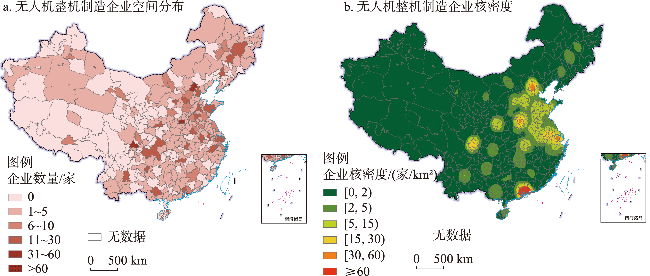
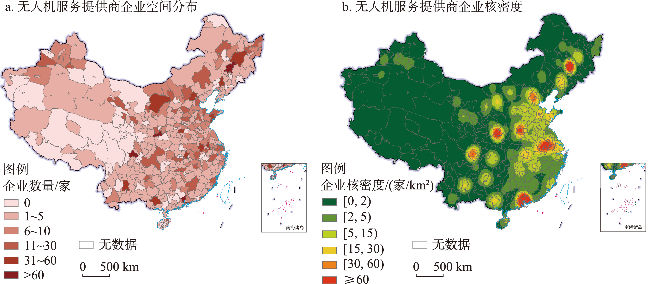
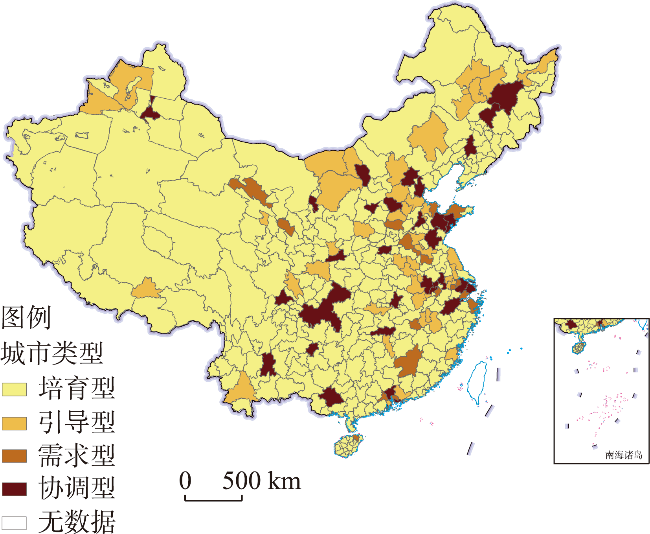
【目的】 无人机作为低空飞行活动的重要支撑,其产业发展与低空经济密切相关。本文旨在识别无人机产业链上中下游的企业分布格局与协同关系,为优化产业空间布局、促进低空经济高质量发展提供参考。【方法】 本文基于企业大数据,通过关键词检索与数据清洗,构建了截至2024年12月31日经营状态正常的中国无人机企业数据库,覆盖了无人机产业链上中下游;在此基础上,采用空间分析方法识别无人机企业空间分布特征,并识别上中下游协同关系。【结果】 ①中国无人机产业以上游原材料供应、零部件制造、核心系统企业较多,其次为下游服务提供商企业,中游整机制造的企业数量相对较少,空间上表现出“东密西疏、南多北少”的格局,以珠三角密度最高,其次为长三角和成渝等地区。②上游和中游企业具有显著的空间集聚性,其中以上游企业的集聚系数相对较高。下游企业面向市场,区域分布的差异相对较小。③基于各城市的产业链上中下游企业分布,可归纳为协调型、需求型、引导型与培育型城市。其中,协调型城市的产业链相对完整、发展优势显著;需求型与引导型城市则是在部分产业链环节具有优势,但也存在一定短板;培育型城市的上中下游企业数量均相对较少,此类城市数量最多。【结论】 不同城市的无人机产业发展情况存在差异,应以产业链相对完整的协调型城市为核心,打造具有全球竞争力的产业集群;加强需求型与引导型城市的补链强链;对基础薄弱的培育型城市则应立足地方特色和优势激发产业潜能,因地制宜地制定发展策略。
陈锦晗 , 杜德林 , 王姣娥 . 产业链视角下中国无人机企业空间分布与协同关系[J]. 资源科学, 2025 , 47(8) : 1732 -1744 . DOI: 10.18402/resci.2025.08.10
[Objective] As an important support for low-altitude flight activities, the development of the unmanned aerial vehicle (UAV) industry is closely linked to the low-altitude economy. This study aims to identify the spatial distribution patterns and coordinated relationships of upstream, midstream, and downstream enterprises in the UAV industry chain, providing references for optimizing industrial spatial layout and promoting high-quality development of the low-altitude economy. [Methods] Based on enterprise big data, this study constructed a comprehensive database of operational UAV enterprises as of December 31, 2024, covering the upstream, midstream, and downstream sectors of the UAV industry chain through keyword search and data cleaning. On this basis, spatial analysis methods were used to identify spatial distribution characteristics of UAV enterprises and coordinated relationships among upstream, midstream, and downstream sectors. [Results] (1) In China’s UAV industry, the upstream sector, encompassing raw material suppliers, component manufacturers, and core system developers, accounted for the largest proportion of enterprises. This was followed by downstream service providers, while midstream UAV manufacturers constituted the smallest proportion. Spatially, the distribution exhibited a pattern of “dense in the east and sparse in the west, more in the south and fewer in the north”. The Pearl River Delta exhibited the highest density, followed by the Yangtze River Delta and the Chengdu-Chongqing regions. (2) Upstream and midstream enterprises showed strong spatial clustering, with upstream enterprises having relatively higher clustering coefficients. Downstream enterprises were market-oriented, and their regional distribution showed relatively smaller differences. (3) Based on the distribution of upstream, midstream, and downstream enterprises in each city’s industry chain, cities could be categorized into four types: coordinated, demand-driven, guided, and cultivated. Coordinated cities had relatively complete industrial chains and significant developmental advantages. Demand-driven and guided cities had advantages in certain segments of the industry chain, but also faced certain shortcomings. Most cities were still in the cultivation stage, with a relatively small number of enterprises across the upstream, midstream, and downstream sectors. [Conclusion] The development of the UAV industry varies across cities. Coordinated cities with relatively complete industry chains should serve as the core hubs for building globally competitive industrial clusters. Demand-driven and guided cities should strengthen and supplement their industry chains, while cultivated cities with weaker foundations should leverage local characteristics and advantages to unlock industrial potential. Overall, development strategies should be tailored to local conditions.
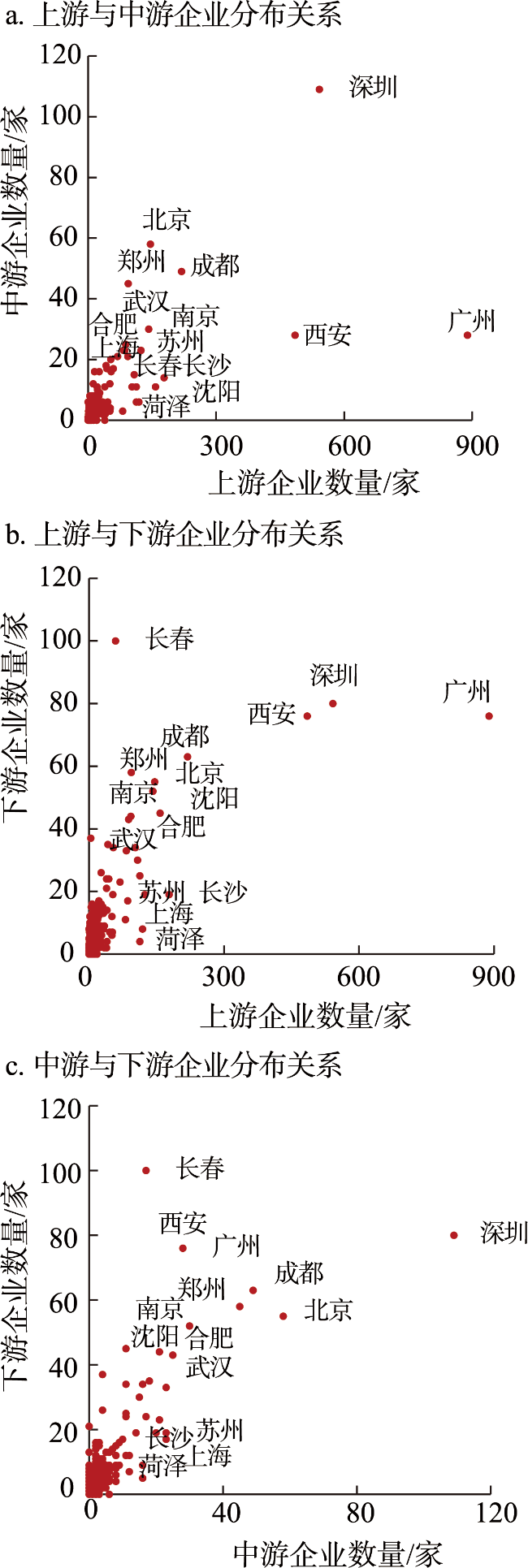
图7 2024年各城市上中下游企业数量对比注:仅标注上游、中游或下游企业数量位于前10位的城市名称。 Figure 7 Comparison of number of upstream, midstream, and downstream enterprises across cities in 2024 |
表1 城市无人机产业发展类型Table 1 Development types of urban UAV industry |
| 城市类型 | 企业数量均值分析 | 城市数量 | |||
|---|---|---|---|---|---|
| 上游 | 中游 | 下游 | |||
| 协调型 | 高 | 高 | 高 | 31 | |
| 需求型 | 上游需求型 | 低 | 高 | 高 | 5 |
| 中游需求型 | 高 | 低 | 高 | 6 | |
| 下游需求型 | 高 | 高 | 低 | 5 | |
| 引导型 | 上游引导型 | 高 | 低 | 低 | 8 |
| 中游引导型 | 低 | 高 | 低 | 13 | |
| 下游引导型 | 低 | 低 | 高 | 21 | |
| 培育型 | 低 | 低 | 低 | 280 | |
| [1] |
廖小罕, 黄耀欢, 刘霞. 低空经济时代地理信息科技发展的机遇和挑战[J]. 地球信息科学学报, 2025, 27(1): 1-9.
[
|
| [2] |
廖小罕, 黄耀欢, 徐晨晨. 面向无人机应用的低空空域资源研究探讨[J]. 地理学报, 2021, 76(11): 2607-2620.
[
|
| [3] |
陈志杰, 朱永文, 刘杨. 基于数字化空域系统的城市无人机管理对策研究[J]. 中国民航大学学报, 2023, 41(3): 8-12.
[
|
| [4] |
|
| [5] |
廖小罕, 徐晨晨, 叶虎平. 低空经济发展与低空路网基础设施建设的效益和挑战[J]. 中国科学院院刊, 2024, 39(11): 1966-1981.
[
|
| [6] |
廖小罕, 屈文秋, 徐晨晨, 等. 城市空中交通及其新型基础设施低空公共航路研究综述[J]. 航空学报, 2023, 44(24): 6-34.
[
|
| [7] |
樊邦奎, 李云, 张瑞雨. 浅析低空智联网与无人机产业应用[J]. 地理科学进展, 2021, 40(9): 1441-1450.
[
|
| [8] |
张洪海, 李姗, 夷珈, 等. 城市低空航路规划研究综述[J]. 南京航空航天大学学报, 2021, 53(6): 827-838.
[
|
| [9] |
张军, 陈磊, 高智杰, 等. 低空无人机技术研究现状与展望[J]. 中国工程科学, 2025, 27(2): 73-85.
[
|
| [10] |
|
| [11] |
李德仁, 李明. 无人机遥感系统的研究进展与应用前景[J]. 武汉大学学报(信息科学版), 2014, 39(5): 505-513.
[
|
| [12] |
付晶莹, 彭婷, 江东, 等. 草地资源立体观测研究进展与理论框架[J]. 资源科学, 2020, 42(10): 1932-1943.
[
|
| [13] |
陈曦亮, 李钢, 徐锋, 等. 基于无人机航拍照片的西安城市形象感知研究[J]. 地理科学进展, 2021, 40(9): 1600-1612.
[
|
| [14] |
|
| [15] |
郑秀梅, 李智恒. 城市空中交通研究进展与趋势[J]. 飞行力学, 2025, 43(1): 10-18.
[
|
| [16] |
|
| [17] |
俞国军, 贺灿飞, 朱晟君. 产业集群韧性: 技术创新、关系治理与市场多元化[J]. 地理研究, 2020, 39(6): 1343-1356.
[
|
| [18] |
周灿, 曾刚. 经济地理学视角下产业集群研究进展与展望[J]. 经济地理, 2018, 38(1): 11-19.
[
|
| [19] |
蓝婷婷, 邵留国. 中国清洁能源金属产业链供应链韧性评估[J]. 资源科学, 2025, 47(4): 891-906.
[
|
| [20] |
张宇祺, 李华姣, 安海忠, 等. 产业链视角下关键矿产资源可供性研究进展[J]. 资源科学, 2024, 46(4): 671-686.
[
|
| [21] |
索琪, 李长升, 王力媛. 中国新能源汽车产业协同创新网络时空演化特征分析[J]. 世界地理研究, 2024, 33(2): 79-92.
[
|
| [22] |
王正, 贾砚淮, 左文进. 数字金融对高新技术产业链韧性的影响研究[J]. 价格理论与实践, 2024, (6): 208-213.
[
|
| [23] |
张文剑, 陈科, 蔡凌曦. 中国无人机产业生态链的协同发展研究[J]. 技术与市场, 2022, 29(5): 133-135.
[
|
| [24] |
陈钊, 初运运. 新兴企业进入与产业链升级: 来自中国无人机行业的证据[J]. 世界经济, 2023, 46(2): 85-107.
[
|
| [25] |
金永花. 新发展机遇期我国新能源汽车产业链水平提升研究[J]. 经济纵横, 2022, (1): 83-90.
[
|
| [26] |
李艳华, 严丹. 航空航天产业提升区域经济发展质量的机理与路径研究[J]. 区域经济评论, 2020, (1): 145-152.
[
|
| [27] |
李国红, 李文宇, 张俊霞. 无人机系统关键技术专利态势研究[J]. 电信网技术, 2017, (3): 30-36.
[
|
| [28] |
肖凡, 王姣娥, 黄宇金, 等. 中国高新技术企业分布影响因素的空间异质性与尺度效应[J]. 地理研究, 2022, 41(5): 1338-1351.
[
|
| [29] |
韩燕, 潘成, 金凤君, 等. 黄河流域数字经济产业空间格局演化及影响因素[J]. 资源科学, 2024, 46(3): 488-504.
[
|
| [30] |
|
| [31] |
唐志鹏, 刘红光, 刘志高, 等. 经济地理学中的数量方法[M]. 北京: 气象出版社, 2012.
[
|
| [32] |
王姣娥, 杜德林. 东北振兴以来地区经济发展水平演化及空间分异模式[J]. 地理科学, 2016, 36(9): 1320-1328.
[
|
| [33] |
方创琳, 王振波, 马海涛. 中国城市群形成发育规律的理论认知与地理学贡献[J]. 地理学报, 2018, 73(4): 651-665.
[
|
| [34] |
黄洁, 杜德林, 王姣娥, 等. 基于城市群尺度的高铁列车与长途汽车网络结构比较[J]. 地理科学, 2020, 40(12): 1958-1966.
[
|
| [35] |
戴靓, 曹湛, 朱青, 等. 中国城市群知识多中心发展评价[J]. 资源科学, 2021, 43(5): 886-897.
[
|
| [36] |
杜德林, 王姣娥, 焦敬娟, 等. 珠三角地区产业与创新协同发展研究[J]. 经济地理, 2020, 40(10): 100-107.
[
|
| [37] |
贾文君. 甘肃省低空经济发展策略研究[J]. 北方经济, 2024, (12): 45-48.
[
|
| [38] |
徐欣, 李佩佳, 杨绪忠. 低空经济风口来了宁波如何“振翅高飞”[J]. 宁波经济(财经视点), 2024, (9): 17-24.
[
|
/
| 〈 |
|
〉 |