中国燃煤电厂碳捕集、利用与封存投资综合效益预测
|
周小琳,女,辽宁凌源人,副教授,研究方向为资源环境经济、宏微观经济计量分析。E-mail: kunqiao298@yeah.net |
收稿日期: 2023-11-30
修回日期: 2024-05-27
网络出版日期: 2024-10-08
基金资助
国家自然科学基金项目(72174039)
Comprehensive benefit prediction of carbon capture, utilization, and storage investment in coal-fired power plants in China
Received date: 2023-11-30
Revised date: 2024-05-27
Online published: 2024-10-08
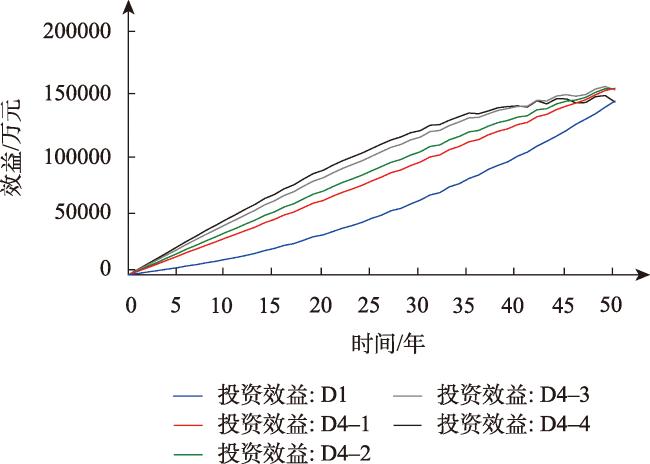
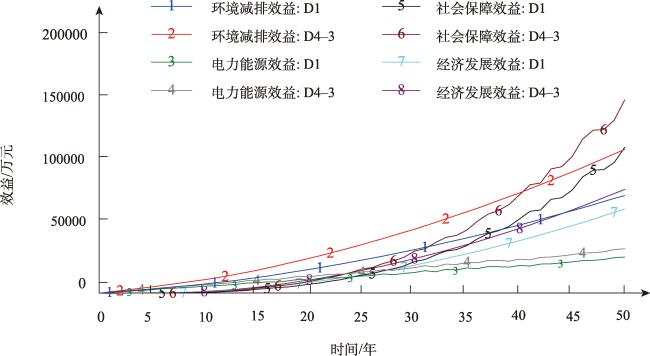
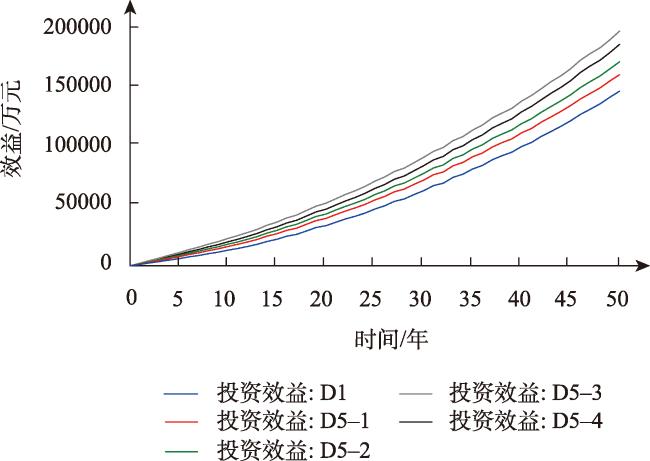
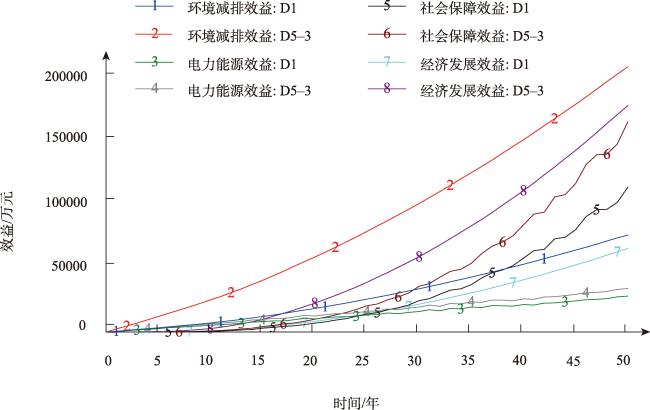
【目的】二氧化碳捕集、利用及封存(CCUS)技术是燃煤电厂减排降碳的核心工具,被视为实现碳中和目标的关键。然而,中国在CCUS方面的投资经济回报低、综合效益不确定且难以衡量,CCUS仍处于示范阶段,精准预测CCUS投资效益,对明确技术路径、优化资源配置,并推动其商业化具有科学意义。【方法】本文以燃煤电厂为研究对象,运用系统动力学方法,从经济发展、电力能源、环境减排和社会保障4个维度,对中国燃煤电厂CCUS投资的综合效益进行预测。【结果】研究发现:①燃煤电厂加装CCUS技术后,CCUS投资综合效益经历了从低位徘徊、波动上升到快速增长的变化。②在技术进步与规模效应的推动下,CCUS投资效益显著提升。技术进步提高了捕集效率并降低成本;而规模效应则通过装机容量增加与碳减排效率的提升,增强了经济、环境与社会效益,整体投资回报大幅改善。③政府补贴、碳税和碳交易价格均显著提升CCUS投资效益。其中,碳交易价格对经济效益和环境减排的推动作用最为显著;而碳税则通过提高发电成本,不仅间接促使企业进行CCUS技术改造,还进一步提升了整体投资效益。相比之下,政府补贴在初期对社会保障效益的促进作用尤为突出。【结论】在CCUS商业化部署和综合效益提升的过程中,CCUS自身迭代和规模化带来的成本降低起到核心作用,碳市场交易机制相对于补贴等政策扶持措施对CCUS发展的激励作用更大。基于此,中国应加强CCUS技术研究、推动CCUS项目尽快纳入碳交易机制、制定适度CCUS补贴激励政策,以增加CCUS投资效益,助力实现碳中和目标。
周小琳 , 刘亚雯 , 韩洁平 , 朴哲勇 , 孟涛 . 中国燃煤电厂碳捕集、利用与封存投资综合效益预测[J]. 资源科学, 2024 , 46(8) : 1604 -1619 . DOI: 10.18402/resci.2024.08.11
[Objective] Carbon capture, utilization, and storage (CCUS) technology is a core tool for reducing emissions and carbon output in coal-fired power plants and is considered key to achieving the carbon neutrality goals. However, in China, the economic returns on investment in CCUS are low, the overall benefits are uncertain and difficult to measure, and CCUS is still in the demonstration phase. Accurately forecasting the benefits of CCUS investment is of critical scientific significance for clarifying technological pathways, optimizing resource allocation, and promoting its commercialization. [Methods] This study took coal-fired power plants as the research subject and employed the system dynamics method to predict the comprehensive benefits of CCUS investment in Chinese coal-fired power plants from four dimensions: economic development, electric energy, environmental emission reduction, and social security. [Results] (1) The study found that after coal-fired power plants were equipped with CCUS technology, the comprehensive benefits of CCUS investment experienced a change from low-level stagnation to fluctuating increases, and then rapid growth. (2) Driven by technological progress and economies of scale, the benefits of CCUS investment have significantly increased. Technological progress has improved capture efficiency and reduced costs, while economies of scale have enhanced economic, environmental, and social benefits through increased installed capacity and improved carbon reduction efficiency, greatly improving overall investment returns.(3) Government subsidies, carbon taxes, and carbon trading prices all significantly enhance the benefits of CCUS investment. Among them, the carbon trading mechanism has the most notable impact on economic benefits and environmental reduction, while the carbon taxes,by increasing power generation costs, not only indirectly motivates enterprises to implement CCUS technology upgrades but also further improves overall investment efficiency. [Conclusion] In the process of commercial deployment and comprehensive benefit improvement of CCUS, the cost reduction brought by the iteration and scale of CCUS itself plays a core role. Compared with policy support measures such as subsidies, the carbon market trading mechanism plays a greater incentive role in the development of CCUS. Based on this, China should strengthen CCUS technology research, promote the inclusion of CCUS projects in the carbon trading mechanism as soon as possible, and formulate a moderate subsidy incentive policy for CCUS to increase the benefits of CCUS investment and help achieve the carbon neutrality goals.
表1 燃煤电厂CCUS投资子系统及主要变量Table 1 Subsystems and key variables of carbon capture, utilization, and storage (CCUS) investment in coal-fired power plants |
| 子系统 | 主要变量 |
|---|---|
| 经济发展系统 | 碳市场收入、发电收入、原油收入、政府补贴、捕集成本、运输成本、存储成本、燃煤消耗成本、碳税税额 |
| 电力能源系统 | 火电发电装机容量、锅炉热损率、能源消费量、火电年均发电利用时间、能源消费折算系数 |
| 环境减排系统 | 理论碳排放量、碳捕集量、燃煤发电量、每单位发电的碳含量、火电标准煤耗、煤炭的碳含量、碳捕集能力、碳减排变化量、减排系数 |
| 社会保障系统 | 电价补贴、碳税税率、社会用电量、GDP增速 |
表2 燃煤电厂CCUS投资效益主要参数赋值表Table 2 Main parameter value assignment for carbon capture, utilization, and storage (CCUS) investment benefits in coal-fired power plants |
| 参数变量 | 赋值 | 数据来源 |
|---|---|---|
| 火电发电装机容量 | 600 MW | 《电力统计年鉴》 |
| 能源消费量 | 1.41×10⁷ t | 《电力统计年鉴》 |
| 火电年均发电利用时间 | 4466小时,介于[4185, 5991] | 《电力统计年鉴》 |
| 每单位发电的碳含量 | 0.8500 kg/kWh | 《中国电力行业年度发展报告2023》 |
| 火电标准煤耗 | RANDOM UNIFORM(270, 289.40, 0) | 北极星电力网 |
| 煤炭的碳含量 | 0.4972 | CHINACAJ官网 |
| 减排系数 | 0.4000 | IPCC报告 |
| 电价补贴 | 0.0300 元/kWh | PJX官网 |
| 碳税税率(a) | 152.9134 元/t | CDMFOUD报告 |
| GDP增速 | 0.0520 | 《社会统计年鉴》 |
| 技术进步 | 0.3300 | 《中国CCUS报告2023》 |
| 投资系数(b) | 0.0100 | 文献[14] |
| 投资回报率(c) | 0.5200 | 文献[16] |
| 原油价格(d) | 391.0919 元/t | EIA官网 |
| 碳价(e) | 246.6345 元/t | EPSDATA官网 |
注:(a)碳税税率根据2023年人民币平均汇率换算为人民币;(b)投资系数为CCUS投资效益与收益的比值;(c)投资回报率为年净收益总额与方案投资总额的比值;(d)原油价格根据2023年人民币平均汇率换算为人民币;(e)碳价根据2023年人民币平均汇率换算为人民币。 |
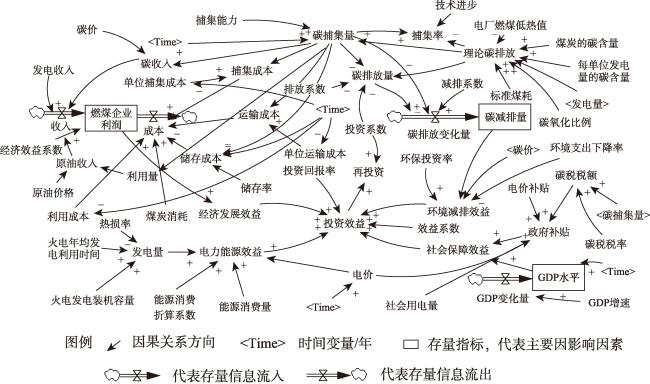
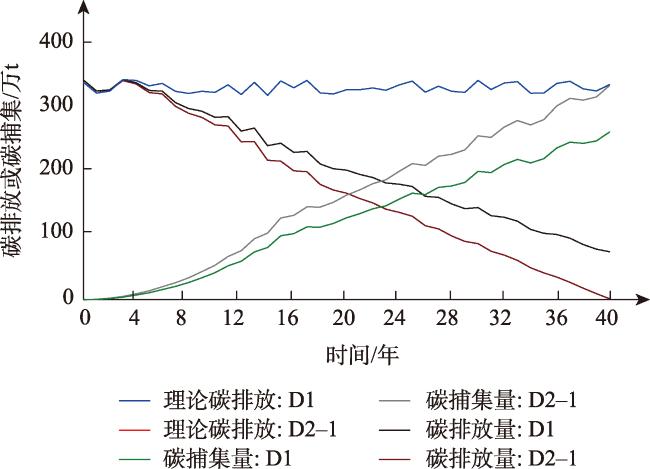
图4 燃煤电厂CCUS碳排放-捕集流图Figure 4 Carbon emission-capture flow diagram of carbon capture, utilization, and storage (CCUS) in coal-fired power plants |
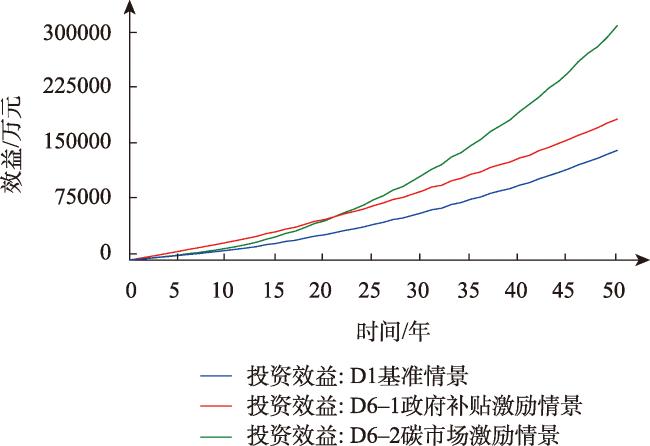
表3 政府补贴及碳市场激励情景Table 3 Scenarios of government subsidies and carbon market incentives |
| 激励政策 | 发电补贴 /(元/kWh) | GDP增速 /% | 碳税税率 /(元/t) | 碳价 /(元/t) | |
|---|---|---|---|---|---|
| 基准情景 | D1 | 0.0300 | 4.00 | 152.9134 | 246.6345 |
| 政府补贴 | D4-1 | 0.0450 | 5.00 | 152.9134 | 246.6345 |
| D4-2 | 0.0525 | 5.00 | 152.9134 | 246.6345 | |
| D4-3 | 0.0600 | 5.00 | 152.9134 | 246.6345 | |
| D4-4 | 0.0675 | 5.00 | 152.9134 | 246.6345 | |
| 碳市场交易 | D5-1 | 0.0300 | 4.00 | 191.1417 | 281.8680 |
| D5-2 | 0.0300 | 4.00 | 229.3701 | 317.1015 | |
| D5-3 | 0.0300 | 4.00 | 267.5984 | 352.3350 | |
| D5-4 | 0.0300 | 4.00 | 267.5984 | 317.1015 | |
| [1] |
张雅娟, 王铮, 李双成. 能源电力系统转型对中国环境影响评估[J]. 资源科学, 2023, 45(9): 1830-1843.
[
|
| [2] |
刘牧心, 梁希, 林千果. 碳中和背景下中国碳捕集、利用与封存项目经济效益和风险评估研究[J]. 热力发电, 2021, 50(9): 18-26.
[
|
| [3] |
韩洁平, 姜玉国, 戈泽琦. 不同火电厂CCUS项目商业模式经济效益研究: 兼析碳排放权交易价格预测[J]. 价格理论与实践, 2023, (5): 40-46, 208.
[
|
| [4] |
聂鹏飞, 高哲远, 王喜平. 不同商业模式下燃煤电厂CCUS投资决策研究[J]. 热力发电, 2023, 52(04):63-71.
[
|
| [5] |
张悦泽, 刘牧心, 黄菲菲, 等. 碳关税全球化背景下碳捕集利用与封存技术的价值评估与未来展望[J]. 洁净煤技术, 2023, (8): 1-13.
[
|
| [6] |
|
| [7] |
|
| [8] |
|
| [9] |
|
| [10] |
伊长生, 陆晓倩. 燃煤电厂CCS技术投资的政策不确定性影响及评价研究[J]. 中国煤炭, 2019, (45): 5-8.
[
|
| [11] |
谭新, 罗大清, 宋欣和. 考虑驱油与碳减排双重效益的CCUS-EOR经济性及发展模式分析与探讨[J]. 油气地质与采收率, 2024, 31(2): 70-78.
[
|
| [12] |
|
| [13] |
连旭, 裴童心, 汪文生, 等. 碳交易机制与技术应用对中国煤电行业碳减排的影响: 基于强化学习的多智能体仿真[J]. 资源科学, 2024, 46(6): 1186-1197.
[
|
| [14] |
|
| [15] |
|
| [16] |
|
| [17] |
|
| [18] |
王喜平, 唐荣. 燃煤电厂碳捕集、利用与封存商业模式与政策激励研究[J]. 热力发电, 2022, 51(8): 29-41.
[
|
/
| 〈 |
|
〉 |