大城市内部“生产-生活-生态空间”多尺度耦合协调度——以郑州市为例
|
赵宏波,男,河南长垣人,副教授,研究方向为经济地理与区域发展。E-mail: zhaohbhhwm@163.com |
收稿日期: 2020-05-20
要求修回日期: 2020-08-06
网络出版日期: 2021-07-25
基金资助
国家自然科学基金项目(41501128)
国家自然科学基金项目(41430637)
版权
Multi-scale analysis on the coupling coordination degree of production-living-ecological spaces in cities: A case study of Zhengzhou City
Received date: 2020-05-20
Request revised date: 2020-08-06
Online published: 2021-07-25
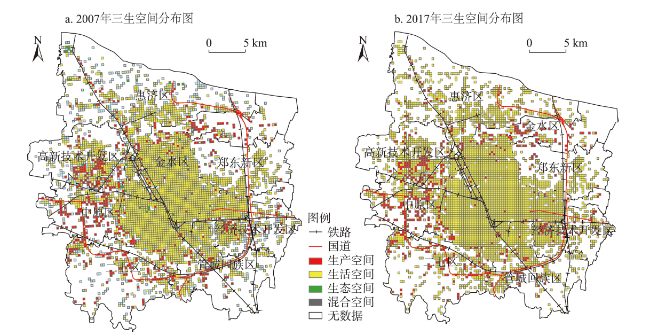
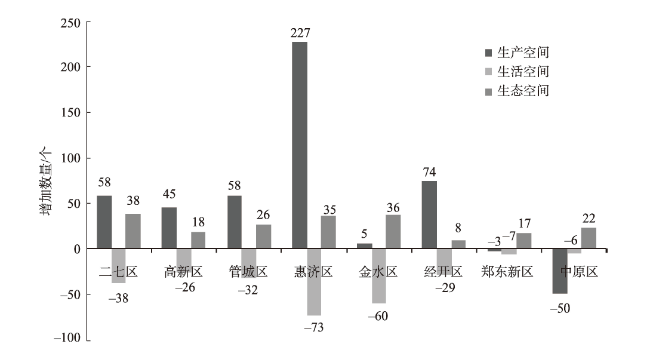
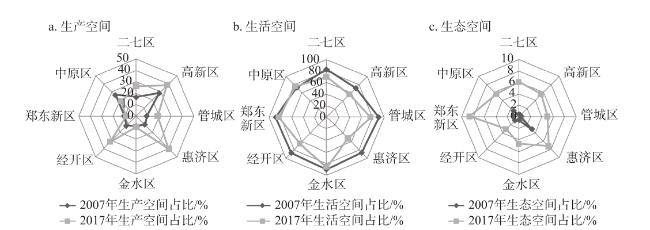
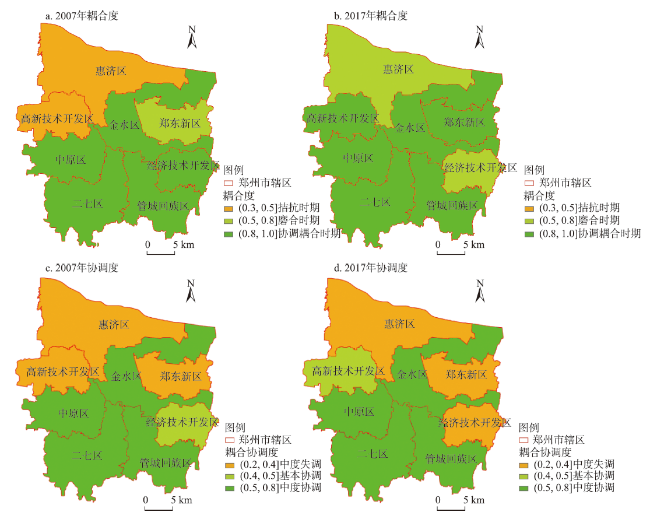
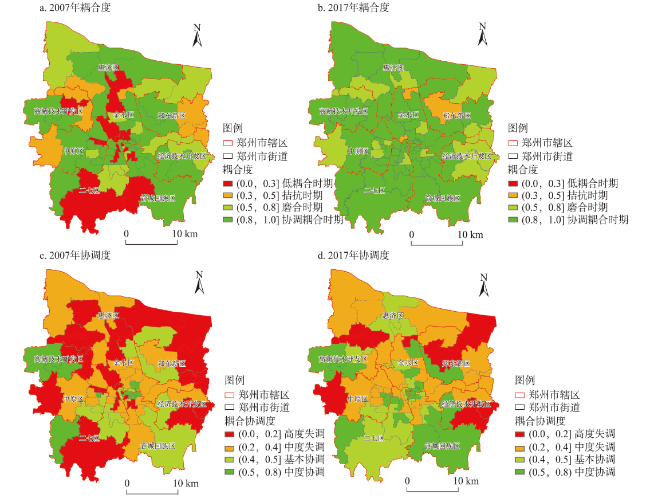
城市“生产-生活-生态空间”的耦合协调发展是国土空间格局优化的重要基础。本文以郑州市为例,利用POI数据与随机森林模型精准识别2007年和2017年城市内部“生产-生活-生态空间”的分布特征,并运用定量模型多尺度分析“生产-生活-生态空间”的耦合协调度。结果表明:①整体结构特征上,郑州城市内部生态空间数量和所占比例均明显增加,生活空间所占比例相对稳定,生产空间的数量与所占比例变化波动较大。②辖区尺度上,郑州市“生产-生活-生态空间”耦合度不断提高,部分区域呈现出由拮抗时期向协调耦合时期的转化,协调度与耦合度存在一定的空间一致性。③街道尺度上,郑州市“生产-生活-生态空间”耦合度平均水平从磨合时期转为协调耦合时期,其空间差异明显减小,“生产-生活-生态空间”的协调度平均水平由中度失调转为基本协调,协调度水平明显提升。本文通过对城市内部“生产-生活-生态空间”耦合协调度的多尺度分析,旨在为城市层面不同尺度的国土空间规划提供理论参考。
关键词: “生产-生活-生态空间”; 随机森林; 耦合协调; POI数据; 郑州市
赵宏波 , 魏甲晨 , 孙东琪 , 王爽 , 刘雅馨 , 谭俊涛 . 大城市内部“生产-生活-生态空间”多尺度耦合协调度——以郑州市为例[J]. 资源科学, 2021 , 43(5) : 944 -953 . DOI: 10.18402/resci.2021.05.08
The coupling coordinated development of urban production-living-ecological spaces is an important basis for the optimization of territorial spatial pattern. Taking Zhengzhou City as an example, the point of interest (POI) data and random forest model were used to accurately identify the distribution characteristics of production-living-ecological spaces within the city between 2007 and 2017, and quantitative models were applied to analyze the coupling coordination degree of production-living-ecological spaces at multiple scales. The results show that: (1) With regard to the overall structural characteristics, the number and proportion of ecological spaces in Zhengzhou City increased significantly, the proportion of living spaces was relatively stable, and the number and proportion of production spaces fluctuated greatly. (2) At the scale of municipal districts, the coupling degree of production-living-ecological spaces had been continuously improved, and some regions showed the transformation from moderate level coupling to coordinated coupling. There is a certain spatial consistency between the coordination degree and the coupling degree. (3) At the scale of residential community, the average coupling degree of production-living-ecological spaces in Zhengzhou City changed from preliminary coupling to coordinated coupling type, and the spatial difference decreased significantly. The average coordination degree of production-living-ecological spaces changed from moderate incongruous to elementary coordination type, and the coordination degree improved significantly. Through the multi-scale analysis of the coupling coordination degree of production-living-ecological spaces within the city, this study provides a theoretical reference for territorial spatial planning on different scales at the city level.
表1 基于“生产-生活-生态空间”的POI分类表Table 1 Point of interest (POI) classification based on production-living-ecological spaces |
| 三生空间 | 大类 | 种类 | 权重 |
|---|---|---|---|
| 生产 | 生产性服 | 公司企业 | 0.4695 |
| 务业空间 | 金融保险 | 0.0967 | |
| 工业空间 | 工厂及产业园 | 0.1238 | |
| 仓储物流 | 0.0152 | ||
| 管理空间 | 政府机构 | 0.0861 | |
| 交通空间 | 交通设施 | 0.2087 | |
| 生活 | 生活性服 务业空间 | 餐饮服务 | 0.0945 |
| 购物服务 | 0.1311 | ||
| 生活服务 | 0.1885 | ||
| 医疗保健 | 0.1638 | ||
| 科教文化 | 0.1029 | ||
| 体育休闲 | 0.0488 | ||
| 住宿服务 | 0.0792 | ||
| 居住空间 | 居住区 | 0.1912 | |
| 生态 | 绿地空间 | 公园绿地 | 0.7414 |
| 风景名胜 | 0.2586 |
资料来源:用地类型参照GB50137-2011《城市用地分类与规划建设用地标准》。 |
表2 影响因子权重表Table 2 Weights of the influencing factors |
| 生产空间 | 生活空间 | 生态空间 | ||||||
|---|---|---|---|---|---|---|---|---|
| 公司企业 | 工厂及产业园 | 生活服务 | 居住区 | 公园绿地 | 风景名胜 | |||
| MDA | 30.12 | 19.63 | 23.12 | 42.80 | 121.04 | 48.98 | ||
| MDA标准化值 | 10.54 | 6.87 | 8.09 | 14.98 | 42.37 | 17.14 | ||
| [1] |
傅伯杰, 张立伟. 土地利用变化与生态系统服务: 概念、方法与进展[J]. 地理科学进展, 2014, 33(4): 441-446.
[
|
| [2] |
周亮, 车磊, 周成虎. 中国城市绿色发展效率时空演变特征及影响因素[J]. 地理学报, 2019, 74(10): 2027-2044.
[
|
| [3] |
金贵, 邓祥征, 赵晓东, 等. 2005-2014年长江经济带城市土地利用效率时空格局特征[J]. 地理学报, 2018, 73(7): 1242-1252.
[
|
| [4] |
刘继来, 刘彦随, 李裕瑞. 中国“三生空间”分类评价与时空格局分析[J]. 地理学报, 2017, 72(7): 1290-1304.
[
|
| [5] |
李欣, 殷如梦, 方斌, 等. 基于“三生”功能的江苏省国土空间特征及分区调控[J]. 长江流域资源与境, 2019, 28(8): 1833-1846.
[
|
| [6] |
李江苏, 孙威, 余建辉. 黄河流域三生空间的演变与区域差异: 基于资源型与非资源型城市的对比[J]. 资源科学, 2020, 42(12): 2285-2299.
[
|
| [7] |
马晓冬, 李鑫, 胡睿, 等. 基于乡村多功能评价的城市边缘区“三生”空间划分研究[J]. 地理科学进展, 2019, 38(9): 1382-1392.
[
|
| [8] |
李欣, 方斌, 殷如梦, 等. 江苏省县域“三生”功能时空变化及协同/权衡关系[J]. 自然资源学报, 2019, 34(11): 2363-2377.
[
|
| [9] |
李广东, 方创琳. 城市生态-生产-生活空间功能定量识别与分析[J]. 地理学报, 2016, 71(1): 49-65.
[
|
| [10] |
李晓青, 刘旺彤, 谢亚文, 等. 多规合一背景下村域“三生空间”划定与实证研究[J]. 经济地理, 2019, 39(10): 146-152.
[
|
| [11] |
李科, 毛德华, 李健, 等. 湘江流域三生空间时空演变及格局分析[J]. 湖南师范大学自然科学学报, 2020, (2): 9-19.
[
|
| [12] |
廖李红, 戴文远, 陈娟, 等. 平潭岛快速城市化进程中三生空间冲突分析[J]. 资源科学, 2017, 39(10): 1823-1833.
[
|
| [13] |
吴艳娟, 杨艳昭, 杨玲, 等. 基于“三生空间”的城市国土空间开发建设适宜性评价: 以宁波市为例[J]. 资源科学, 2016, 38(11): 2072-2081.
[
|
| [14] |
龚亚男, 韩书成, 时晓标, 等. 广东省“三生空间”用地转型的时空演变及其生态环境效应[J]. 水土保持研究, 2020, 27(3): 203-209.
[
|
| [15] |
张军涛, 翟婧彤. 中国“三生空间”耦合协调度测度[J]. 城市问题, 2019, (11): 38-44.
[
|
| [16] |
池娇, 焦利民, 董婷, 等. 基于POI数据的城市功能区定量识别及其可视化[J]. 测绘地理信息, 2016, 41(2): 68-73.
[
|
| [17] |
许泽宁, 高晓路. 基于电子地图兴趣点的城市建成区边界识别方法[J]. 地理学报, 2016, 71(6): 928-939.
[
|
| [18] |
曹根榕, 顾朝林, 张乔扬. 基于POI数据的中心城区三生空间识别及格局分析: 以上海市中心城区为例[J]. 城市规划学刊, 2019, (2): 44-53.
[
|
| [19] |
张雷, 王琳琳, 张旭东, 等. 随机森林算法基本思想及其在生态学中的应用-以云南松分布模拟为例[J]. 生态学报, 2014, 34(3): 650-659.
[
|
| [20] |
项涛, 董响红, 郭超, 等. 基于随机森林模型预测气候变化对黄颡鱼适生区的影响[J]. 水生生物学报, 2019, 43(6): 1262-1270.
[
|
| [21] |
赵彦锋, 程道全, 巫振富, 等. 基于空间分析的河南省小麦施肥问题诊断与地理优化[J]. 土壤学报, 2020, 57(5): 1206-1218.
[
|
| [22] |
王超, 阚瑷珂, 曾业隆, 等. 基于随机森林模型的西藏人口分布格局及影响因素[J]. 地理学报, 2019, 74(4): 664-680.
[
|
| [23] |
|
| [24] |
|
| [25] |
赵宏波, 余涤非, 苗长虹, 等. 基于POI数据的郑州市文化设施的区位布局特征与影响因素研究[J]. 地理科学, 2018, 38(9): 1525-1534.
[
|
| [26] |
|
| [27] |
金宇, 周可新, 高吉喜, 等. 基于随机森林模型的国家重点保护陆生脊椎动物物种优先保护区的识别[J]. 生态学报, 2016, 36(23): 7702-7712.
[
|
| [28] |
方匡南, 吴见彬, 朱建平, 等. 随机森林方法研究综述[J]. 统计与信息论坛, 2011, 26(3): 32-38.
[
|
| [29] |
王成, 唐宁. 重庆市乡村三生空间功能耦合协调的时空特征与格局演化[J]. 地理研究, 2018, 37(6): 1100-1114.
[
|
| [30] |
张旺, 周跃云, 胡光伟. 超大城市“新三化”的时空耦合协调性分析: 以中国十大城市为例[J]. 地理科学, 2013, 33(5): 562-569.
[
|
| [31] |
张玉萍, 瓦哈甫·哈力克, 党建华, 等. 吐鲁番旅游-经济-生态环境耦合协调发展分析[J]. 人文地理, 2014, 29(4): 140-145.
[
|
| [32] |
康雨豪, 王玥瑶, 夏竹君, 等. 利用POI数据的武汉城市功能区划分与识别[J]. 测绘地理信息, 2018, 43(1): 81-85.
[
|
/
| 〈 |
|
〉 |