国家文化公园物质文化资源价值评估与建设路径研究——以东昆仑山文化公园为例
|
杜雨,女,安徽宿州人,博士研究生,研究方向为全球变化与人类活动。E-mail: 2239819982@qq.com |
收稿日期: 2025-06-19
修回日期: 2025-10-25
网络出版日期: 2026-03-11
基金资助
教育部哲学社会科学研究重大项目子课题(2024JZDZ068)
Research on value evaluation of material cultural resources and construction paths of national cultural parks: A case study of East Kunlun Mountain Cultural Park
Received date: 2025-06-19
Revised date: 2025-10-25
Online published: 2026-03-11
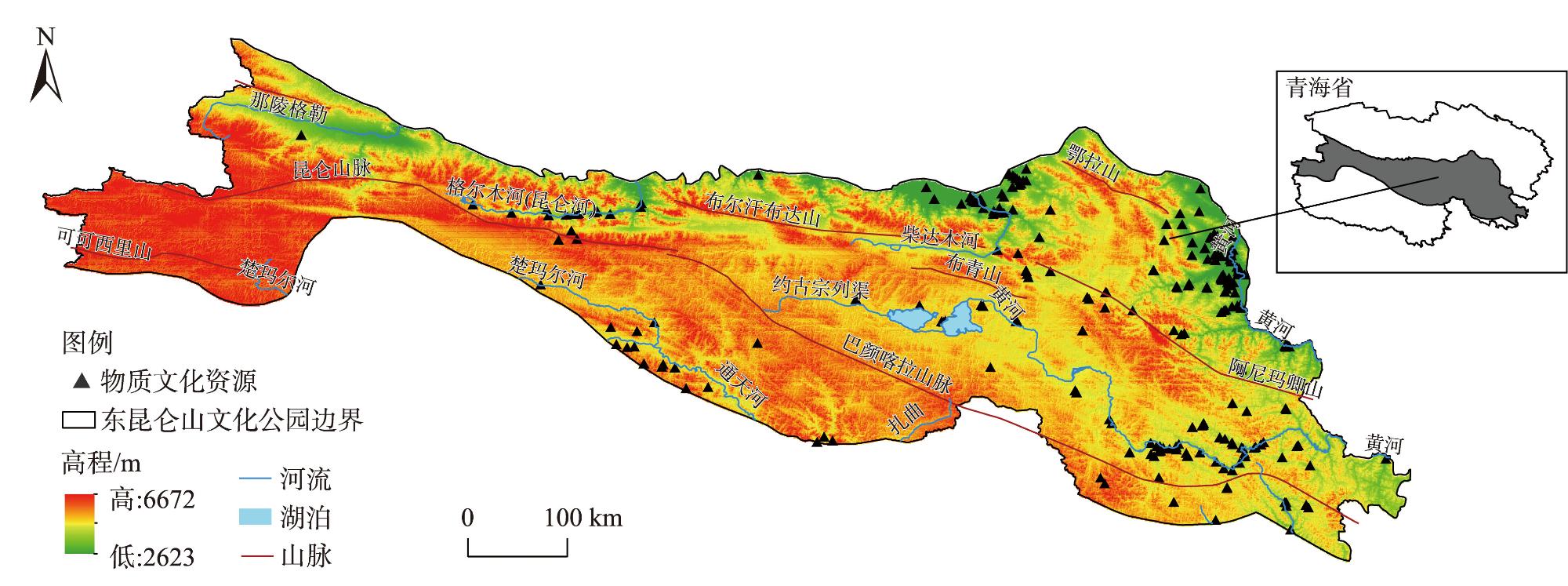
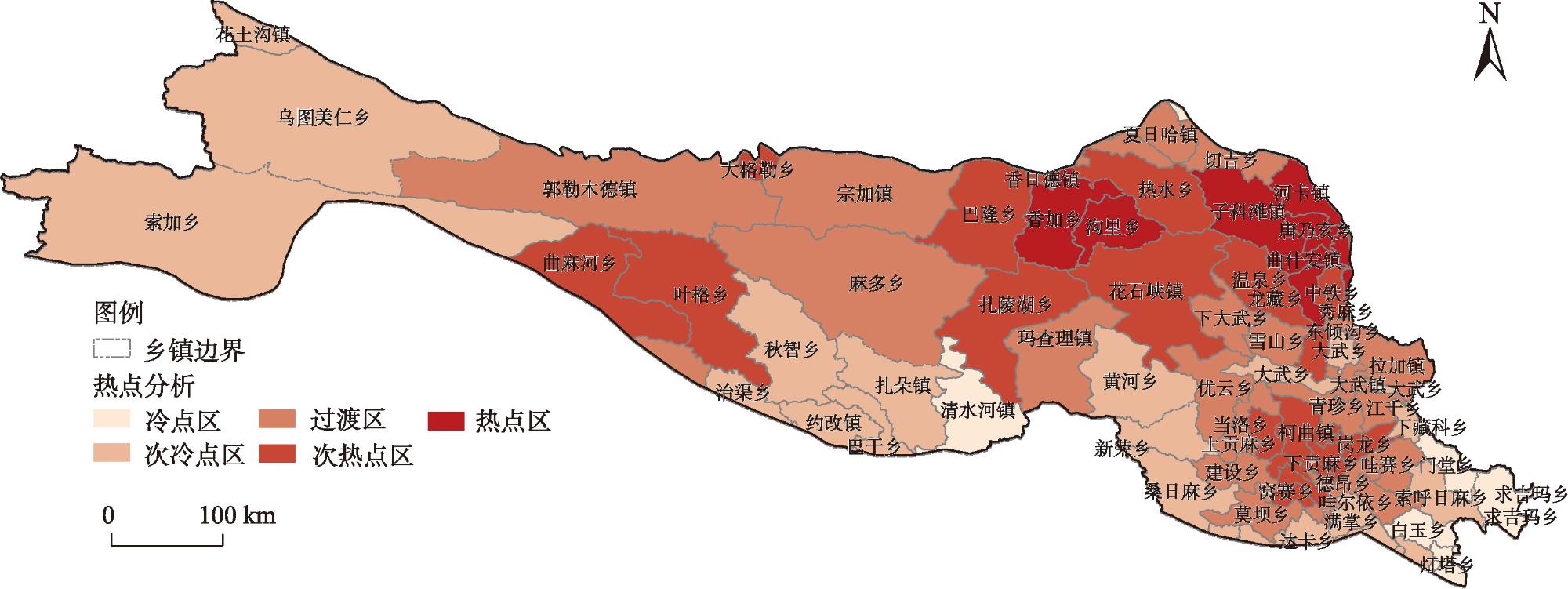
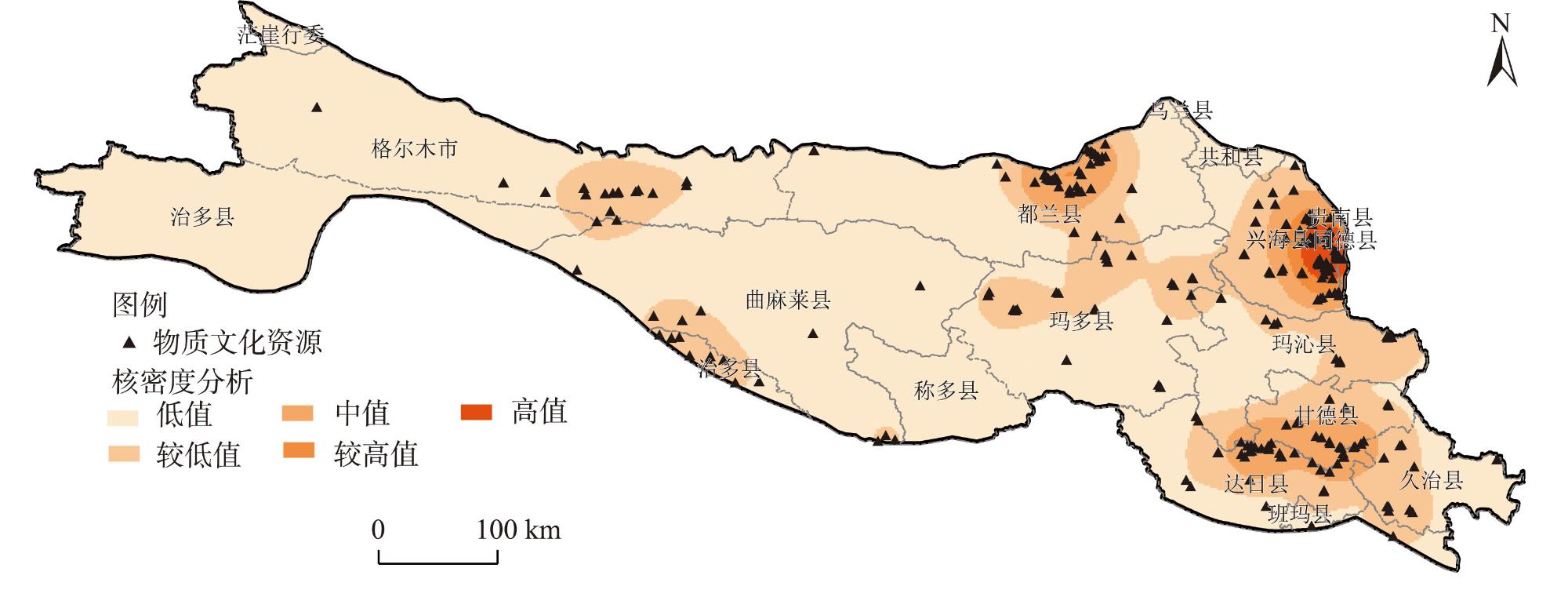
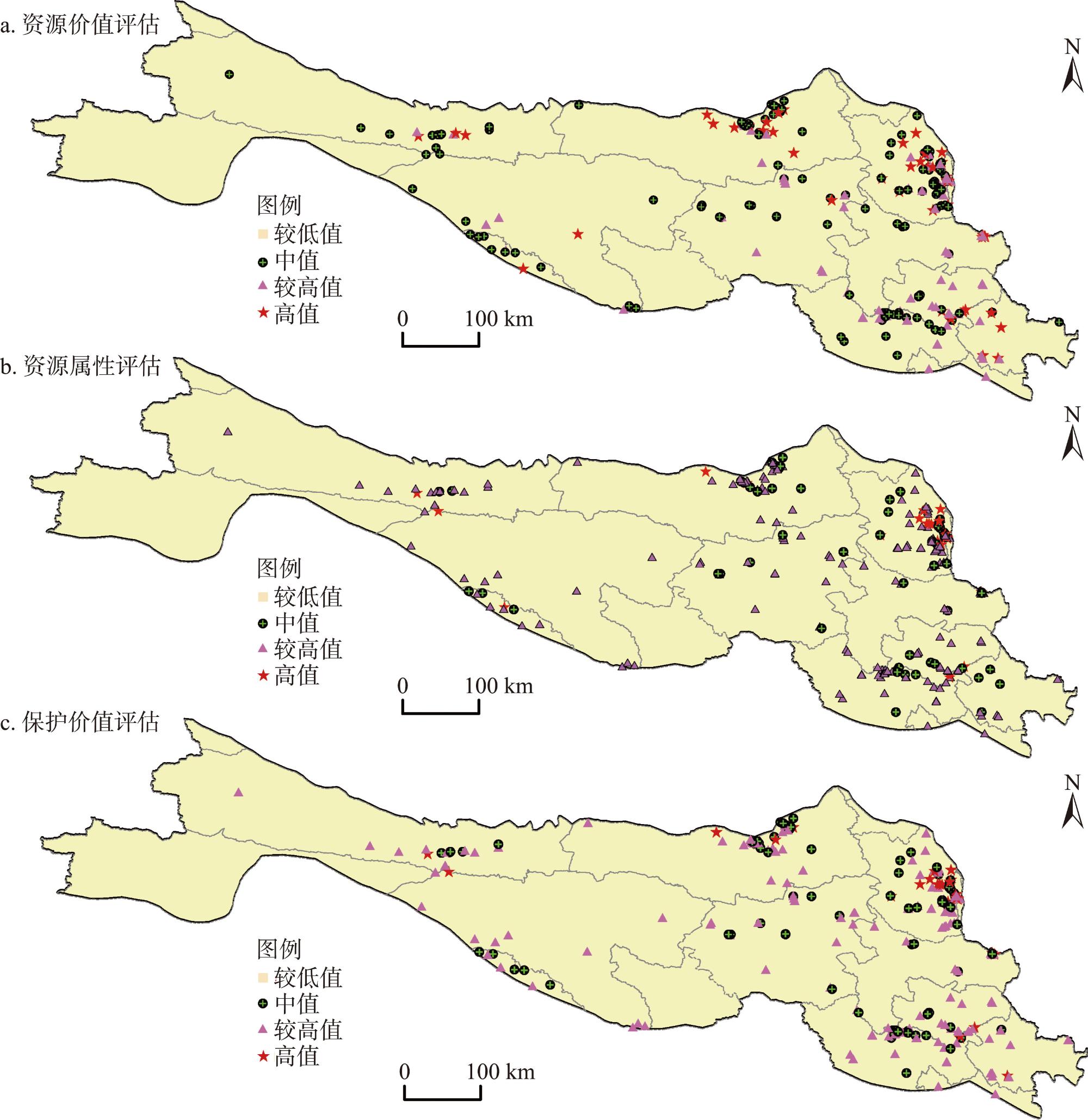
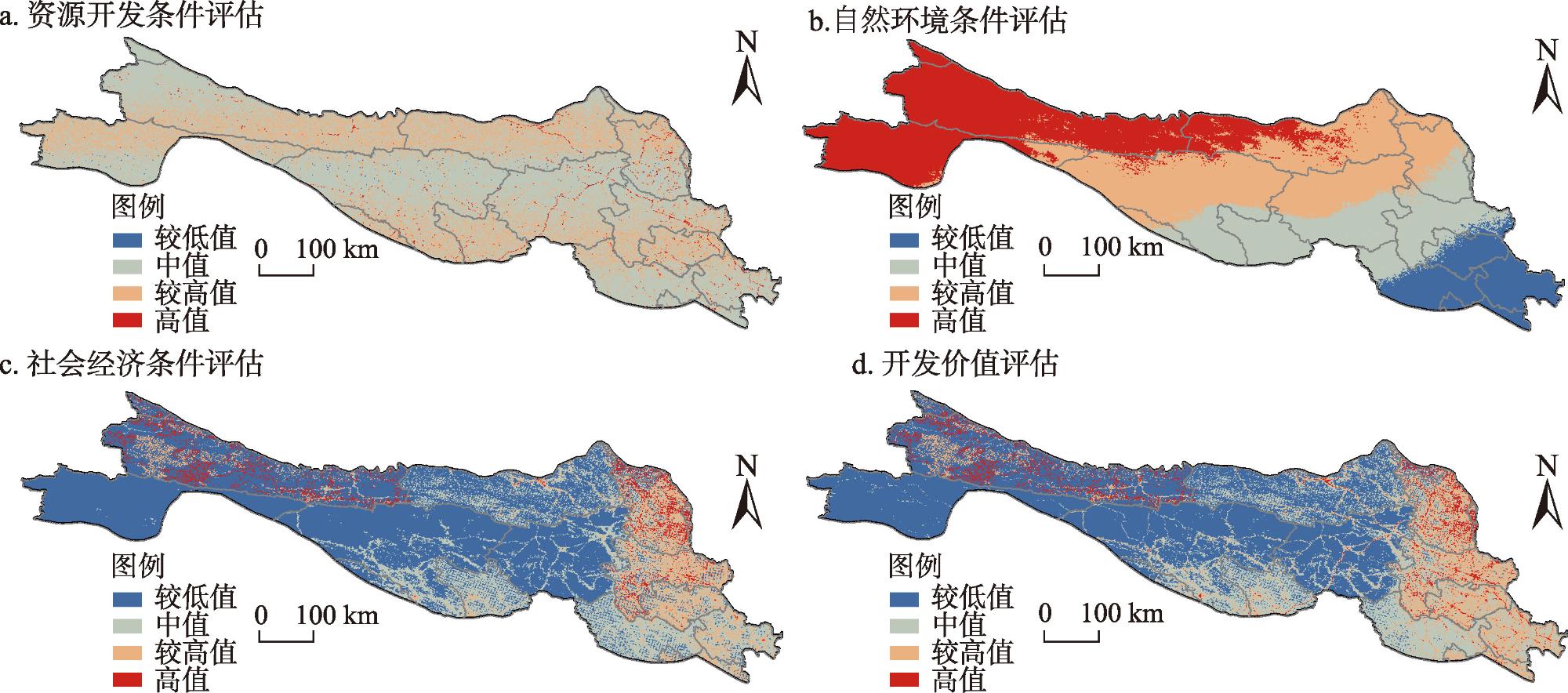
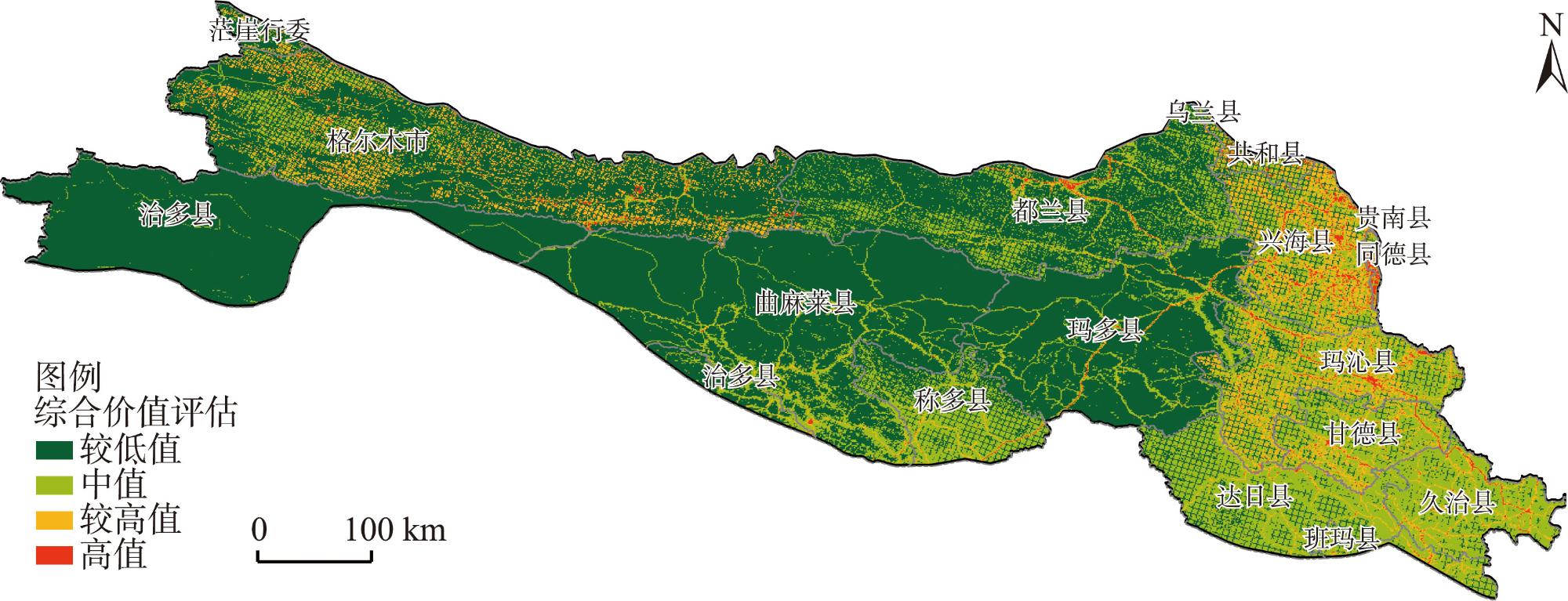
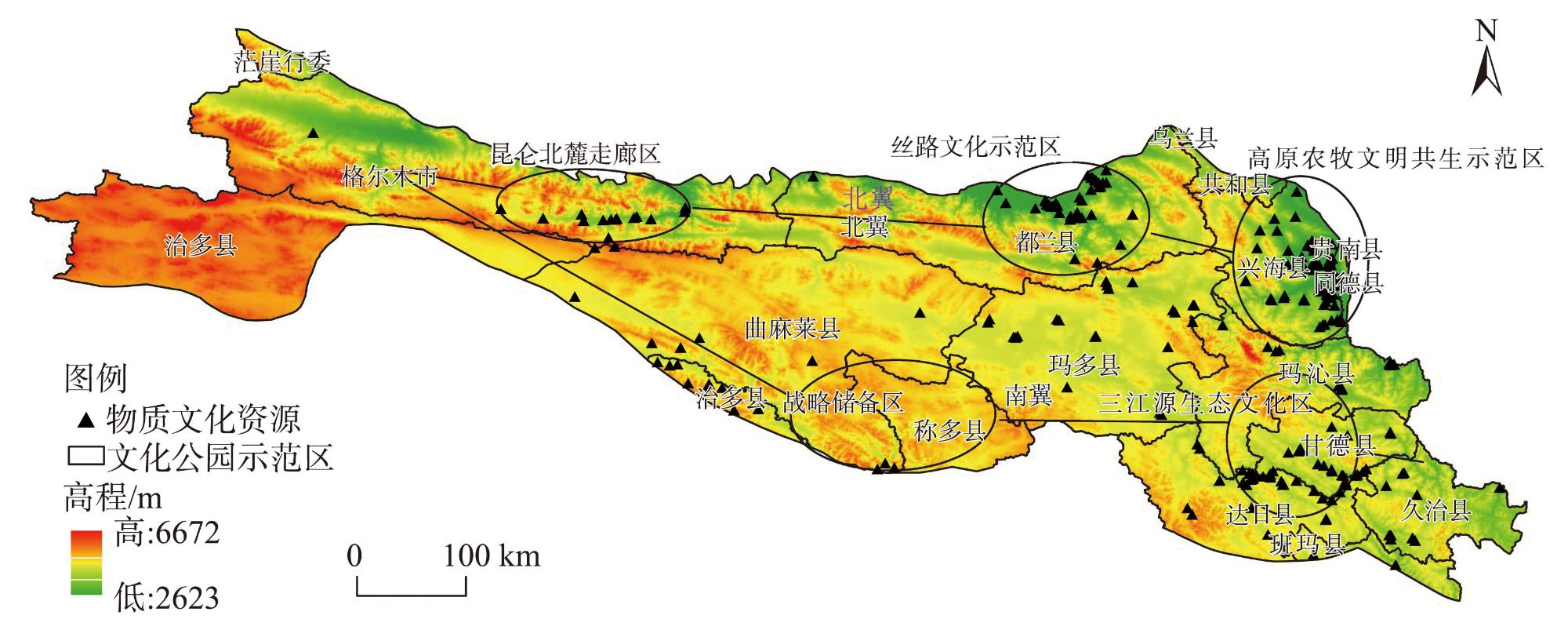
【目的】开展国家文化公园物质文化资源的精细化研究,可为公园规范化建设与资源保护开发提供有力支撑,同时为同类公园物质文化资源价值评估提供新的范例。【方法】以东昆仑山文化公园302处物质文化资源为研究对象,以1 km格网为研究单元,运用空间分析和价值评价方法,探究其空间分异格局,综合评估此区域的物质文化资源价值,并为东昆仑山文化公园的建设提供实践路径。【结果】①东昆仑山文化公园的物质文化资源整体呈“单核凝聚—外围离散”的层级化格局,热点区均集中于北麓的都兰县和兴海县等低海拔区域,次热点区构成“辐射依附”与“内生驱动”的双重特征;物质文化资源的集聚性突出,可概括为“一核多带”模式,分别在“兴海县—同德县”形成1个高密度核心区,在都兰县北部构成1个小型次核心。②研究区的资源开发条件均值为8.29×10⁻⁴,总体水平处于较高值区;但资源价值(均值为0.31×10⁻⁴)、资源属性(均值为0.67×10⁻⁴)、自然环境条件(均值为12.47×10⁻⁴)、社会经济条件(均值为20.43×10⁻⁴)指标的总体水平均位于中值区。③研究区南北两麓的物质文化资源综合价值差异显著,呈现北麓相对高于南麓高寒区的空间分异格局,总体价值处于中值区水平。【结论】研究区外在的资源开发条件整体较好,但物质文化资源本体的内在价值(资源价值、资源属性)与外在支撑条件(自然环境条件、社会经济条件)均处于中等水平,且空间分异显著。依托此结果,建议构建“一核两翼五节点”遗产廊道体系,设立多元功能文化区,实施多元组合开发策略,并采取多维度措施推进物质文化资源保护与文化公园建设。
杜雨 , 侯光良 , 林鑫 . 国家文化公园物质文化资源价值评估与建设路径研究——以东昆仑山文化公园为例[J]. 资源科学, 2026 , 48(2) : 424 -438 . DOI: 10.18402/resci.2026.02.10
[Objective] Carrying out detailed research on the material cultural resources of national cultural parks can provide strong support for standardized park construction and resource protection and development, while also offering a new model for the value assessment of material cultural resources in similar parks. [Methods] Taking 302 material cultural resources in the East Kunlun Mountains area as the research objects and 1 km grid as the research unit, spatial analysis and value evaluation methods were adopted to explore their spatial differentiation pattern, comprehensively assess the value of material cultural resources in this region, and provide a practical path for the construction of the East Kunlun Mountain Cultural Park. [Results] (1) The material cultural resources in the East Kunlun Mountain Cultural Park generally present a hierarchical pattern of “single-core agglomeration-peripheral dispersion”. The hotspots are concentrated in low-altitude areas such as Dulan County and Xinghai County in the northern foot, and the sub-hotspots form dual characteristics of “radiation dependence” and “endogenous drive”; the agglomeration of resources is prominent, which can be summarized as a “one-core and multi-belt” model, forming one high-density core area in “Xinghai County-Tongde County” and one small sub-core in northern Dulan County. (2) The average value of resource development conditions in the study area is 8.29×10⁻⁴, which is at a relatively high level overall; however, the overall levels of indicators such as resource value (average value 0.31×10⁻⁴), resource attributes (average value 0.67×10⁻⁴), natural environment conditions (average value 12.47×10⁻⁴), and social and economic conditions (average value 20.43×10⁻⁴) are all in the median area. (3) There are significant differences in the comprehensive value of material cultural resources between the northern and southern foots of the study area, showing a spatial differentiation pattern where the northern foot is relatively higher than the alpine area in the southern foot, and the overall value is at the median level. [Conclusion] The overall resource development conditions in the study area are good, but the intrinsic value of the resource itself (resource value, resource attributes) and the external supporting conditions (natural environment conditions, social and economic conditions) are both at a medium level, with significant spatial differentiation. Based on this result, it is suggested to construct a heritage corridor system of “one core, two wings and five nodes”, establish multi-functional cultural areas, implement a multi-element combined development strategy, and take multi-dimensional measures to promote the protection of material cultural resources and the construction of cultural parks.
表1 数据来源Table 1 Data sources |
| 数据名称 | 数据来源 |
|---|---|
| 物质文化资源名录 | 青海省第三次全国文物普查、青海省社会科学院、本研究团队野外考察 |
| 青海历史、文化史志 | 青海省志、地方县志汇编 |
| 物质文化资源等级和A级旅游景区 | 青海省文化和旅游厅(https://whlyt.qinghai.gov.cn) |
| 交通、城市POI数据 | OpenStreetMap(https://www.openstreetmap.org) |
| 东昆仑山行政边界、山脉、河流、湖泊水系 | 地理空间数据云(https://www.gscloud.cn) |
| 物质文化资源坐标 | Google Earth、百度地图 |
| 自然环境数据 | 国家青藏高原科学数据中心(https://data.tpdc.ac.cn) |
| GDP、人口数据 | 资源环境科学与数据平台(https://www.resdc.cn) |
| 人类足迹指数 | UEMM团队(https://www.x-mol.com/groups/li_xuecao) |
表2 东昆仑山文化资源评估指标体系Table 2 Evaluation indicator system for cultural resources in East Kunlun Mountain |
| 目标层 | 综合层 | 项目层 | 因子层 | 释义 |
|---|---|---|---|---|
| 综合价值评估 | 保护价值 | 资源价值 | 历史价值 | 国家级=5分,省级=3分,市县级=2分,其他=1分(调整个别重要物质文化资源的分值) |
| 艺术价值 | 同上 | |||
| 科学价值 | 同上 | |||
| 资源属性 | 规模性 | 物质文化资源的占地面积大小/m² | ||
| 完整度 | 好=5分,较好=4分,一般=3分,较差=2分,差=1分 | |||
| 文化关联度 | 物质文化资源与昆仑文化、丝绸之路的文化关联程度(强=5分,较强=4分,一般=3分,较弱=2分,弱=1分) | |||
| 开发价值 | 资源开发条件 | 路网密度 | 道路长度与栅格面积的比值/(km/km²) | |
| 县(区)中心 | 各栅格离最近县政府的距离/km | |||
| 周边景区 | 周边3×3个栅格数量内的A级旅游景区数/个 | |||
| 公共设施 | 各栅格内所能提供的公共设施数/个 | |||
| 自然环境条件 | 平均温度 | 1991—2020年平均气温/℃ | ||
| 平均降水 | 1991—2020年平均降水量/mm | |||
| 海拔 | 2020年海拔栅格数据/m | |||
| 坡度 | 基于海拔栅格数据,运用Arc GIS中的“坡度”工具提取 | |||
| 社会经济条件 | 人口密度 | 2019年人口数量与栅格面积的比值/(人/km²) | ||
| 人均GDP | 2019年GDP与2019年人口数量的比值/(元/人) | |||
| 人类足迹指数 | 基于2019年人类足迹指数栅格数据,运用Arc GIS中的“值提取至点”工具提取 |
| [1] |
李荣炜, 魏泽辰, 刘骋. “文化遗产与社会发展论坛”综述[J]. 浙江大学学报(人文社会科学版), 2024, 54(12): 16.
[
|
| [2] |
|
| [3] |
|
| [4] |
|
| [5] |
|
| [6] |
|
| [7] |
|
| [8] |
|
| [9] |
|
| [10] |
|
| [11] |
|
| [12] |
刘茜昀, 史达, 张琳. 历史文化遗产保护传承与乡村振兴协同发展: 以可持续发展为视角[J]. 社会科学家, 2024, (2): 140-146.
[
|
| [13] |
|
| [14] |
王灵恩, 李珂, 崔家胜, 等. 气候变化对文化遗产的影响: 机理、态势与应对[J]. 自然资源学报, 2023, 38(9): 2263-2282.
[
|
| [15] |
吴佳倚, 陈亚颦, 焦敏, 等. 云南省物质文化遗产的时空分布特征及其影响因素: 以重点文物保护单位为例[J]. 湖南师范大学自然科学学报, 2023, 46(5): 52-62.
[
|
| [16] |
胡娟, 朱琳, 唐昭沛, 等. 武汉市文化遗产的社会记忆演化特征: 以文物保护单位为例[J]. 经济地理, 2019, 39(7): 225-232.
[
|
| [17] |
岳菊, 戴湘毅. 京津冀文化遗产时空格局及其影响因素: 以文物保护单位为例[J]. 经济地理, 2020, 40(12): 221-230.
[
|
| [18] |
卢佳辰, 刘爱利. 传统村落非物质文化遗产发展的共生模式研究: 以江西省寒信村为例[J]. 资源科学, 2023, 45(7): 1396-1409.
[
|
| [19] |
周然, 游诗雪, 黄璐, 等. 全球重要农业文化遗产桑基鱼塘时空格局演变和驱动因素[J]. 浙江大学学报(农业与生命科学版), 2024, 50(2): 200-208.
[
|
| [20] |
崔峰, 王哲政. 农业文化遗产保护预警评价体系构建与方法研究[J]. 自然资源学报, 2023, 38(5): 1119-1134.
[
|
| [21] |
张新红, 杨玉欢, 刘奔腾. 中国工业遗产的时空分布特征与空间整合保护[J]. 经济地理, 2023, 43(2): 103-114.
[
|
| [22] |
赵宗福. 大文化视野中的昆仑文化研究与文化建设[J]. 青海社会科学, 2014, (6): 1-14.
[
|
| [23] |
李生梅, 侯光良, 金孙梅. 拉萨市农村路网通达性评价与分区优化研究[J]. 长江流域资源与环境, 2023, 32(8): 1608-1619.
[
|
| [24] |
马斌斌, 陈兴鹏, 陈芳婷, 等. 中华老字号企业空间分异及影响因素研究[J]. 地理研究, 2020, 39(10): 2313-2329.
[
|
| [25] |
|
| [26] |
黄榕. 长沙市域乡村文化遗产价值评估及保护格局构建研究[D]. 长沙: 湖南大学, 2021.
[
|
| [27] |
王可可. 澜湄流域云南段文化遗产价值评价与开发研究[D]. 昆明: 云南财经大学, 2020.
[
|
| [28] |
吕晗雪. 吉林省工业文化遗产资源价值评价与旅游开发策略研究[D]. 长春: 东北师范大学, 2022.
[
|
| [29] |
刘洪彬, 张贺宾, 吴岩. 耕地质量评价的内涵、理论与体系重构[J]. 资源科学, 2025, 47(12): 2767-2780.
[
|
| [30] |
刘海猛, 卢佳祎, 王成新, 等. 基于栅格尺度的黄河流域人地关系时空耦合分析[J]. 生态学报, 2024, 44(15): 6499-6512.
[
|
| [31] |
王园园. 区域分解与网格融合在物质文化遗产保护中的应用研究[D]. 西安: 西北大学, 2022.
[
|
| [32] |
|
| [33] |
王玏, 宋希法, 刘思雨, 等. 生物文化多样性视角下的农业文化遗产保护区划方法研究: 以湖北恩施玉露茶文化系统为例[J]. 自然资源学报, 2025, 40(5): 1412-1428.
[
|
| [34] |
沈路, 钞小静. 人工智能技术对黄河流域城市碳全要素生产率的影响[J]. 资源科学, 2025, 47(12): 2695-2706.
[
|
| [35] |
周玉玺, 高瑞敏. 黄河流域乡村数字经济与生态韧性的协同演化及驱动因素[J]. 资源科学, 2025, 47(10): 2145-2160.
[
|
| [36] |
龙翔宇, 李伯华, 杨馥端, 等. 传统村落新内生发展的理论认知与演进路径[J]. 资源科学, 2025, 47(9): 1992-2004.
[
|
| [37] |
徐琳琳, 虞虎. 国外国家公园景观评价与保护利用研究进展及对中国的启示[J]. 资源科学, 2022, 44(7): 1520-1532.
[
|
| [38] |
李修远, 郭舒. 文化和旅游融合视域下东北地区工业遗产空间分布格局及旅游利用[J]. 地理科学, 2025, 45(4): 1-12.
[
|
/
| 〈 |
|
〉 |