基于多目标协同的农林生物质资源优化利用模拟与实施策略——以福建省为例
|
柯文岚,女,福建泉州人,副教授,研究方向为资源环境经济政策评价、生态产品价值实现。E-mail: kewenlan1988@hotmail.com |
收稿日期: 2024-08-17
修回日期: 2024-11-08
网络出版日期: 2025-10-13
基金资助
国家自然科学基金面上项目(41971258)
福建省社会科学基金重点项目(FJ2025A030)
福建省自然科学基金面上项目(2021J011227)
Simulation and implementation strategies for optimal utilization of agricultural and forestry biomass resources based on multi-objective synergy: A case study of Fujian Province
Received date: 2024-08-17
Revised date: 2024-11-08
Online published: 2025-10-13
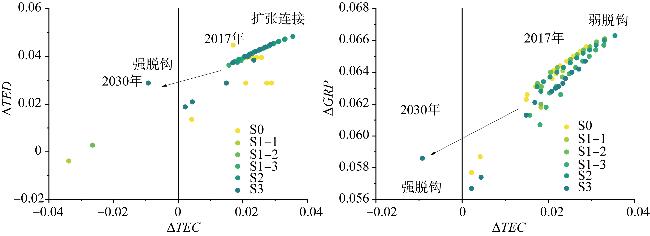
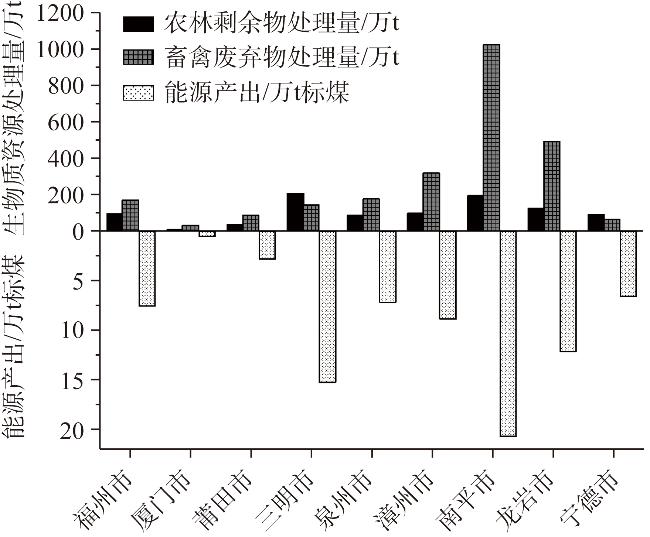
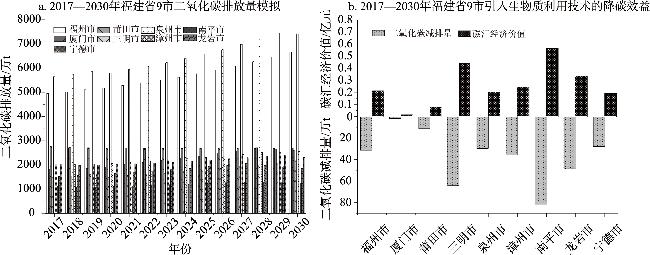
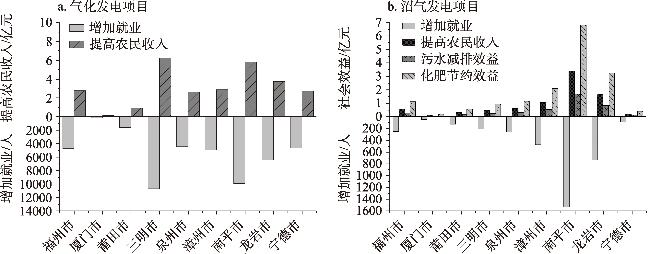
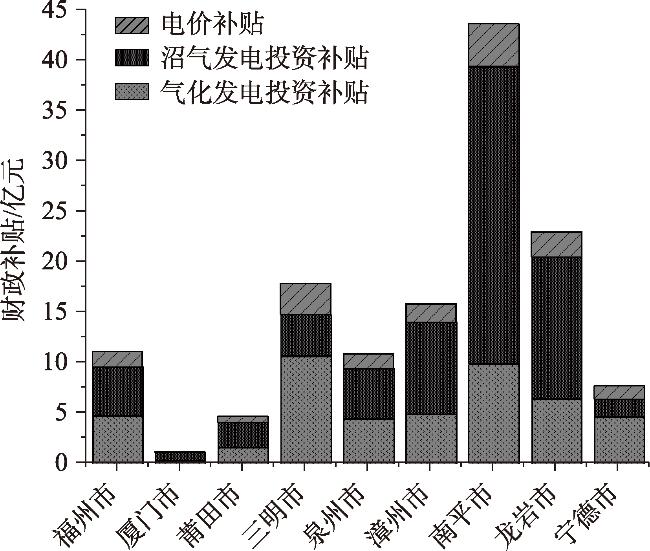
【目的】建立有效的多目标协同机制,发挥生物质资源利用的能源替代、碳减排和农村经济振兴多重功能,是中国生物质能产业发展亟待解决的现实问题。【方法】本文基于动态市场均衡模型与多目标规划方法,以福建省为例,构建了一个省域农林生物质资源利用与“经济-能源-环境”系统多主体多目标协同发展模型,旨在模拟求解2017—2030年的最优技术与政策实施策略。【结果】①生物质资源利用只有兼顾能耗双控约束和经济增长目标,才能实现碳排放与能源利用、经济增长的强脱钩状态。②模拟期内生物质能利用累计可替代化石能源81.56万t标煤,碳减排330.79万t,实现降碳效益2.28亿元,增加就业5.13万人,提高农民收入36.14亿元,实现污水减排效益4.15亿元、化肥节约效益16.63亿元。地方政府可通过新建补贴、电价补贴等措施推进生物质能产业向市场化过渡。③通过在全省分布式建设476个小型气化发电项目、83个沼气发电项目,将一定程度上解决生物质原料分散、收储运困难等问题,配合产业绿色转型可实现中长期生物质能利用、乡村振兴与降碳效益等多目标的协调发展。【结论】本文通过情景分析与动态模拟,证实了引入包含资源利用技术和政府规制的政策组合,能够实现生物质能利用、乡村振兴与降碳效益等多目标协调发展,为在中国普及生物质资源利用提供了政策启示。
柯文岚 , 闫晶晶 , 张国丰 , 沙景华 . 基于多目标协同的农林生物质资源优化利用模拟与实施策略——以福建省为例[J]. 资源科学, 2025 , 47(9) : 2019 -2032 . DOI: 10.18402/resci.2025.09.14
[Objective] Establishing an effective multi-objective synergy mechanism to leverage the multiple functions of biomass resource utilization, including energy substitution, carbon emission reduction, and rural economic revitalization, is an urgent practical issue that needs to be addressed in the development of China’s biomass energy industry. [Methods] This study employed a dynamic market equilibrium model in combination with multi-objective programming methods and took Fujian Province as an example. A multi-agent and multi-objective collaborative development model for provincial agricultural and forestry biomass resource utilization within the economic-energy-environment system was constructed to simulate and solve the optimal technology and policy implementation strategies from 2017 to 2030. [Results] (1) Only by balancing energy consumption dual-control constraints and economic growth targets could biomass resource utilization achieve a strong decoupling state between carbon emissions and both energy utilization and economic growth. (2) During the simulation period, biomass energy utilization could cumulatively substitute 815600 tons of fossil energy, reduce carbon emissions by 3.3079 Mt, generate 228 million yuan in carbon reduction benefits, create 51300 new jobs, increase farmers’ income by 3.614 billion yuan, achieve 415 million yuan in wastewater reduction benefits, yield 1.663 billion yuan in fertilizer savings. Local governments could promote the market-oriented transition of the biomass energy industry through measures such as new construction subsidies and electricity price subsidies. (3) By distributing 476 small-scale gasification power generation projects and 83 biogas power generation projects province-wide, problems such as the dispersion of biomass feedstock and difficulties in collection, storage, and transportation were partially solved. Combined with industrial green transformation, it could achieve the coordinated development of multiple objectives, including medium- to long-term biomass energy utilization, rural revitalization, and carbon reduction benefits. [Conclusion] Through scenario analysis and dynamic simulation, this paper confirms that the introduction of a set of policies including resource utilization technologies and government regulations can achieve the coordinated development of multiple objectives, such as biomass energy utilization, rural revitalization, and carbon reduction benefits, providing policy implications for popularizing biomass resource utilization in China.
表1 不同生物质能利用备选方案的技术参数Table 1 Technical parameters of alternative biomass energy utilization options |
| 技术参数 | A:抽汽凝汽式汽轮发电/ (24 MW) | B:直燃汽轮机发电/ (25 MW) | C:气化发电/ (2 MW) | D:生物天然气/ m3 | E:沼气发电/ (3 MW) |
|---|---|---|---|---|---|
| 农林剩余物处理量/(万t/年) | 22.000 | 19.770 | 1.950 | 0.023 | - |
| 畜产废弃物处理量/(万t/年) | - | - | - | - | 30.000 |
| 发电量/(亿kWh/年) | 1.560 | 1.425 | 0.108 | 0.006 | 0.180 |
| 能源产出系数/(万t标煤/万t) | 0.087 | 0.089 | 0.068 | 0.307 | 0.007 |
| 单位处理投资额/(亿元/万t) | 0.126 | 0.116 | 0.051 | 1.004 | 0.029 |
| 单位处理碳减排系数/(万t/万t) | 0.373 | 0.379 | 0.291 | 1.311 | 0.024 |
表2 情景设计Table 2 Scenario design |
| 情景模式 | 能源规划目标 | 产业规划目标 | “双碳”目标 | |||||
|---|---|---|---|---|---|---|---|---|
| 处理农产品剩余物 | 处理林产品剩余物 | 处理畜禽废弃物 | 能耗双控 | 产业结构调整 | 碳双控 | |||
| S0 | × | × | × | √ | √ | √ | ||
| S1-1 | √ | × | × | × | √ | √ | ||
| S1-2 | √ | √ | × | × | √ | √ | ||
| S1-3 | √ | √ | √ | × | √ | √ | ||
| S2 | × | × | × | × | √ | √ | ||
| S3 | √ | √ | √ | √ | √ | √ | ||
表3 生物质能利用技术选择与区域布局Table 3 Technology selection and regional layout of biomass energy utilization |
| 技术选择 | 福州市 | 厦门市 | 莆田市 | 三明市 | 泉州市 | 漳州市 | 南平市 | 龙岩市 | 宁德市 |
|---|---|---|---|---|---|---|---|---|---|
| 气化发电项目数/个 | 47 | 2 | 16 | 107 | 44 | 49 | 99 | 64 | 46 |
| 沼气发电项目数/个 | 6 | 1 | 3 | 5 | 6 | 11 | 34 | 16 | 2 |
| [1] |
高世楫. 绿色生产力与绿色低碳发展的创新路径[J]. 探索与争鸣, 2024, (3): 19-22, 177.
[
|
| [2] |
邹才能, 何东博, 贾成业, 等. 世界能源转型内涵、路径及其对碳中和的意义[J]. 石油学报, 2021, 42(2): 233-247.
[
|
| [3] |
IRNEA. Global Renewables Outlook[R]. Abu Dhabi: International Renewable Energy Agency, 2020.
|
| [4] |
石元春, 程序, 朱万斌. 当前中国生物质能源发展的若干战略思考[J]. 科技导报, 2019, 37(20): 6-11.
[
|
| [5] |
辛泊达, 吕连宏, 王斯一, 等. 基于文献计量分析的生物质能源领域研究进展[J]. 中国环境科学, 2024, 44(4): 1875-1884.
[
|
| [6] |
许炜华, 谢如谦, 郑宗明, 等. 福建省生物质能学科发展报告[J]. 海峡科学, 2013, (1): 11-17.
[
|
| [7] |
钟兆真, 刘丽娜, 张亚鹏, 等. 中国生物质能政策变迁研究: 2000-2019年[J]. 中国人口·资源与环境, 2022, 32(1): 77-88.
[
|
| [8] |
|
| [9] |
|
| [10] |
袁振宏. 生物质能资源[M]. 北京: 化学工业出版社, 2020.
[
|
| [11] |
张蓓蓓. 我国生物质原料资源及能源潜力评估[D]. 北京: 中国农业大学, 2018.
[
|
| [12] |
舒也, 刘雅暄, 刘苗苗, 等. 中国主要农作物可收集秸秆能源潜力与生物乙醇生产潜力研究[J]. 北京理工大学学报(社会科学版), 2023, 25(5): 64-72.
[
|
| [13] |
任继勤. 秸秆生物质能利用对节能减排的贡献潜力研究[J]. 北京交通大学学报(社会科学版), 2018, 17(4): 79-87.
[
|
| [14] |
赵晴云, 马若婧, 周璐芸, 等. 北方农村清洁供暖先行区农业废弃物的生物质能潜力及减排效应评估[J]. 农业资源与环境学报, 2023, 40(3): 667-679, 745.
[
|
| [15] |
|
| [16] |
耿爱欣, 潘文琦, 杨红强. 中国林木生物质能源替代煤炭的减排效益评估[J]. 资源科学, 2020, 42(3): 536-547.
[
|
| [17] |
王斯一, 张彩虹, 米锋. 资源价值流视角下发电企业碳足迹与经济成本评价: 燃煤发电与生物质发电比较研究[J]. 工业技术经济, 2018, 37(12): 78-85.
[
|
| [18] |
王火根, 王可奕. 基于生命周期评价的生物质与煤炭发电综合成本核算[J]. 干旱区资源与环境, 2020, 34(6): 56-61.
[
|
| [19] |
张晓东. 生物质发电技术[M]. 北京: 化工出版社, 2020.
[
|
| [20] |
王兵, 肖睿, 张会岩. 生物油选择性温和加氢制备含氧液体燃料[J]. 生物产业技术, 2017, (3): 89-93.
[
|
| [21] |
马隆龙, 唐志华, 汪丛伟, 等. 生物质能研究现状及未来发展策略[J]. 中国科学院院刊, 2019, 34(4): 434-440.
[
|
| [22] |
王斯一, 白梓函, 吕连宏, 等. 基于政策工具的中国生物质发电补贴政策评估[J]. 环境工程技术学报, 2021, 11(6): 1241-1249.
[
|
| [23] |
朱孝成, 窦克军, 王振中, 等. 中国农林生物质发电项目经济性分析[J]. 全球能源互联网, 2022, 5(2): 182-187.
[
|
| [24] |
|
| [25] |
|
| [26] |
|
| [27] |
|
| [28] |
|
| [29] |
柯文岚, 闫晶晶, 吴容容, 等. 基于动态最优化模型预测福建省污水污泥再利用和城市可持续发展[J]. 资源科学, 2021, 43(3): 477-488.
[
|
| [30] |
|
| [31] |
曾维康, 万伟, 马莉莉. 多重目标约束下中国省际产业能源协同的碳排放效应[J]. 资源科学, 2023, 45(3): 549-563.
[
|
| [32] |
马晓红. 福建生物质能源产业发展的问题与对策[J]. 金融经济, 2013, (22): 21-23.
[
|
| [33] |
|
| [34] |
柯文岚, 李泽伟, 罗世兴. 福建省林业碳汇项目价值评估及金融产品定价: 基于实物期权理论[J]. 中国国土资源经济, 2024, (1): 48-55.
[
|
| [35] |
|
/
| 〈 |
|
〉 |