人口-土地协调视角下的湖南省主体功能区优化探索
|
周恺,男,博士,副教授,研究方向为收缩城市与规划应对、城市与区域规划。E-mail: zhoukai_nju@hotmail.com |
收稿日期: 2023-11-30
修回日期: 2024-01-24
网络出版日期: 2024-03-21
基金资助
国家自然科学基金项目(52078197)
国土资源评价与利用湖南省重点实验室开放课题(SYS-ZX-202301)
Optimizing major function-oriented zone of Hunan Province from the perspective of population-land coordination
Received date: 2023-11-30
Revised date: 2024-01-24
Online published: 2024-03-21
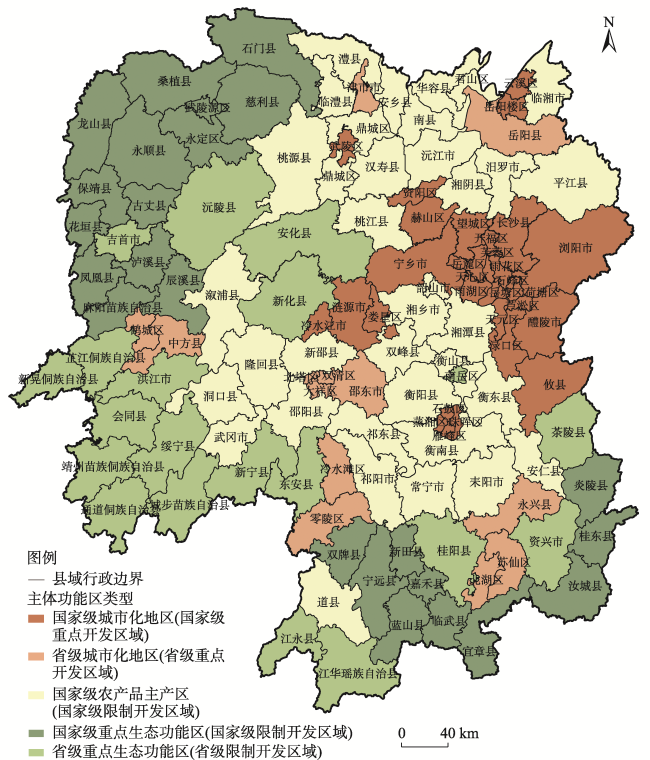
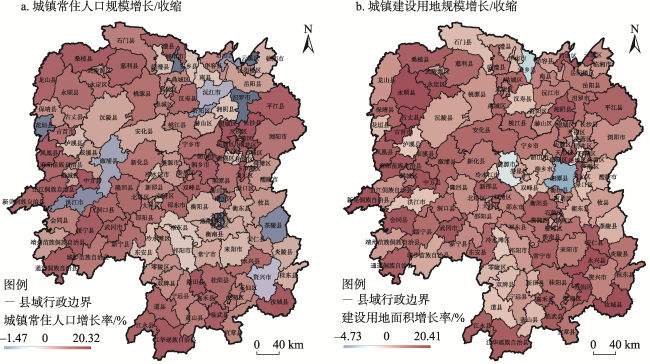
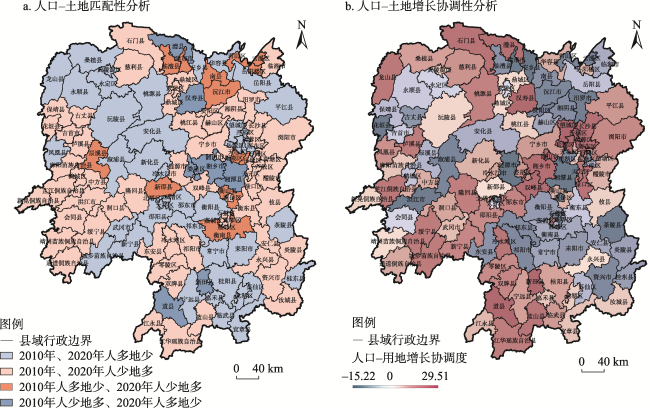
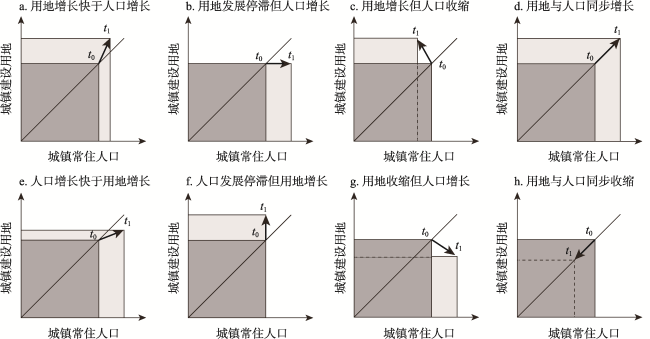
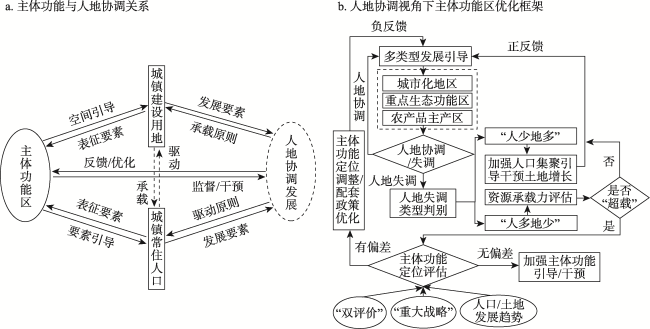
【目的】 主体功能区对促进人口、经济、社会、资源、环境协调发展具有战略引领作用,为了应对人口和用地的紧缩发展新趋势,有必要对主体功能区实施进行回顾评价,并针对问题提出优化建议。【方法】 本文运用人口普查和土地调查数据,探究湖南省区县人口-土地的增长/收缩时空演变规律,定量分析2010—2020年区县人口-土地的协调关系,结合《湖南省主体功能区规划》(2012年)总结主体功能区框架下的人地变化特征,并对比规划实现情况,探讨未来主体功能区的优化发展方向。【结果】 研究发现:①2010—2020年,湖南省各区县城镇常住人口增长/收缩差异化发展特征明显,全省城镇建设用地总体呈增长趋势,但增长速率呈下降趋势;②2010—2020年区县人口和土地不平衡现象普遍,大量的区县存在人多地少(集约型发展)与人少地多(宽松型发展)两种不匹配趋势,既存在城镇常住人口增长滞后于城镇建设用地增长的区县,也存在城镇常住人口增长略快于城镇建设用地增长的区县。③《湖南省主体功能区规划》自2012年实施以来,虽然体现出引导人口和土地协调发展的作用,但各区县城镇人口和土地发展仍然存在与所属主体功能区发展目标相违背的情况。【结论】 基于以上分析,本文对主体功能区进行优化方案探索。一方面,人口-土地协调视角下,各类主体功能区(城市化地区、农产品主产区和重点生态功能区)都可能存在多种发展情景,有必要进一步细化类型划分,提出湖南省各区县多类型发展方向;另一方面,主体功能区类型与城镇建设用地、城镇常住人口之间存在双向作用机制,未来的主体功能区规划需要结合数据分析得出人口和土地增长关系,从人地协调发展视角对主体功能区提出优化路径。
周恺 , 张旭阳 , 夏依宁 , 张瑞霞 , 曾鹏 . 人口-土地协调视角下的湖南省主体功能区优化探索[J]. 资源科学, 2024 , 46(2) : 421 -433 . DOI: 10.18402/resci.2024.02.13
[Objective] The major function-oriented zones (MFOZs) play a strategic role in promoting the coordinated development of population, economy, society, resources, and environment. In response to the emerging trend of population shrinkage and more compact development of cities, it is necessary to review and evaluate the implementation of MFOZ and propose optimization suggestions. [Methods] This study used census and land survey data to explore the spatiotemporal patterns of population-land growth/shrinkage in counties of Hunan Province. It quantitatively analyzed the coordination between population and land from 2010 to 2020. Comparing the results with objectives set in the Hunan Province MFOZ Plan (2012), it summarized the characteristics of population-land changes under the MFOZ framework, which led to discussions on the future optimization direction of MFOZ. [Results] The study found that: (1) From 2010 to 2020, there were obvious differentiated development pathways of urban population growth/shrinkage in various counties of Hunan Province. Overall, urban land showed a growing trend, but the growth rate declined. (2) There was a widespread of population-land imbalance in the counties from 2010 to 2020. Many counties exhibited two mismatch trends: more population and less land (compact development), and less population and more land (expansive development). Both the counties with urban population growth lagging behind urban construction land growth and those with urban population growth slightly faster than urban construction land growth were observed. (3) Since its implementation in Hunan Province in 2012, although the MFOZ Plan has played the role of guiding coordinated development of population and land, there are still situations where the results are inconsistent with the development goals of the MFOZ. [Conclusion] Based on the analysis, this study explored optimization solutions for the MFOZ. On the one hand, from the perspective of population-land coordination, various types of MFOZ (urbanization areas, major agricultural production areas, and key ecological function areas) may have multiple development scenarios, and it is necessary to further refine their classification and propose multi-type development directions for Hunan Province. On the other hand, there is a bidirectional mechanism of influence between MFOZ types and urban land, as well as urban population. Future MFOZ planning needs to combine the population-land growth relationship derived from data analysis and propose optimization paths from the perspective of coordinated development between the two.
表1 2010—2020年各主体功能区区县城镇常住人口变化分类Table 1 Classification of permanent resident population change of each major function-oriented zone (MFOZ), 2010-2020 |
| 区县变化类型及增长 与收缩区县数量比 | 城市化地区区县/个 | 农产品主产区区县/个 | 重点生态功能区区县/个 |
|---|---|---|---|
| A型:快速增长 | 4 | 1 | 1 |
| B型:缓慢增长 | 34 | 30 | 38 |
| C型:缓慢收缩 | 5 | 4 | 5 |
| N型:发展停滞 | 0 | 0 | 0 |
| 增长与收缩区县数量比 | 38/5 | 31/4 | 39/5 |
表2 2010—2020年各主体功能区区县城镇建设用地变化分类Table 2 Classification of urban construction land change of each major function-oriented zone (MFOZ), 2010-2020 |
| 区县变化类型及增长 与收缩区县数量比 | 城市化地区区县/个 | 农产品主产区区县/个 | 重点生态功能区区县/个 |
|---|---|---|---|
| A型:中度收缩 | 0 | 1 | 0 |
| B型:轻度收缩 | 0 | 1 | 0 |
| C型:轻度扩张 | 32 | 18 | 21 |
| D型:中度扩张 | 9 | 15 | 20 |
| E型:重度扩张 | 1 | 0 | 3 |
| N型:发展停滞 | 0 | 0 | 0 |
| 增长与收缩区县数量比 | 42/1 | 29/2 | 44/0 |
表3 2010—2020年各主体功能区区县人口-土地匹配/协调关系分类Table 3 Classification of population-land matching/coordination relationships of each major function-oriented zone (MFOZ), 2010-2020 |
| 人口-土地匹配/协调关系 | 城市化地区区县/个 | 农产品主产区区县/个 | 重点生态功能区区县/个 | |
|---|---|---|---|---|
| 人口-土地匹配性类型 | ||||
| 2010、2020年人多地少 | 14 | 11 | 18 | |
| 2010、2020年人少地多 | 23 | 12 | 24 | |
| 2010年人多地少、2020年人少地多 | 5 | 7 | 1 | |
| 2010年人少地多、2020年人多地少 | 1 | 5 | 1 | |
| 人口-土地增长协调性类型 | ||||
| 城镇建设用地增长速率略快于 城镇常住人口增长速率 | 协调发展 | 6 | 1 | 5 |
| 轻度失调 | 3 | 4 | 4 | |
| 中度失调 | 1 | 2 | 2 | |
| 高度失调 | 0 | 2 | 0 | |
| 严重失调 | 1 | 3 | 0 | |
| 极度失调 | 5 | 4 | 4 | |
| 城镇常住人口增长速率略快于 城镇建设用地增长速率 | 协调发展 | 4 | 3 | 8 |
| 轻度失调 | 12 | 8 | 11 | |
| 中度失调 | 4 | 1 | 8 | |
| 高度失调 | 3 | 5 | 1 | |
| 严重失调 | 3 | 0 | 0 | |
| 极度失调 | 1 | 2 | 1 | |
表4 城镇发展类型特征统计表Table 4 Characteristics of urban development types |
| 发展引导类型 | 城镇常住人口变化类型 | 城镇建设用地变化类型 | 城市化地区区县/个 | 农产品主产区区县/个 | 重点生态功能区区县/个 |
|---|---|---|---|---|---|
| 稳定发展型 | A型、B型、C型 | C型、D型、E型 | 35 | 3 | 1 |
| 紧凑发展型 | B型 | C型、D型 | 5 | 0 | 0 |
| 振兴发展型 | B型 | C型 | 1 | 0 | 0 |
| 稳定调整型 | B型、C型 | B型、C型、D型 | 3 | 7 | 1 |
| 稳定维持型 | B型、C型 | A型、B型、C型、D型 | 3 | 15 | 0 |
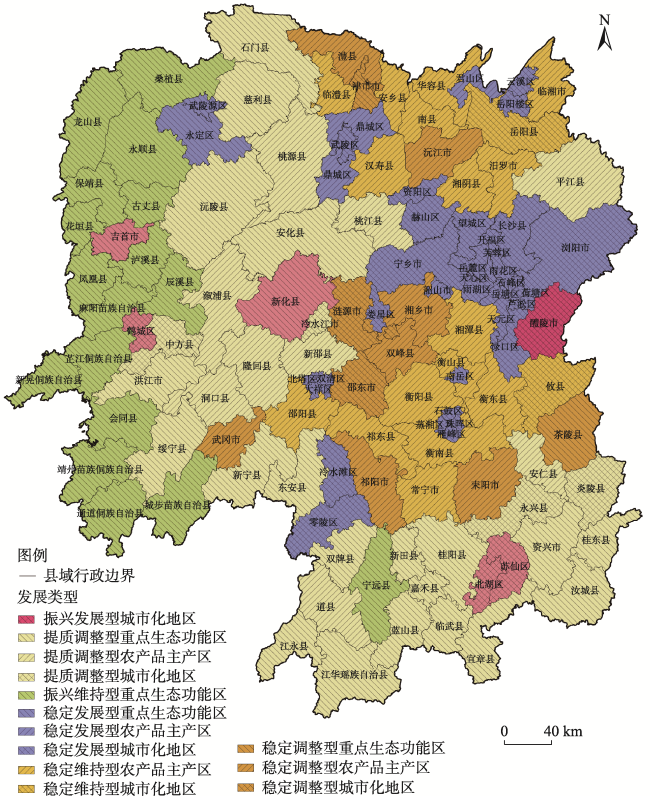
| 提质调整型 | A型、B型、C型 | C型、D型、E型 | 4 | 7 | 22 |
| 振兴维持型 | B型、C型 | A型、C型、D型、E型 | 0 | 0 | 17 |
| [1] |
陆大道. “未来地球”框架文件与中国地理科学的发展: 从“未来地球”框架文件看黄秉维先生论断的前瞻性[J]. 地理学报, 2014, 69(8): 1043-1051.
[
|
| [2] |
谢地, 王圣媛. 我国主体功能区建设的演进脉络、内在逻辑与实践要求[J]. 学习与探索, 2023, (6): 91-98.
[
|
| [3] |
尹力, 魏伟. 基于主体功能区战略的我国城市群城镇空间演化解析(2000-2020年)[J]. 城市规划学刊, 2023, (2): 88-95.
[
|
| [4] |
王晓云, 杨秀平, 张雪梅. 基于DEA-Tobit两步法的城镇化效率评价及其影响因素: 从人口城镇化与土地城镇化协调发展的视角[J]. 生态经济, 2017, 33(5): 29-34.
[
|
| [5] |
岳文泽, 周秋实, 李蒙蒙, 等. 面向主体功能分区的建设用地强度研究: 模式识别与时空演变[J]. 城市规划, 2023, 47(5): 15-24.
[
|
| [6] |
杨喜, 卢新海. 空间效应视角下中国城市土地城镇化的驱动因素[J]. 中国人口·资源与环境, 2021, 31(1): 156-164.
[
|
| [7] |
陈绍军, 余丹阳. 长三角城市群城镇化进程中人地关系时空耦合特征及影响因素研究[J/OL]. 世界地理研究, (2023-09-14) [2024-02-26]. http://kns.cnki.net/kcms/detail/31.1626.P.20230914.0935.004.html.
[
|
| [8] |
王艳飞, 张定祥, 李婷婷. 京津冀建设用地人口密度变化格局及影响机制[J]. 资源科学, 2023, 45(4): 872-883.
[
|
| [9] |
张莉, 史旭敏. 全国城乡人口与建设用地协调发展研究[J]. 城市发展研究, 2019, 26(6): 30-36.
[
|
| [10] |
梁流涛, 袁晨光, 刘琳轲. 中国地级市土地城镇化与人口城镇化协调发展的空间格局分析[J]. 河南大学学报(自然科学版), 2019, 49(4): 391-401.
[
|
| [11] |
李自鹏, 欧向军, 朱杰, 等. 江苏省人口与土地城镇化协调发展研究[J]. 中国农学通报, 2022, 38(8): 157-164.
[
|
| [12] |
王雨枫. 城市群人口-土地城镇化时空分异特征及影响机制: 以哈长-辽中南为例[J]. 人口与发展, 2022, 28(3): 52-61.
[
|
| [13] |
谢余初, 刘秋华, 张宇, 等. 北部湾城市群人口-土地城镇化质量的耦合协调关系及空间差异[J/OL]. 水土保持研究, (2023-11-14) [2024-02-26]. https://doi.org/10.13869/j.cnki.rswc.2024.03.044.
[
|
| [14] |
朱杰, 欧向军. 江苏人口-土地城镇化的异速增长与协调发展研究[J]. 国土与自然资源研究, 2020, (2): 37-42.
[
|
| [15] |
王富喜. 山东半岛城市群人口-土地城镇化质量测度与协调发展研究[J]. 地理科学, 2020, 40(8): 1345-1354.
[
|
| [16] |
程帅, 田家华. 武汉市人口城镇化和土地城镇化协调发展研究[J]. 湖北农业科学, 2021, 60(4): 79-85.
[
|
| [17] |
赵庆海, 刘合林. 山东省土地城镇化与人口城镇化协调发展对策研究[J]. 电子科技大学学报(社科版), 2018, 20(6): 16-23.
[
|
| [18] |
陈磊. 土地资源利用效率研究评述及改进路径理论逻辑: 基于主体功能区治理的思考[J]. 水土保持研究, 2022, 29(1): 386-393.
[
|
| [19] |
樊杰. 中国主体功能区划方案[J]. 地理学报, 2015, 70(2): 186-201.
[
|
| [20] |
赵燕菁. 城规、土规与主体功能区: 国家视角的国土空间规划[J]. 北京规划建设, 2020, (3): 155-158.
[
|
| [21] |
吴桐, 岳文泽, 夏皓轩, 等. 国土空间规划视域下主体功能区战略优化[J]. 经济地理, 2022, 42(2): 11-17.
[
|
| [22] |
罗彦, 蒋国翔, 陈少杰, 等. 基于“双评价”和主体功能区优化的国土空间规划探索[J]. 城市规划, 2022, 46(1): 7-17.
[
|
| [23] |
常笑, 祁帆. 新时代主体功能区战略制度优化研究[J]. 土地科学动态, 2023, (4): 16-20.
[
|
| [24] |
中国国土空间规划. UP前沿论道 “健全主体功能区制度优化国土空间发展格局”[EB/OL]. (2024-01-17) [2024-02-06]. https://mp.weixin.qq.com/s/NbXHZ3lhVKwxm_hnvHOofA.
[The Territory Spatial Planning of China. Frontier Discourse of UP: Improve the System of Functional Zones and Optimize the Spatial Development Pattern of the National Territory[EB/OL]. (2024-01-17)[2024-02-06]. https://mp.weixin.qq.com/s/NbXHZ3lhVKwxm_hn-vHOofA.
|
| [25] |
贾克敬, 何鸿飞, 张辉, 等. 基于“双评价”的国土空间格局优化[J]. 中国土地科学, 2020, 34(5): 43-51.
[
|
| [26] |
刘珺. “双评价”优化模型在城镇圈国土空间规划中的实践探索: 以上海市崇明区西沙城镇圈为例[J]. 上海城市规划, 2023, (3): 62-70.
[
|
| [27] |
周恺, 钱芳芳, 严妍. 湖南省多地理尺度下的人口“收缩地图”[J]. 地理研究, 2017, 36(2): 267-280.
[
|
| [28] |
文余源, 刘洋, 邢晓旭, 等. 人口收缩视角下中国产业集聚与城市人口规模演化及其关系[J]. 经济地理, 2023, 43(11): 115-125.
[
|
| [29] |
余雷, 罗梅, 邱欣悦, 等. 2000-2020年东北三省收缩城市主体功能空间演化研究[C]. 中国城市规划学会. 人民城市, 规划赋能: 2022中国城市规划年会论文集[C]. 北京: 中国建筑工业出版社, 2023.
[
|
| [30] |
尹宏玲, 徐腾. 我国城市人口城镇化与土地城镇化失调特征及差异研究[J]. 城市规划学刊, 2013, (2): 10-15.
[
|
| [31] |
赵宁宁, 郭炎, 李志刚, 等. 新型城镇化下中部流出地村庄的人口转型特征与微观成因: 以湖南岳阳市为例[J]. 人文地理, 2020, 35(4): 139-145.
[
|
| [32] |
|
| [33] |
张伟娜, 蒋玲玲, 张伟伟. 湖南人口与土地城镇化协调发展影响因素及作用机制分析[J]. 国土与自然资源研究, 2022, (1): 8-13.
[
|
| [34] |
蔡芳芳, 濮励杰. 南通市城乡建设用地演变时空特征与形成机理[J]. 资源科学, 2014, 36(4): 731-740.
[
|
| [35] |
王继威. 新型城镇化视角下土地城镇化与人口城镇化协调发展分析[J]. 农业经济, 2023, (6): 109-112.
[
|
| [36] |
樊杰, 周侃. 以“三区三线”深化落实主体功能区战略的理论思考与路径探索[J]. 中国土地科学, 2021, 35(9): 1-9.
[
|
/
| 〈 |
|
〉 |