基于路径依赖视角的旅游资源诅咒演化模型
|
李文静,女,湖南岳阳人,博士生,研究方向为旅游发展与目的地管理。E-mail: 365347506@qq.com |
收稿日期: 2019-01-25
要求修回日期: 2019-06-23
网络出版日期: 2019-09-25
基金资助
国家自然科学基金项目(41471122)
版权
An evolutionary process model of tourism resource curse: Based on path dependence theory
Received date: 2019-01-25
Request revised date: 2019-06-23
Online published: 2019-09-25
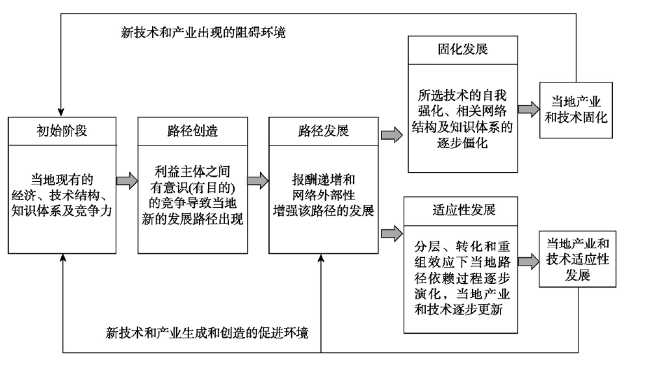
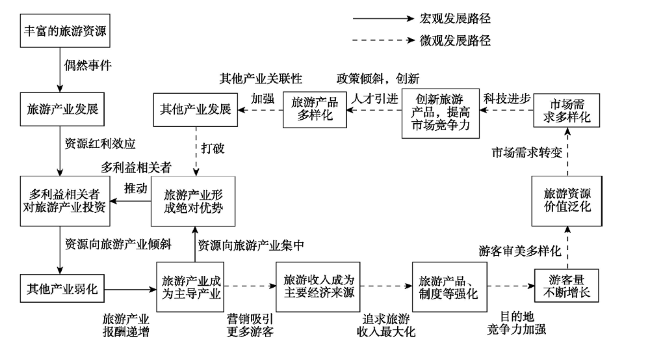
旅游资源诅咒假说常在旅游研究中解释旅游发展与经济长期增长的非线性关系,但这一过程是怎样形成的却并不清楚。本文通过系统梳理旅游资源诅咒假说相关文献,认为资源依赖型旅游发展模式是否阻碍经济增长是判断旅游资源诅咒假说成立的基础,旅游发展的挤出效应是旅游资源诅咒假说的作用原理,而路径依赖则是旅游资源诅咒的生成机制。在此基础上,本文分析了旅游资源价值的动态变化特征、旅游产业演化的复杂特征,结合路径依赖复合模型,建立了结合宏观及微观两个层面的旅游资源诅咒演变模型。模型认为:受旅游资源丰裕度影响,旅游目的地在宏观上会在路径依赖的影响下陷入发展模式锁定状态;但受旅游资源价值边界变化的影响,旅游目的地在微观上会根据市场需要不断发生层级演化及转换发展,试图通过不同发展路径重组突破旅游资源诅咒困境。本文加深了对旅游资源诅咒复杂演化过程的理解,对促进旅游目的地的可持续发展具有参考意义。
李文静 , 张朝枝 . 基于路径依赖视角的旅游资源诅咒演化模型[J]. 资源科学, 2019 , 41(9) : 1724 -1733 . DOI: 10.18402/resci.2019.09.13
The application of tourism resource curse hypothesis in tourism research can explain the nonlinear relationship between tourism development and long-term economic growth, but how this process came about is unclear. This article examines the existing studies in the tourism resource curse research field by a systematic review. The study shows whether the resource-dependent tourism development hinders economic growth is the basis for judging the establishment of tourism resource curse. The crowding out effect to other industries is the principle of tourism resource curse. The classic path dependence model is the generation mechanism of the tourism resource curse. Based on these, this article analyzes the dynamic characteristics of tourism resource value and the complex characteristics of the tourism industry. Combined with the composite-standard model of path dependence, this article establishes a tourism resource curse evolutionary process model by combining macro-level and micro-level path dependence evolution. At the macro-level, due to the abundance of tourism resources, tourism destinations will be locked into a tourism development path. At the micro-level, however, due to the changes in the boundary of tourism resource value, tourism destinations will continue a hierarchical evolution according to the change of market needs and institutions, and transform the tourism development path. Facilitated by the evolutionary process, tourism destinations try to break through the tourism resource curse through different development paths. This study has deepened our understanding of the complex evolution process of tourism resource curse, and may provide some reference for promoting sustainable tourism.
| [1] |
|
| [2] |
|
| [3] |
李跃军, 周秋巧, 姜琴君 . “旅游资源错位现象”与“旅游资源诅咒”辨析[J]. 旅游论坛, 2018,11(2):43-50.
[
|
| [4] |
|
| [5] |
邓涛涛, 王丹丹, 刘璧如 . “资源诅咒”理论在旅游研究中的应用: 综述与启示[J]. 旅游学刊, 2017,32(11):60-68.
[
|
| [6] |
左冰 . 旅游能打破资源诅咒吗?基于中国31个省(市、区)的比较研究[J]. 商业经济与管理, 2013, ( 5):60-69.
[
|
| [7] |
朱希伟, 曾道智 . 旅游资源、工业集聚与资源诅咒[J]. 世界经济, 2009, ( 5):65-72.
[
|
| [8] |
|
| [9] |
|
| [10] |
|
| [11] |
|
| [12] |
|
| [13] |
|
| [14] |
|
| [15] |
|
| [16] |
|
| [17] |
|
| [18] |
|
| [19] |
徐红罡 . 资源型旅游地增长极限的理论模型[J]. 中国人口·资源与环境, 2006,16(5):35-40.
[
|
| [20] |
韩春鲜 . 基于旅游资源优势度差异的新疆旅游经济发展空间分析[J]. 经济地理, 2009,29(5):871-875.
[
|
| [21] |
|
| [22] |
|
| [23] |
|
| [24] |
|
| [25] |
|
| [26] |
赵磊, 唐承财 . 产业结构变迁、旅游业与经济增长: 来自中国的经验证据[J]. 资源科学, 2017,39(10):1918-1929.
[
|
| [27] |
|
| [28] |
|
| [29] |
|
| [30] |
张生玲, 李跃, 酒二科 , 等. 路径依赖、市场进入与资源型城市转型[J]. 经济理论与经济管理, 2016, ( 2):14-27.
[
|
| [31] |
|
| [32] |
周喜君, 郭丕斌 . 煤炭资源就地转化与“资源诅咒”的规避: 以中国中西部8个典型省区为例[J]. 资源科学, 2015,37(2):318-324.
[
|
| [33] |
|
| [34] |
崔学峰 . 资源诅咒论与初级产品论的比较及其启示[J]. 改革与战略, 2014,30(2):29-32.
[
|
| [35] |
王隽妮, 万永坤, 董锁成 . 旅游业“挤出效应”与区域差异分析[J]. 资源科学, 2015,37(3):573-580.
[
|
| [36] |
|
| [37] |
杨懿, 杨先明 . 旅游地“荷兰病”效应: 旅游负面经济影响研究新视角[J]. 财经理论与实践, 2015,36(5):133-137.
[
|
| [38] |
邵帅, 范美婷, 杨莉莉 . 资源产业依赖如何影响经济发展效率?有条件资源诅咒假说的检验及解释[J]. 管理世界, 2013, ( 2):32-63.
[
|
| [39] |
王彩萍, 徐红罡, 张萍 . 市场化改革、政府干预与区域旅游业发展: 从宏观视角来解读困境[J]. 旅游学刊, 2015,30(3):44-52.
[
|
| [40] |
车震宇, 保继刚 . 市县级政策与管理在古村落保护和旅游中的重要性: 以黄山市、大理州和丽江市为例[J]. 建筑学报, 2006, ( 12):45-47.
[
|
| [41] |
|
| [42] |
|
| [43] |
徐红罡, 吴悦芳, 彭丽娟 . 古村落旅游地游线固化的路径依赖: 世界遗产地西递、宏村实证分析[J]. 地理研究, 2010,29(7):1324-1334.
[
|
| [44] |
曹翔, 郭立萍 . 中国旅游业发展导致了资源诅咒效应吗?[J]. 旅游学刊, 2017,32(5):14-25.
[
|
| [45] |
|
| [46] |
|
| [47] |
俞金国, 王丽华 . 关于旅游资源理论的再思考[J]. 资源开发与市场, 2010,26(3):279-282.
[
|
| [48] |
宋子千 . 论旅游的被吸引性与旅游资源概念[J]. 旅游学刊, 2006,21(6):69-72.
[
|
| [49] |
张凌云. 市场评价: 旅游资源新的价值观: 兼论旅游资源研究的几个理论问题[J]. 旅游学刊, 1999, ( 2):47-52.
[
|
| [50] |
李向明 . 略论旅游资源生态位的概念与选择策略[J]. 旅游学刊, 2007,22(2):49-53.
[
|
| [51] |
|
| [52] |
|
| [53] |
赵普, 金小波 . 变“资源诅咒”为“资源话语权”: 资源富集地区经济增长的战略博弈选择[J]. 求索, 2010, ( 8):27-30.
[
|
| [54] |
|
| [55] |
|
| [56] |
|
| [57] |
黄光国 . 社会科学的理路[M]. 北京: 中国人民大学出版社, 2006.
[
|
| [58] |
张朝枝, 李文静 . 遗产旅游研究: 从遗产地的旅游到遗产旅游[J]. 旅游科学, 2016,30(1):37-47.
[
|
| [59] |
冯建辉 . 哈维的“时空压缩”理论浅析[J]. 唯实, 2010, ( 7):33-37.
[
|
| [60] |
哈维 . 后现代的状况: 对文化变迁之缘起的探究[M]. 阎嘉, 译. 北京: 商务印书馆, 2003.
[
|
| [61] |
|
| [62] |
|
| [63] |
陈新建, 濮励杰 . 中国资源地理学学科地位与近期研究热点[J]. 资源科学, 2015,37(3):425-435.
[
|
| [64] |
|
| [65] |
黄利秀 . 从新经济地理学到演化经济地理学: 区域政策含义及其启示[J]. 商业研究, 2014,54(9):21-26.
[
|
| [66] |
李福柱 . 演化经济地理学的理论框架与研究范式: 一个文献综述[J]. 经济地理, 2011,31(12):1975-1980.
[
|
| [67] |
|
| [68] |
|
| [69] |
|
| [70] |
|
/
| 〈 |
|
〉 |