公元733年河湟谷地耕地分布格局重建
作者简介:吴致蕾,女,四川绵阳人,硕士生,主要从事自然地理综合研究。E-mail:Wuzl32@163.com
收稿日期: 2016-06-16
要求修回日期: 2016-08-18
网络出版日期: 2017-02-20
基金资助
国家自然科学基金项目(41271123,41550004)
中国科学院战略性先导科技专项(XDB03030500)
Reconstruction of cropland spatial patterns in 733 AD in the Yellow River-Huangshui River Valley
Received date: 2016-06-16
Request revised date: 2016-08-18
Online published: 2017-02-20
Copyright
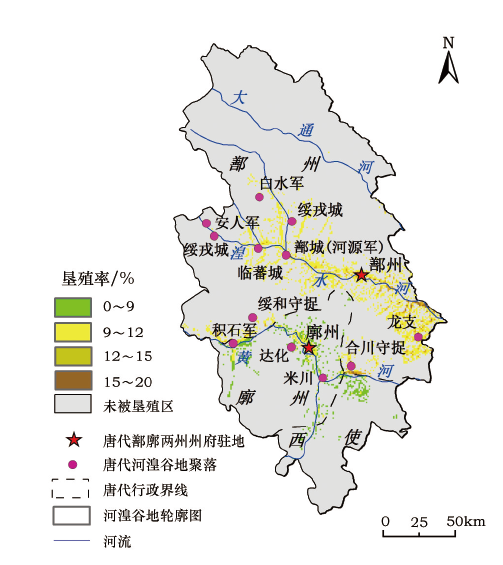
典型区域历史时期高分辨率的土地利用/土地覆盖变化重建对研究过去全球环境变化和全球气候变化具有十分重要的意义。公元733年(唐代开元二十一年)是河湟谷地以军事屯田为主的农业发展的峰值期,是其屯田规模最为宏大、效益空前、原始土地覆盖影响最为深刻的时段。本文收集、整理了公元733年河湟谷地历史文献中的耕地数据,运用青藏高原河湟谷地区耕地网格化重建方法,结合历史时期聚落分布的实际状况,对耕地分布进行二次分配,分析并重建了公元733年前后河湟谷地耕地资源规模以及分布格局。结果显示:①公元733年河湟地区耕地开垦以军事屯田为主,共有123屯,估算出屯田总面积为321.13km2;②耕地空间分布主要以聚落为中心,以河流为中心线向外扩散,集中分布在湟水干流区域以及黄河河谷区域中的串珠状盆地内,受海拔高度和山地地形因素的限制,加之当时人口较少,耕地面积有限,全区仅有11.7%的网格有耕地分布;③垦殖强度受到自然条件和生产力水平的双重影响,垦殖率整体偏低,处于农业发展的成长期;全区耕地网格平均垦殖率为9.2%,最高垦殖率仅为18.9%,其中有31.4%的耕地网格垦殖率在9.0%以下,67.6%的耕地网格垦殖率在9.0%~15.0%之间,1.0%的耕地网格垦殖率达到15.0%~20.0%之间;④垦殖强度在行政单元之间具有明显的差异性,鄯州垦殖率较高,平均垦殖率接近13%;廓州垦殖率较低,南部西使地区垦殖率最低。
吴致蕾 , 刘峰贵 , 陈琼 , 周强 , 杨登兴 . 公元733年河湟谷地耕地分布格局重建[J]. 资源科学, 2017 , 39(2) : 252 -262 . DOI: 10.18402/resci.2017.02.08
Reconstruction of high-resolution land use/land cover changes in typical region in the historical periods is of great significance to the study of past global environmental changes and global climate. It was a time node that cropland in the Tang Dynasty was the largest and the most efficient on record. Here,we collected and organized data on cropland area from historical documents during the Tang Dynasty to reconstruct the historical cropland spatial distribution of the Yellow River-Huangshui River valley (YHV)on the Qinghai-Tibetan Plateau. We combined this with the actual distribution situation of cropland in the historical period and adjusted the distribution of settlement for a second time to reproduce the spatial distribution pattern of farmland resources in the Tang Dynasty. The results showed that cropland in the YHV in the Tang Dynasty were dominated by military Mita,it was a total of 123 Tun and the total area was 321.13km2. From analysis of cropland distribution,the spread of arable land mainly took the settlement as the center,and took the main river as the center line,and was distributed intensively in the basin of the Huangshui River and Yellow River valley area. Limited by altitude,mountainous terrain factors and a low population meant that only 11.7% of regional grids were cropland. The reclamation index was very low and influenced by natural environment factors and social productivity. It was in the early stages of agricultural development. The average reclamation rate of cropland was 9.2%,and the highest rate was 18.9%. For 31.4% of all grids the reclamation rate was less than 9%;67.6% of all grids had a reclamation index from 9%~15% and only 1% of all grids had a reclamation index which was from 15%~20%. The distribution of reclamation intensity was different among administrative units: the reclamation index was highest in Shanzhou where the average reclamation index was nearly 13%; the reclamation index in Kuozhou was far lower;and the reclamation index was lowest in Xishi region which was located in the south of the YHV.
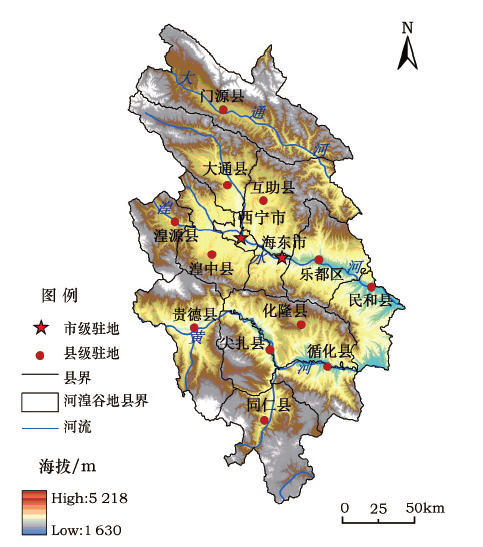
Figure 1 Location of the study area图1 研究区位置 |
Table 1 The statistics of cropland area in each region of YHV in A.D.733(Tang Dynasty)表1 公元 733年河湟谷地各区域耕地面积数据 |
| 唐代河湟谷地 行政单位 | 军事 屯田 | 对应现代 区域 | 军屯数 /屯 | 折算现代耕地面积/km2 |
|---|---|---|---|---|
| 鄯州 | 临洮军 | 乐都 | 30 | 78.32 |
| 河源军 | 西宁 | 28 | 73.10 | |
| 白水军 | 大通 | 11 | 28.72 | |
| 安人军 | 湟源 | 10 | 26.11 | |
| 鄯州 | 6 | 15.66 | ||
| 廓州 | 合川守捉 | 化隆 | 9 | 23.50 |
| 积石军 | 贵德 | 12 | 31.33 | |
| 绥和守捉 | 贵德 | 3 | 7.83 | |
| 廓州 | 化隆群科 | 4 | 10.44 | |
| 吐谷浑统治区域 | 西使 | 同仁 | 10 | 26.11 |
| 合计 | 123 | 321.12 |
Figure 2 Spatial distribution of cropland in YHV in A.D.733图2 公元733年河湟谷地耕地空间分布格局 |
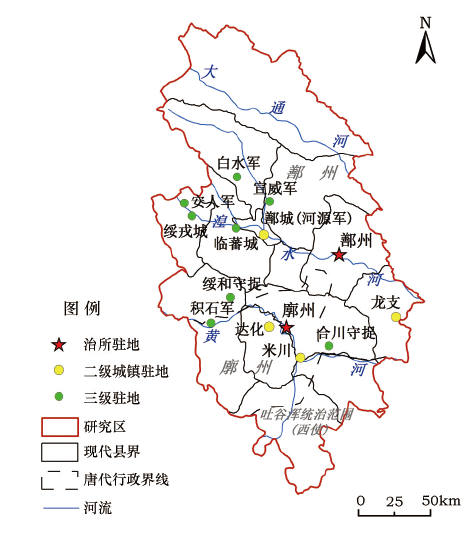
Figure 3 The schematic diagram of administrative boundaries in Tang Dynasty图3 唐代行政界线示意 |
The authors have declared that no competing interests exist.
| [1] |
|
| [2] |
|
| [3] |
|
| [4] |
[
|
| [5] |
[
|
| [6] |
|
| [7] |
|
| [8] |
|
| [9] |
|
| [10] |
|
| [11] |
|
| [12] |
|
| [13] |
|
| [14] |
|
| [15] |
|
| [16] |
|
| [17] |
|
| [18] |
|
| [19] |
|
| [20] |
|
| [21] |
[
|
| [22] |
[
|
| [23] |
[
|
| [24] |
[
|
| [25] |
|
| [26] |
[
|
| [27] |
[
|
| [28] |
[
|
| [29] |
[
|
| [30] |
[
|
| [31] |
[
|
| [32] |
[
|
| [33] |
[
|
| [34] |
[
|
| [35] |
[
|
| [36] |
[
|
| [37] |
[
|
| [38] |
[
|
| [39] |
[
|
| [40] |
[
|
| [41] |
[
|
| [42] |
[
|
| [43] |
[
|
| [44] |
玉井是博. 南宋本大唐六典校刊记[M]. 东京:岩波书店,1942.
[
|
| [45] |
[
|
| [46] |
[
|
| [47] |
[
|
| [48] |
[
|
| [49] |
[
|
| [50] |
[
|
| [51] |
[
|
| [52] |
[
|
| [53] |
[
|
| [54] |
[
|
| [55] |
[
|
| [56] |
[
|
| [57] |
[
|
| [58] |
[
|
| [59] |
[
|
| [60] |
[
|
| [61] |
[
|
/
| 〈 |
|
〉 |