Review on development and utilization of offshore renewable energy: An analysis based on a five-dimensional framework
Received date: 2024-05-21
Revised date: 2024-09-18
Online published: 2025-05-12
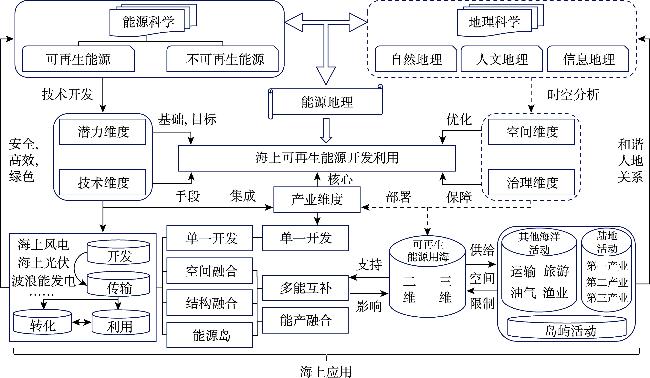
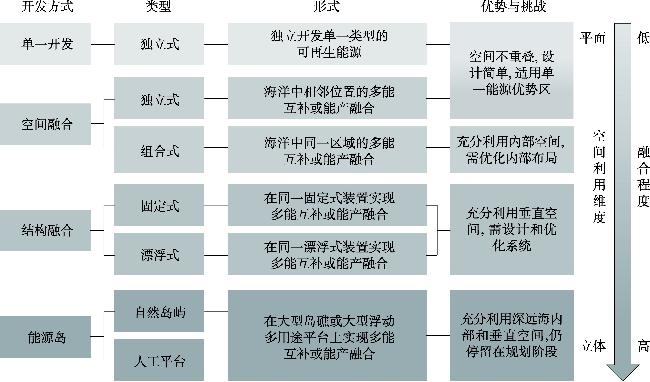
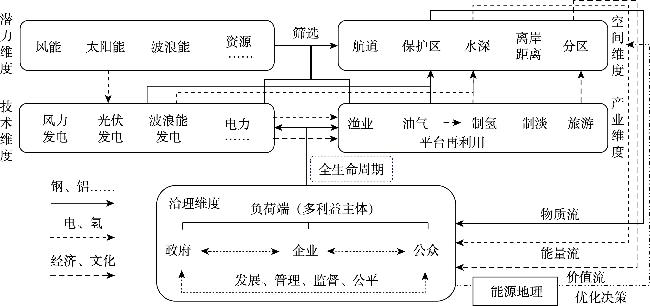
Offshore renewable energy boasts abundant potential and exhibits characteristics of synergistic development. However, it also faces challenges such as complex environmental conditions, low reliability, and spatial competition. Moreover, its interdisciplinary theoretical foundations have not yet been fully understood, and a systematic understanding of sustainable development pathways is lacking. From the perspective of energy geography, a research framework encompassing five dimensions—potential, technology, industry, space, and governance is developed. Through multidimensional integration and cross-domain analysis, the study systematically reviews the research progress in the development and utilization of offshore renewable energy, including potential assessment, technological development, industrial synergy, spatial evaluation, and impact governance. The review indicates that: (1) Offshore renewable energy is still in its early stage, characterized by “diverse energy types with great potential but technological imbalance, and abundant application scenarios but insufficient integration”. Specifically, offshore wind power technology is mature and dominates development. Energy industry development approaches are diverse with various integration scenarios, while single-mode development still prevails in the short term. Development and utilization offer significant environmental benefits, but may lead to risk transfer. (2) Scientific research, technological development, and industrial integration practices lag far behind the actual needs of offshore resources development and utilization. This is manifested in large discrepancies in assessment results due to different evaluation scales for energy potential, and inconsistent evaluation criteria within the same scale. Immature technological development and poor economic viability of industrial integration hinder efficient development and utilization of marine resources. Spatial assessments focus primarily on planar site selection and optimization, with limited research on three-dimensional marine utilization and the integration of energy and industrial production. The ecological impact mechanisms of development and utilization remain unclear. (3) To promote coordinated development across the five dimensions, offshore renewable energy development should focus on unifying potential assessment standards, enhancing techno-economic efficiency, promoting industrial integration, optimizing spatial utilization, and improving the governance framework. These efforts will support the efficient use of marine resources and the high-quality development of the marine economy. This review provides a comprehensive framework for understanding and advancing offshore renewable energy development, offering valuable insights for policymakers, researchers, and industry stakeholders.
DU Wenjie , CAI Guotian , Qi Xiaoling , WANG Peng , ZHANG Jixiang . Review on development and utilization of offshore renewable energy: An analysis based on a five-dimensional framework[J]. Resources Science, 2025 , 47(4) : 675 -690 . DOI: 10.18402/resci.2025.04.01
表1 国内外海上可再生能源技术成熟度、发展阶段与平准化度电成本(LCOE)对比Table 1 Comparison of technology maturity, development stages, and LCOE of offshore renewable energy at home and abroad |
| 能源技术 | 国际 | 国内 | LCOE/($/kWh) | |||
|---|---|---|---|---|---|---|
| 成熟度 | 发展阶段 | 成熟度 | 发展阶段 | |||
| 海上风电 | 9 | 商业化阶段 | 9 | 商业化阶段 | 0.09(固定式);0.16(漂浮式) | |
| 潮汐能发电 | 6~9 | 预商业化-商业化阶段 | 9 | 商业化阶段 | 0.20~0.45 | |
| 潮流能发电 | 3~8 | 原型-商业化阶段 | 7~8 | 预商业化阶段 | 0.20~0.45 | |
| 波浪能发电 | 1~8 | 研究-预商业化阶段 | 1~6 | 研究-工程示范阶段 | 0.30~0.55 | |
| 水上光伏 | 4~6 | 工程示范阶段 | 3~6 | 研究-工程示范阶段 | 0.35 | |
| 温差能发电 | 5~9 | 工程示范-商业化阶段 | 4~5 | 工程示范阶段 | 0.20~0.67 | |
| 盐差能发电 | 1~6 | 研究-原型阶段 | 1~3 | 研究阶段 | 0.11~2.37 | |
表2 能产融合场景主导能源及开发方式Table 2 Dominant energy sources and development approaches in energy-industry integration scenarios |
| 融合场景 | 国外 | 国内 | |||
|---|---|---|---|---|---|
| 主导能源 | 开发方式 | 主导能源 | 开发方式 | ||
| 能氢融合 | 风能 | 空间融合 | 风能 | 空间融合 | |
| 能油融合 | 风能 | 空间融合 | 风能 | 空间融合 | |
| 能淡融合 | 波浪能 | 结构融合 | 波浪能 | 结构融合 | |
| 能渔融合 | 风能 | 空间融合 | 风能 | 结构融合 | |
| 能旅融合 | 风能 | 空间融合 | 太阳能、波浪能 | 结构融合 | |
| 能观融合 | 太阳能 | 结构融合 | 太阳能 | 结构融合 | |
| [1] |
|
| [2] |
|
| [3] |
|
| [4] |
|
| [5] |
|
| [6] |
李志川, 高敏, 齐磊, 等. 漂浮式风电开发技术研究综述[J]. 船舶工程, 2023, 45(10): 153-160, 165.
|
| [7] |
|
| [8] |
|
| [9] |
傅伯杰. 地理学: 从知识、科学到决策[J]. 地理学报, 2017, 72(11): 1923-1932.
|
| [10] |
樊杰. “人地关系地域系统”是综合研究地理格局形成与演变规律的理论基石[J]. 地理学报, 2018, 73(4): 597-607.
|
| [11] |
李小云, 杨宇, 刘毅. 中国人地关系演进及其资源环境基础研究进展[J]. 地理学报, 2016, 71(12): 2067-2088.
|
| [12] |
|
| [13] |
杨宇, 郭越, 樊杰, 等. 能源地理研究的发展与展望[J]. 地理学报, 2024, 79(1): 147-170.
|
| [14] |
沈镭. 面向碳中和的中国自然资源安全保障与实现策略[J]. 自然资源学报, 2022, 37(12): 3037-3048.
|
| [15] |
成升魁, 沈镭, 封志明, 等. 中国自然资源研究的发展历程及展望[J]. 自然资源学报, 2020, 35(8): 1757-1772.
|
| [16] |
|
| [17] |
IRENA. Innovation Outlook: Ocean Energy Technologies[R]. Abu Dhabi: International Renewable Energy Agency, 2020.
|
| [18] |
IEA. Ocean Energy in Islands and Remote Costal Areas: Opportunities and Challenges[R]. Paris: International Energy Agency, 2020.
|
| [19] |
IEA. Offshore Wind Outlook 2019[R]. Paris: International Energy Agency, 2019.
|
| [20] |
|
| [21] |
|
| [22] |
周荣卫, 何晓凤, 朱蓉, 等. 中国近海风能资源开发潜力数值模拟[J]. 资源科学, 2010, 32(8): 1434-1443.
|
| [23] |
郑崇伟, 贾本凯, 郭随平, 等. 全球海域波浪能资源储量分析[J]. 资源科学, 2013, 35(8): 1611-1616.
|
| [24] |
|
| [25] |
|
| [26] |
|
| [27] |
|
| [28] |
|
| [29] |
郑洁, 杨淑涵, 柳存根, 等. 海洋可再生能源装备技术发展研究[J]. 中国工程科学, 2023, 25(3): 22-32.
|
| [30] |
|
| [31] |
付强, 王国荣, 周守为, 等. 温差能与低温海水资源综合利用研究[J]. 中国工程科学, 2021, 23(6): 52-60.
|
| [32] |
|
| [33] |
IRENA. Offshore Renewables: An Action Agenda for Deployment[R]. Abu Dhabi: International Renewable Energy Agency, 2021.
|
| [34] |
刘伟民, 刘蕾, 陈凤云, 等. 中国海洋可再生能源技术进展[J]. 科技导报, 2020, 38(14): 27-39.
|
| [35] |
|
| [36] |
|
| [37] |
|
| [38] |
|
| [39] |
|
| [40] |
|
| [41] |
|
| [42] |
郭胜伟, 门秀杰, 张胜军, 等. 中国海洋能源产业发展现状及协同发展思路[J]. 中国海上油气, 2024, 36(3): 230-239.
|
| [43] |
|
| [44] |
|
| [45] |
van den Burg S W K,
|
| [46] |
|
| [47] |
|
| [48] |
|
| [49] |
|
| [50] |
|
| [51] |
侯娟, 周为峰, 王鲁民, 等. 中国深远海养殖潜力的空间分析[J]. 资源科学, 2020, 42(7): 1325-1337.
|
| [52] |
|
| [53] |
|
| [54] |
|
| [55] |
王军成, 孙继昌, 刘岩, 等. 我国海洋监测仪器装备发展分析及展望[J]. 中国工程科学, 2023, 25(3): 42-52.
|
| [56] |
蔡国田, 李沛, 赵黛青. 中国能源战略研究的经济地理学视角探讨[J]. 世界地理研究, 2018, 27(1): 94-103.
|
| [57] |
|
| [58] |
|
| [59] |
|
| [60] |
|
| [61] |
邵萌, 伊传秀, 陈玉静, 等. 海南省波浪能开发智能化适宜性分析模型研究[J]. 中国海洋大学学报(自然科学版), 2024, 54(6): 165-178.
|
| [62] |
|
| [63] |
|
| [64] |
|
| [65] |
|
| [66] |
|
| [67] |
|
| [68] |
|
| [69] |
|
| [70] |
|
| [71] |
|
| [72] |
|
| [73] |
|
| [74] |
|
| [75] |
|
| [76] |
李彦平, 陈逸洋, 刘大海, 等. 海域立体分层利用的空间冲突及管理: 基于时空行为视角[J]. 自然资源学报, 2023, 38(10): 2475-2489.
|
| [77] |
李彦平, 刘大海, 陈逸洋, 等. 海域三维空间资源认知与立体化管理[J]. 自然资源学报, 2024, 39(1): 49-61.
|
| [78] |
杨红生, 茹小尚, 张立斌, 等. 海洋牧场与海上风电融合发展: 理念与展望[J]. 中国科学院院刊, 2019, 34(6): 700-707.
|
| [79] |
|
| [80] |
|
| [81] |
|
| [82] |
向宁, 王礼茂, 屈秋实, 等. 基于生命周期评估的海、陆风电系统排放对比[J]. 资源科学, 2021, 43(4): 745-755.
|
| [83] |
|
| [84] |
|
| [85] |
|
| [86] |
IEA. The Role of Critical Minerals in Clean Energy Transitions[R]. Paris: International Energy Agency, 2021.
|
| [87] |
汪鹏, 王翘楚, 韩茹茹, 等. 全球关键金属-低碳能源关联研究综述及其启示[J]. 资源科学, 2021, 43(4): 669-681.
|
| [88] |
|
| [89] |
杨正先, 张志锋, 韩建波, 等. 海洋资源环境承载能力超载阈值确定方法探讨[J]. 地理科学进展, 2017, 36(3): 313-319.
|
| [90] |
马仁锋, 季顺伟, 马静武, 等. 海域“双评价”的实践与应用: 以温州为例[J]. 经济地理, 2022, 42(1): 21-27.
|
| [91] |
樊杰, 周侃, 孙威, 等. 人文-经济地理学在生态文明建设中的学科价值与学术创新[J]. 地理科学进展, 2013, 32(2): 147-160.
|
| [92] |
王亚飞, 樊杰. 资源环境承载能力百年研究的系统综述[J]. 地理学报, 2023, 78(11): 2676-2693.
|
| [93] |
|
| [94] |
|
| [95] |
|
| [96] |
|
| [97] |
|
| [98] |
|
| [99] |
|
| [100] |
|
/
| 〈 |
|
〉 |