Drivers of the formation of collaborative network between herdsmen in rangeland governance: From the perspective of ecological fit
Received date: 2023-12-26
Revised date: 2024-05-30
Online published: 2024-10-08
[Objective] Collaborative governance is increasingly important in coping with complex grassland resource and environmental problems under dynamic changes, but the effectiveness of governance also depends partly on the fit between the governing and governed systems, thus there is a need to embed a fit perspective for advancing the scientific understanding of the formation mechanism of collaborative governance network. [Methods] Based on the first-hand data from surveys conducted in 2020 and 2022 at Yangrang Village, Gonghe County, Qinghai Province, we constructed the social-ecological network of herders and rangeland using multilevel network and minimum building block methods, and further empirically examined the role of structural, actor attribute, covariate, and fit effects in the formation of collaborative governance network among herders using the multilevel exponential random graph model based on the description of the basic characteristics of the network. [Results] (1) The collaborative network is characterized by low density and high centralization, and each herder has two collaborative ties on average. (2) Among the structural effects, only ties closure promotes the formation of collaborative network, i.e., collaborative ties are more likely to be established between herders who share a common collaborative partner. (3) In the actor attribute effects, the activity effect is stronger than the homophily effect. For the former, social status, years of education and managed pastureland area all have a positive effect on the formation of collaborative ties; for the latter, collaborative ties are more likely to be established between herders with similar numbers of livestock. (4) Affective network has an entraining effect on the establishment of collaborative network, suggesting that collaborative ties are more likely to be established between herders with kinship or close blood ties. (5) Among the ecological fit effects, only sharing fit has a significant effect on the formation of collaborative network. [Conclusion] There is still much room for improvement in the collaborative governance of rangeland resources for herders. It is desirable to promote the establishment of collaboration among herders with similar capabilities and resources while letting self-organization and affective dependence play a role, and to make full use of the path of resource sharing to cultivate and develop collaborative governance. In addition, awareness and understanding of the ecological changes in grasslands and ecological linkages of pastures should be strengthened, and herders should be guided and encouraged to collaborate in solving the problem related to scale fit, in order to help herders break through path dependence and enhance the pathways and effectiveness of collaborative governance.
CHEN Liang , CHEN Haibin , SHAO Liqun , WANG Shuai , XIA Xianli , ZHANG Han . Drivers of the formation of collaborative network between herdsmen in rangeland governance: From the perspective of ecological fit[J]. Resources Science, 2024 , 46(8) : 1460 -1477 . DOI: 10.18402/resci.2024.08.02
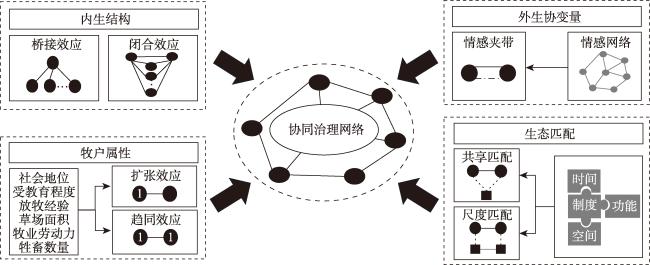
表1 网络构建块的命名与描述Table 1 Names and description of network building blocks |
| 构建块 | 名称 | 统计量 | 描述 |
|---|---|---|---|
| 结构效应 | |||
 | 桥接效应 | ASA | 中心度较高的牧户充当其他牧户之间的桥梁从而建立协同治理关系 |
 | 闭合效应 | ATA | 牧户建立闭合三角关系,这有助于解决高风险的集体行动问题[32] |
| 行动者属性效应 | |||
 | 扩张效应 | Activity | 具有特定属性的牧户与其他不具有或少有这一属性的牧户建立协同治理关系 |
 | 趋同效应 | Homophily | 属性接近或相似的牧户之间建立协同治理关系 |
| 协变量效应 | |||
 | 夹带效应 | Entraining | 存在情感基础的牧户之间建立协同治理关系 |
| 匹配效应 | |||
 | 共享匹配 | TriangleXAX | 共享草场的牧户之间建立协同治理关系 |
 | 尺度匹配 | C4AXB | 分别管理生态连通的草场的牧户之间建立协同治理关系 |
| 控制变量 | |||
 | A2PA | 牧户之间建立开放三角关系,作为建立闭合三角关系的前提条件,控制此结构以保证ATA能够得到真实反映 | |
 | Star2AX | 牧户同时拥有协同治理关系与生态关系,控制此结构以保证TriangleXAX能够得到真实反映 | |
 | L3XAX | 分别管理非生态连通草场的牧户之间建立协同治理关系,控制此结构以保证C4AXB能够得到真实反映 |
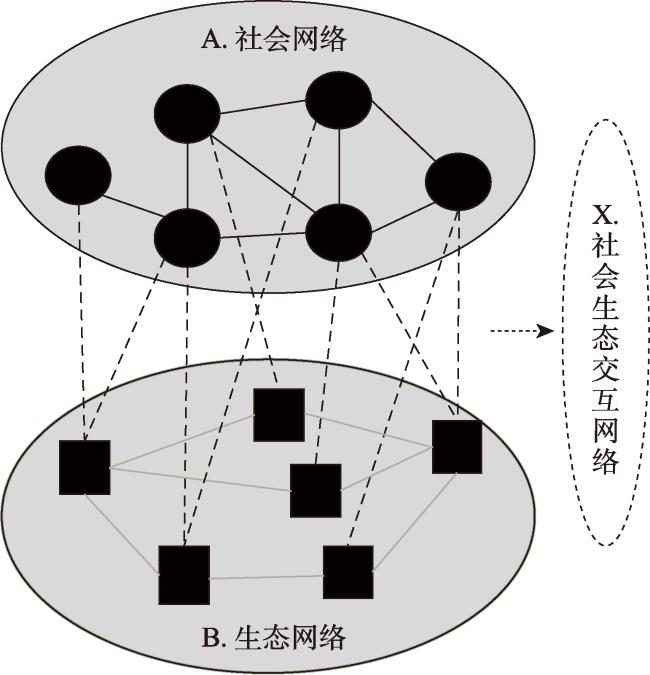
注:黑色圆圈代表牧户,黑色方块代表草场,黑色实线代表社会关系(即牧户协同关系),灰色实线代表生态关系(即草场间的生态连通关系),灰色虚线代表社会-生态交互关系(即牧户与草场的管理关系)。 |
表2 网络关系类型Table 2 Types of network relationships |
| 类型 | 过程 | 定义 |
|---|---|---|
| 社会 | 情感依赖 | 牧户之间的亲缘或血缘关系 |
| 信息交流 | 气候和生态变化认知、放牧经验和生产知识与技术的交流与传播以及政策、牲畜保险和价格等信息的分享与同步 | |
| 资源获取 | 草场、牲畜、资金、机械设备、劳动力等资源的共同支持与互助 | |
| 生态 | 牲畜移动与物种扩散 | 牛羊等牲畜的日常活动范围和高原鼠兔等物种的最大潜在扩散距离[15] |
| 社会-生态 | 草场管理 | 牧户在草场上进行的放牧、打草、挖虫草等利用活动,以及禁牧、草畜平衡等保护活动 |
表3 变量描述性统计Table 3 Descriptive statistics of variables |
| 属性变量 | 变量符号 | 定义与赋值 | 均值 | 标准差 |
|---|---|---|---|---|
| 社会地位 | SS | 户主是否为党员、干部或德高望重的老人,是=1;否=0 | — | — |
| 受教育程度 | EDU | 户主的受教育年限 | 3.43 | 3.82 |
| 放牧经验 | GEXP | 户主放牧年限 | 22.79 | 14.34 |
| 牧业劳动力 | PL | 家庭中参与畜牧生产活动的劳动力人数 | 1.84 | 1.25 |
| 草场面积 | PA | 家庭正在使用的草场面积/亩 | 658.06 | 257.73 |
| 牲畜数量 | LN | 家庭年末牲畜存栏量/标准羊(a) | 154.57 | 135.79 |
| 兼业类型 | PTB | 家庭为专业牧户=0;Ⅰ兼牧户=1;Ⅱ兼牧户=2;非专业牧户=3(b) | — | — |
注:(a)1只蔵系羊/绵羊/山羊相当于1只标准羊,1头牦牛/奶牛/黄牛相当于5只标准羊,1匹马相当于6只标准羊[34];(b)基于畜牧业收入占总收入比重划分:专业牧户≥95%>Ⅰ兼牧户≥50%>Ⅱ兼牧户≥5%>非专业牧户。 |
表4 样本描述性统计Table 4 Descriptive statistics of samples |
| 基本特征 | 分类 | 频数 | 百分比/% |
|---|---|---|---|
| 性别 | 男 | 69 | 81.18 |
| 女 | 16 | 18.82 | |
| 年龄 | (0, 30] | 10 | 11.76 |
| (30, 60] | 67 | 78.82 | |
| (60, 100] | 8 | 9.42 | |
| 受教育程度 | 小学及以下 | 76 | 89.41 |
| 初中 | 4 | 4.71 | |
| 高中及以上 | 5 | 5.88 | |
| 健康水平 | 非常差 | 0 | 0.00 |
| 较差 | 1 | 1.17 | |
| 一般 | 9 | 10.59 | |
| 健康 | 7 | 8.24 | |
| 非常健康 | 68 | 80.00 | |
| 普通话水平 | 非常差 | 15 | 17.65 |
| 较差 | 29 | 34.12 | |
| 一般 | 28 | 32.94 | |
| 较好 | 10 | 11.76 | |
| 非常好 | 3 | 3.53 | |
| 家庭总人口数 | (0, 3] | 28 | 32.94 |
| (3, 5] | 50 | 58.82 | |
| (5, 10] | 7 | 8.24 | |
| 牧业劳动力人数 | (0, 3] | 79 | 92.94 |
| (3, 5] | 5 | 5.88 | |
| (5, 10] | 1 | 1.18 | |
| 草场面积/亩 | (0, 500] | 26 | 30.59 |
| (500, 1000] | 52 | 61.18 | |
| (1000, 1500] | 7 | 8.23 | |
| 牲畜数量/羊单位 | (0, 200] | 55 | 64.71 |
| (200, 400] | 27 | 31.76 | |
| (400, 600] | 3 | 3.53 | |
| 总年收入/元 | (0, 50000] | 43 | 50.59 |
| (50000, 100000] | 29 | 34.12 | |
| >100000 | 13 | 15.29 |
表5 网络基本结构特征Table 5 Basic structural characteristics of networks |
| 指标 | 情感网络 | 协同治理网络 | 生态网络 | 社会-生态交互网络 |
|---|---|---|---|---|
| 节点 | 85 | 85 | 199 | 284 |
| 边 | 109 | 173 | 1234 | 294 |
| 密度 | 0.031 | 0.048 | 0.062 | 0.017 |
| 集中度 | 0.066 | 0.572 | 0.082 | — |
| 最大度数中心度 | 8 | 51 | 26 | 11 |
| 最小度数中心度 | 0 | 0 | 0 | 1 |
| 平均度数中心度 | 2.565 | 2.035 | 12.402 | 3.459 |
表6 ML-ERGM估计结果Table 6 Estimation results of the multilevel exponential random graph model (ML-ERGM) |
| 构建块 | 模型1 | 模型2 | 模型 3 | ||||||||
|---|---|---|---|---|---|---|---|---|---|---|---|
| 参数 | 标准误 | GOF-t | 参数 | 标准误 | GOF-t | 参数 | 标准误 | GOF-t | |||
| Edge | -3.1312* | 0.9889 | 0.0736 | -3.8966* | 0.9834 | -0.1541 | -3.8543* | 1.0578 | 0.0810 | ||
| 结构效应 | |||||||||||
| ASA | -0.6885* | 0.3067 | 0.0772 | -0.7247* | 0.2899 | -0.1534 | -0.6897* | 0.2946 | 0.0803 | ||
| ATA | 0.4182* | 0.1322 | 0.0574 | 0.4087* | 0.1224 | -0.1840 | 0.3981* | 0.1269 | 0.0916 | ||
| 行动者属性效应 | |||||||||||
| 扩张效应 | |||||||||||
| SS | 0.7181* | 0.2256 | 0.0683 | 0.8365* | 0.2459 | -0.1497 | 0.8572* | 0.2531 | 0.1005 | ||
| EDU | 0.0480* | 0.0189 | 0.1982 | 0.0540* | 0.0204 | -0.0199 | 0.0560* | 0.0215 | 0.1897 | ||
| EXP | -0.0049 | 0.0063 | -0.0849 | -0.0057 | 0.0062 | -0.2520 | -0.0066 | 0.0063 | -0.0784 | ||
| PL | -0.0517 | 0.0860 | -0.1175 | -0.0171 | 0.0945 | -0.3024 | -0.0161 | 0.0909 | -0.1213 | ||
| PA | 0.0007* | 0.0003 | -0.0258 | 0.0008* | 0.0003 | -0.2477 | 0.0008* | 0.0003 | 0.0135 | ||
| LN | 0.0007 | 0.0007 | -0.1498 | 0.0005 | 0.0008 | -0.3100 | 0.0007 | 0.0008 | -0.1452 | ||
| 趋同效应 | |||||||||||
| SS | 0.2975 | 0.4682 | 0.0349 | 0.3121 | 0.4995 | -0.0627 | 0.2236 | 0.5440 | 0.0450 | ||
| EDU | 0.0287 | 0.0239 | 0.2340 | 0.0367 | 0.0254 | 0.0381 | 0.0426 | 0.0253 | 0.2238 | ||
| EXP | -0.0022 | 0.0084 | 0.2298 | 0.0007 | 0.0089 | -0.0112 | -0.0006 | 0.0087 | 0.2014 | ||
| PL | 0.0367 | 0.0937 | 0.2632 | 0.0601 | 0.0980 | 0.0356 | 0.0644 | 0.0977 | 0.1859 | ||
| PA | 0.0006 | 0.0004 | -0.1612 | 0.0007 | 0.0004 | -0.2951 | 0.0006 | 0.0004 | -0.1001 | ||
| LN | -0.0020* | 0.0010 | 0.1176 | -0.0021 | 0.0011 | -0.1048 | -0.0021* | 0.0011 | 0.0870 | ||
| PTB | -0.1868 | 0.2199 | -0.0727 | -0.1753 | 0.2328 | -0.2345 | -0.2370 | 0.2429 | -0.0568 | ||
| 协变量效应 | |||||||||||
| AFF | 3.2888* | 0.2511 | -0.0440 | 3.0572* | 0.2693 | 0.0076 | |||||
| 匹配效应 | |||||||||||
| TriangleXAX | 0.3577* | 0.1678 | -0.0132 | ||||||||
| C4AXB | 0.0716 | 0.0648 | 0.0732 | ||||||||
| 控制变量 | |||||||||||
| A2PA | 0.0419* | 0.0062 | 0.0472 | 0.0452* | 0.0062 | -0.1736 | 0.0446* | 0.0063 | 0.0818 | ||
| Star2AX | 0.0373 | 0.0934 | 0.1088 | ||||||||
| L3XAX | -0.0369 | 0.0316 | 0.1304 | ||||||||
| 马氏距离 | 1023 | 993 | 963 | ||||||||
注:*表示在0.05水平上显著。 |
| [1] |
|
| [2] |
|
| [3] |
谭淑豪, 杜辉, 等.戴微著, 以集体行动促牧区草地资源走出治理困境[J]. 中国人口·资源与环境, 2023, 33(2): 176-187.
[
|
| [4] |
新华网. “十四五”时期我国将实施退化草原修复2.3亿亩[N/OL]. (2021-08-20) [2024-08-02]. http://www.news.cn/fortune/2021-08/20/c_1127780934.htm.
[ Xinhua. China to Implement 230 Million Acres of Degraded Grassland Restoration during 14th Five-Year Plan Period[N/OL]. (2021-08-20) [2024-08-25]. http://www.news.cn/fortune/2021-08/20/c_1127780934.htm.]
|
| [5] |
|
| [6] |
董世魁, 杨明岳, 任继周, 等. 基于放牧系统单元的草地可持续管理: 概念与模式[J]. 草业科学, 2020, 37(3): 403-412.
[
|
| [7] |
|
| [8] |
谭淑豪. 牧业制度变迁对草地退化的影响及其路径[J]. 农业经济问题, 2020, (2): 115-125.
[
|
| [9] |
|
| [10] |
赵昕月, 董世魁, 杨明岳, 等. 基于扰沌模型的青藏高原放牧社会-生态系统分析[J]. 自然资源学报, 2021, 36(8): 2125-2138.
[
|
| [11] |
|
| [12] |
|
| [13] |
|
| [14] |
张重, 龚健, 李靖业, 等. 基于信息量模型的三江源东部草地退化易发性评价: 以青海省果洛州为例[J]. 资源科学, 2022, 44(3): 464-479.
[
|
| [15] |
|
| [16] |
|
| [17] |
|
| [18] |
|
| [19] |
|
| [20] |
|
| [21] |
|
| [22] |
|
| [23] |
|
| [24] |
郭建杰, 谢富纪. 基于ERGM的协同创新网络形成影响因素实证研究[J]. 管理学报, 2021, 18(1): 91-98.
[
|
| [25] |
徐建军, 安辉, 杨晓伟. “一带一路”跨国金融对出口贸易网络的影响研究: 基于指数随机图模型的实证检验[J]. 中国软科学, 2022, (6): 146-157.
[
|
| [26] |
|
| [27] |
戴靓, 丁子军, 曹湛, 等. 长三角地区城市协同创新网络的演化特征及其驱动力[J]. 资源科学, 2023, 45(5): 1006-1019.
[
|
| [28] |
|
| [29] |
覃雄合, 李梁荣, 黄晓东. 基于指数随机图模型的全球跨境并购网络结构特征与形成机制[J]. 资源科学, 2023, 45(9): 1693-1709.
[
|
| [30] |
|
| [31] |
|
| [32] |
|
| [33] |
|
| [34] |
钱琛, 邵砾群, 王帅, 等. 社会网络对牧户草地租入行为的影响: 以青海省门源县4个村为例[J]. 资源科学, 2021, 43(2): 269-279.
[
|
| [35] |
庄淑蓉, 严祥, 陈睿山. “公地悲剧”的研究进展及其对资源可持续治理的启示[J]. 自然资源学报, 2023, 38(6): 1651-1666.
[
|
| [36] |
Gongbuzeren,
|
| [37] |
|
| [38] |
|
| [39] |
|
| [40] |
|
| [41] |
|
| [42] |
薛彩霞. 农户政治身份对绿色农业生产技术的引领效应[J]. 西北农林科技大学学报(社会科学版), 2022, 22(3): 148-160.
[
|
| [43] |
张勉, 魏钧, 杨百寅. 社会资本的来源:工作咨询网络中心性的前因变量[J]. 管理世界, 2009, (5): 119-127.
[
|
| [44] |
史雨星, 赵敏娟. 关系网络、社会互动与牧户草场转入行为: 草场流转市场转型期社会资本作用的再审视[J]. 农业技术经济, 2023, (1): 45-59.
[
|
| [45] |
|
/
| 〈 |
|
〉 |