Construction of a full-chain model of municipal solid waste sorting based on digital technology and case studies
Received date: 2023-11-07
Revised date: 2024-01-27
Online published: 2024-05-29
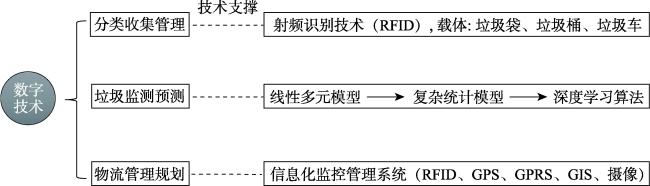
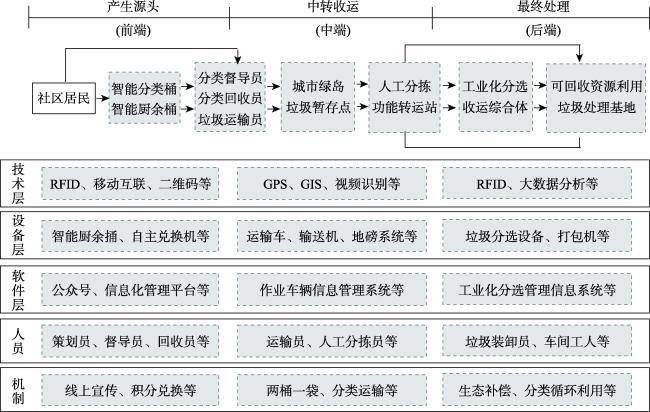
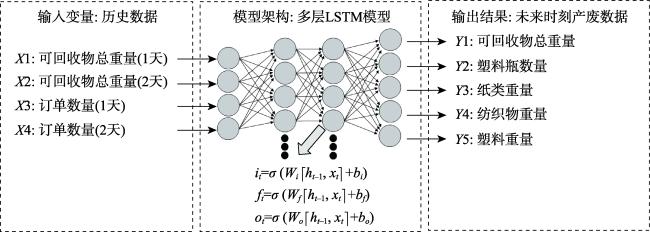
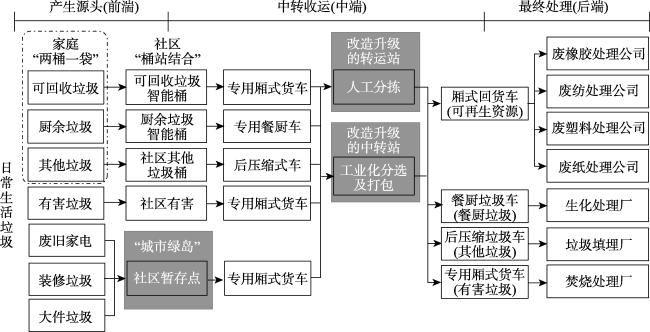
[Objective] In the context of mandatory municipal solid waste (MSW) classification, traditional waste sorting practices face challenges in terms of participation rates and accuracy. In view of the increasing waste generation and resource recycling demand, the management and disposal level of MSW need to be further improved. This study aimed to thoroughly explore how digital technology paths enhance and transform waste sorting models, promoting the sustainable development of resource recycling and environmental protection. [Methods] This research conducted empirical case studies on the different application scenarios and practical cases of digital technology at various stages of domestic waste management, including generation, transfer, collection, and final disposal. It provided an in-depth analysis of different cases by integrating advanced algorithms such as deep learning and genetic algorithms. [Results] The application of digital technology at the front-stage can improve the participation rate and accuracy of MSW disposal and predict future waste production trends, with errors within 21.94%. The application in the middle-stage optimizes the inefficiencies in the traditional model of waste collection and transportation, planning the optimal routes using genetic algorithms to achieve unified objectives of economic cost, carbon emissions, and collection efficiency. The application at the end-stage helps enhance the overall efficiency of waste treatment and disposal, achieving a net benefit increase ranging from 8% to 39.7%. [Conclusion] This paper proposes a new model for waste sorting based on digital technology and centered on full-chain management. By leveraging information and automation technologies, it provides more efficient and precise solutions for waste sorting. Digital technology addresses the information gaps in traditional waste sorting methods, while the full-chain approach coordinates the front-end, mid-end, and back-end stages of waste sorting. This model overcomes the shortcomings of traditional waste sorting methods, enhances the recycling rate of typical urban waste, and achieves sustainable urban waste management.
Key words: municipal solid waste; waste sorting; digital technology; deep learning; full-chain
CHEN Jiehao , HU Yupeng , FEI Fan , LI Jun , WEN Zongguo . Construction of a full-chain model of municipal solid waste sorting based on digital technology and case studies[J]. Resources Science, 2024 , 46(4) : 687 -699 . DOI: 10.18402/resci.2024.04.03
表1 试点项目2018年垃圾分类回收数据表Table 1 Data table of waste sorting and recycling of pilot projects in 2018 |
| 序号 | 品类 | 回收数量 | 户均回收值 |
|---|---|---|---|
| 1 | 玻璃类 | 50046 kg | 1.99 kg |
| 2 | 金属类 | 83515 kg | 3.33 kg |
| 3 | 塑料类 | 175317 kg | 6.98 kg |
| 4 | 织物类 | 57590 kg | 2.29 kg |
| 5 | 纸质类 | 162487 kg | 6.47 kg |
| 6 | 电器类 | 3774个 | 0.15个(4.5 kg) |
| 7 | 电子品类 | 697个 | 0.03个(0.09 kg) |
表2 长短期记忆神经网络模型拟合效果Table 2 Long short-term memory neural network (LSTM) model fitting results |
| 预测变量 | 拟合系数R2 | 均方误差MAPE/% |
|---|---|---|
| 可回收物总重量 | 0.88 | 21.94 |
| 塑料瓶数量 | 0.81 | 31.22 |
| 纸类重量 | 0.87 | 25.35 |
| 纺织物重量 | 0.85 | 26.54 |
| 塑料重量 | 0.83 | 27.68 |
表4 模型适用性评估Table 4 Model applicability evaluation |
| 预测变量 | MAPE/% | ||
|---|---|---|---|
| 广州 | 北京 | 上海 | |
| 可回收物总重量 | 21.94 | 24.58 | 25.72 |
| 塑料瓶数量 | 31.22 | 33.25 | 32.87 |
| 纸类重量 | 25.35 | 27.88 | 27.53 |
| 纺织物重量 | 26.54 | 28.71 | 29.21 |
| 塑料重量 | 27.68 | 27.71 | 26.94 |
| [1] |
|
| [2] |
|
| [3] |
中华人民共和国住房和城乡建设部. 中国城乡建设统计年鉴2021[M]. 北京: 中国统计出版社, 2021.
[ Ministry of Housing and Urban-Rural Development of the People’s Republic of China. China Urban-Rural Construction Statistical Yearbook 2021[M]. Beijing: China Statistics Press, 2021.]
|
| [4] |
|
| [5] |
国务院办公厅. 关于转发国家发展改革委住房城乡建设部生活垃圾分类制度实施方案的通知[J]. 中华人民共和国国务院公报, 2017, (11): 91-95.
[ General Office of the State Council. Notice on forwarding the implementation plan for the domestic waste classification system by the National Development and Reform Commission and the Ministry of Housing and Urban-Rural Development[J]. Gazette of the State Council of the People’s Republic of China, 2017, (11): 91-95.]
|
| [6] |
国务院办公厅. 关于印发“无废城市”建设试点工作方案的通知[J]. 中华人民共和国国务院公报, 2019, (4): 5-11.
[ General Office of the State Council. Notice on the issuance of the pilot work program for the construction of “waste free cities”[J]. Gazette of the State Council of the People’s Republic of China, 2019, (4): 5-11.]
|
| [7] |
北京市统计局. 垃圾分类成效明显: 北京市城乡居民垃圾分类意识及现状调查报告[R/OL]. (2021-05-14) [2024-04-26]. http://www.beijing.gov.cn/gongkai/shuju/sjjd/202105/t20210514_2389272.html.
[ Beijing Municipal Bureau of Statistics. Remarkable Achievement in Waste Classification-Report on the Awareness and Current Situation of Urban and Rural Residents' Waste Classification in Beijing[R/OL]. (2021-05-14) [2024-04-26].
|
| [8] |
陈禹行, 庄志凌, 曾杰. 中国垃圾分类现状与智能分类垃圾系统设计分析[J]. 电子技术与软件工程, 2019, (23): 99-102.
[
|
| [9] |
温宗国, 胡纾寒, 张桦楠, 等. 资源循环利用的产业互联新时代[M]. 北京: 科学出版社, 2018.
[
|
| [10] |
国务院. 关于积极推进“互联网+”行动的指导意见[J]. 中华人民共和国国务院公报, 2015, (20): 11-23.
[ The State Council. Guiding opinions on actively promoting the “Internet Plus” action[J]. Gazette of the State Council of the People’s Republic of China, 2015, (20): 11-23.]
|
| [11] |
毛长丹. 基于RFID的智能垃圾分类回收系统设计[J]. 信息系统工程, 2022, (3): 96-99.
[
|
| [12] |
|
| [13] |
|
| [14] |
|
| [15] |
|
| [16] |
|
| [17] |
|
| [18] |
|
| [19] |
|
| [20] |
|
| [21] |
|
| [22] |
|
| [23] |
|
| [24] |
|
| [25] |
|
| [26] |
|
| [27] |
|
| [28] |
|
| [29] |
|
| [30] |
|
| [31] |
|
| [32] |
|
| [33] |
|
| [34] |
|
| [35] |
|
| [36] |
|
| [37] |
|
| [38] |
|
| [39] |
|
| [40] |
李昊朋. 基于机器学习方法的智能机器人探究[J]. 通讯世界, 2019, 26(4): 241-242.
[
|
| [41] |
|
| [42] |
|
| [43] |
|
| [44] |
|
| [45] |
|
| [46] |
|
| [47] |
|
| [48] |
|
| [49] |
|
| [50] |
|
/
| 〈 |
|
〉 |