Influencing factors of municipal solid waste classification policy diffusion: Based on event history analysis of 261 prefecture-level cities in China
Received date: 2022-04-28
Revised date: 2022-07-04
Online published: 2022-09-25
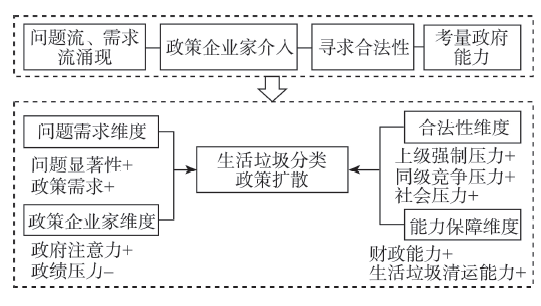
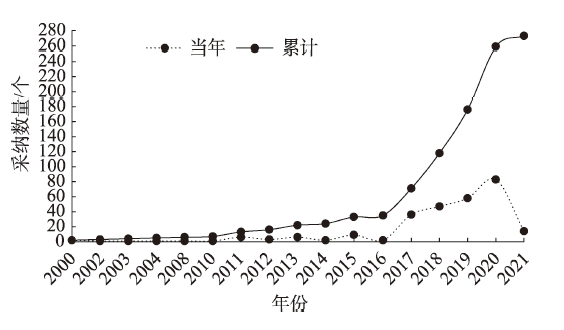
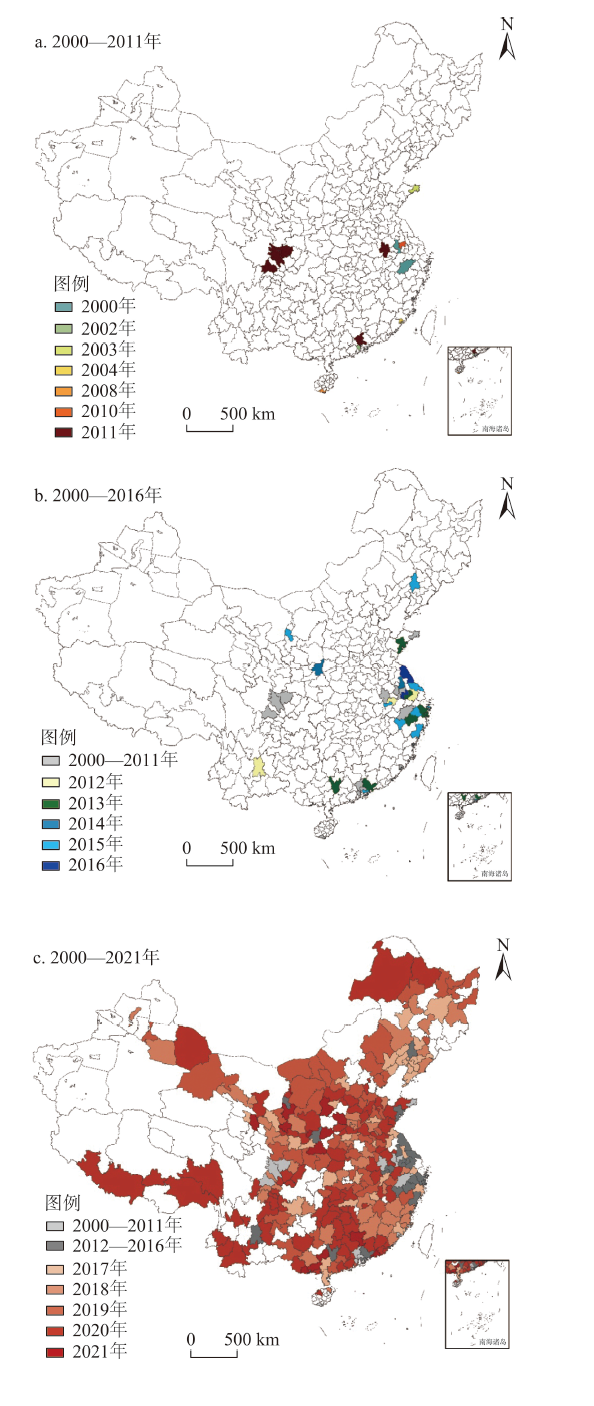
Clarifying the spatial and temporal distribution characteristics and causes of municipal solid waste classification policy diffusion can accelerate the policy implementation and improve urban environmental governance. This study took the municipal solid waste classification policy diffusion in 261 prefecture-level cities as the research object, and constructed a model that includes four dimensions: problem demand, policy entrepreneur, legitimacy, and capability. The study found that: (1) The diffusion of municipal solid waste classification policy presents a S-shaped curve in the temporal dimension, and shows regional demonstration and proximity effects in space. (2) The diffusion of municipal solid waste classification policy is affected by multiple factors. Peer competition pressure, financial capacity, coercive pressure from superiors, and the salience of the problem are the main driving forces for the policy diffusion, while government attention of mere formality may hinder the policy diffusion. (3) The influencing factors vary in time and space. Specifically, financial capacity and superior pressure, peer competition pressure and financial capacity, and peer competition pressure are the main driving factors in the time periods from 2003 to 2011, 2012 to 2016, and 2017 to 2020 respectively. The mix of factors influencing regional policy adoption also varies between the eastern, central, and western parts of China. The lessons are as follows: (1) Local government policy adoption should take the initiative to “tailor-made” according to the actual governance of the jurisdiction. (2) It is urgent to give full play to the key role of government entities in policy agenda setting and policy implementation. (3) Finally, it is necessary to objectively assess the strong driving effect of superior coercive pressure on policy diffusion. An incentive provision and assessment mechanism should complement superior pressure to create an innovative atmosphere of “competing for the first place”.
LUO Dan , LI Jiangping , ZHANG Qingzhi . Influencing factors of municipal solid waste classification policy diffusion: Based on event history analysis of 261 prefecture-level cities in China[J]. Resources Science, 2022 , 44(7) : 1476 -1493 . DOI: 10.18402/resci.2022.07.13
表1 变量设置及测量方法Table 1 Variable setting and measurement |
| 变量名称 | 测量方式 | 数据来源 | ||
|---|---|---|---|---|
| 自变量 | 问题需求维度 | 问题显著性(Problem) | 城市当年年末总人口数量/万人,滞后一年取对数 | 《中国城市统计年鉴》 |
| 政策需求(Demand) | 市辖区人均地区生产总值/万元,滞后一年取对数 | 《中国城市统计年鉴》 | ||
| 政策企业家维度 | 政府注意力(Attention) | 结合计算机辅助文本学习法,以地级市政府工作报告中的词频表征,滞后一年 | 文构财经文本数据平台的地市政府工作报告子数据库(a) | |
| 政绩压力(Achievement) | 选取GDP增长率、财政收入增长率以及失业率作为表征,每一细分指标低于同类区域平均值赋值为“1”,反之为“0”,再将三个指标的赋值相加,取值范围为[0,3],滞后一年 | 《中国城市统计年鉴》 | ||
| 合法性维度 | 上级强制压力(Force) | 是否被上级政府列为垃圾分类试点城市,是=1,否=0 | 政府官网、北大法宝-法律法规检索系统(b) | |
| 同级竞争压力(Peer) | 省内采纳垃圾分类政策的城市总数除以省内其他城市总数 | 政府官网、北大法宝-法律法规检索系统 | ||
| 社会压力(Society) | 以“垃圾分类”为主题的新闻报道篇数,滞后一年 | 中国知网报纸数据库(c) | ||
| 能力维度 | 财政收入(Revenue) | 城市当年度人均公共财政收入/(万元/人),滞后一年取对数 | 《中国城市统计年鉴》 | |
| 生活垃圾清运能力(Ability) | 城市当年度人均生活垃圾清运量/(t/人),滞后一年 | 《中国城市建设统计年鉴》 | ||
| 因变量 | 政策扩散 (Diffusion) | 若出台了生活垃圾分类行动方案或实施细则类的文件记为“1”,反之为“0” | 政府官网、北大法宝-法律法规检索系统 | |
注:(a) 文构财经文本数据库: http://www.wingodata.com/#/dash/index;(b) 北大法宝-法律法规检索系统: http://www.pkulaw.cn/law;(c) 中国知网报纸数据库: https://kns.cnki.net/kns8?dbcode=CCND。 |
表2 描述性统计结果Table 2 Descriptive statistics of the variables |
| 变量名称 | 观测值 | 最小值 | 最大值 | 均值 | 标准差 | VIF |
|---|---|---|---|---|---|---|
| Diffusion | 4698 | 0.000 | 1.000 | 0.160 | 0.366 | — |
| Problem | 4697 | 1.203 | 3.176 | 2.550 | 0.294 | 1.168 |
| Demand | 4682 | 3.088 | 5.463 | 4.549 | 0.349 | 5.035 |
| Attention | 4698 | 0.000 | 166.000 | 35.330 | 21.224 | 1.346 |
| Achievement | 4698 | 0.000 | 3.000 | 1.590 | 0.925 | 1.008 |
| Force | 4698 | 0.000 | 1.000 | 0.170 | 0.376 | 1.966 |
| Peer | 4698 | 0.000 | 1.000 | 0.170 | 0.300 | 2.096 |
| Society | 4698 | 0.000 | 23.000 | 0.650 | 1.607 | 1.042 |
| Revenue | 4697 | 1.799 | 4.911 | 3.190 | 0.519 | 6.082 |
| Ability | 4690 | 0.002 | 2.309 | 0.127 | 0.192 | 1.476 |
表3 双变量相关性统计结果Table 3 Statistical results of bivariate correlation |
| 变量 | Diffusion | Problem | Demand | Attention | Achievement | Force | Peer | Society | Revenue | Ability |
|---|---|---|---|---|---|---|---|---|---|---|
| Diffusion | 1.000 | |||||||||
| Problem | 0.042*** | 1.000 | ||||||||
| Demand | 0.388*** | -0.006 | 1.000 | |||||||
| Attention | 0.261*** | 0.035** | 0.452*** | 1.000 | ||||||
| Achievement | -0.042*** | 0.003 | -0.029* | 0.011 | 1.000 | |||||
| Force | 0.639*** | 0.058*** | 0.366*** | 0.303*** | -0.014 | 1.000 | ||||
| Peer | 0.744*** | 0.033** | 0.421*** | 0.329*** | -0.063*** | 0.682*** | 1.000 | |||
| Society | 0.115*** | 0.042*** | 0.105*** | 0.064*** | 0.021 | 0.073*** | 0.120*** | 1.000 | ||
| Revenue | 0.438*** | -0.131*** | 0.881*** | 0.467*** | -0.035** | 0.382*** | 0.444*** | 0.115*** | 1.000 | |
| Ability | 0.205*** | -0.314*** | 0.247*** | 0.094*** | 0.008 | 0.178*** | 0.106*** | 0.134*** | 0.421*** | 1.000 |
注:表中显示的相关系数为Pearson’s correlation coefficients,***、**、*分别代表在1%、5%、10%的显著水平上显著。下同。 |
表4 生活垃圾分类政策扩散的事件史分析Table 4 Event history analysis of the municipal solid waste classification policy diffusion |
| 变量名称 | 模型1 | 模型2 | 模型3 | 模型4 | 模型5 | 模型6 | 模型7 | 模型8 | 模型9 | 模型10 | 模型11 |
|---|---|---|---|---|---|---|---|---|---|---|---|
| Problem | 0.587*** (0.148) | 0.530*** (0.151) | 0.465** (0.224) | 1.023*** (0.161) | 1.124*** (0.243) | ||||||
| Demand | 4.670*** (0.195) | 4.413*** (0.203) | 3.288*** (0.284) | 0.914*** (0.326) | -0.577 (0.489) | ||||||
| Attenion | 0.032*** (0.002) | 0.017*** (0.002) | 0.004 (0.003) | 0.014*** (0.002) | -0.008** (0.004) | ||||||
| Achievement | -0.145*** (0.045) | -0.189*** (0.050) | 0.027 (0.070) | -0.211*** (0.051) | -0.018 (0.074) | ||||||
| Force | 1.842*** (0.138) | 1.554*** (0.140) | 1.803*** (0.140) | 1.620*** (0.143) | 1.623*** (0.149) | ||||||
| Peer | 5.099*** (0.218) | 4.723*** (0.223) | 5.046*** (0.224) | 4.569*** (0.224) | 4.718*** (0.234) | ||||||
| Society | 0.111*** (0.027) | 0.113*** (0.030) | 0.111*** (0.027) | 0.086** (0.033) | 0.075** (0.035) | ||||||
| Revenue | 3.546*** (0.149) | 3.039*** (0.238) | 3.400*** (0.155) | 2.799*** (0.223) | 3.240*** (0.357) | ||||||
| Ability | -1.106*** (0.225) | -0.592** (0.246) | -0.965*** (0.232) | -0.448 (0.293) | -0.369 (0.326) | ||||||
| 常数项 | -25.120*** (1.035) | -2.714*** (0.114) | -3.850*** (0.101) | -13.662*** (0.517) | -24.198*** (1.058) | -20.410*** (1.493) | -18.917*** (1.114) | -4.033*** (0.187) | -13.430*** (0.529) | -13.362*** (0.792) | -14.729*** (1.626) |
| 伪R2 | 0.301*** | 0.110*** | 0.656*** | 0.349*** | 0.323*** | 0.691*** | 0.362*** | 0.657*** | 0.364*** | 0.712*** | 0.716*** |
注:表格中数值所代表的含义为“系数(标准误)”。下同。 |
表5 2003—2011年生活垃圾分类政策扩散事件史分析Table 5 Event history analysis of the municipal solid waste classification policy diffusion in different periods, 2003-2011 |
| 变量名称 | 模型1 | 模型2 | 模型3 | 模型4 | 模型5 | 模型6 | 模型7 |
|---|---|---|---|---|---|---|---|
| Problem | -0.387 (0.422) | -1.160** (0.556) | 0.297 (0.499) | -1.556** (0.746) | |||
| Demand | 4.441*** (0.619) | 2.691*** (0.827) | -4.604*** (1.139) | -2.403 (1.652) | |||
| Attention | -0.009 (0.009) | -0.012 (0.012) | -0.027*** (0.010) | -0.023* (0.014) | |||
| Achievement | -0.028 (0.157) | -0.344* (0.202) | -0.239 (0.175) | -0.442* (0.226) | |||
| Force | 4.239*** (0.419) | 4.967*** (0.422) | 4.397*** (0.497) | 5.098*** (0.654) | |||
| Peer | 5.142*** (0.844) | 5.790*** (0.816) | 4.890*** (0.835) | 3.958*** (0.930) | |||
| Society | 0.082 (0.073) | 0.192*** (0.073) | 0.105 (0.073) | 0.188** (0.077) | |||
| Revenue | 7.699*** (0.940) | 5.632*** (0.614) | 3.986*** (0.661) | 5.725*** (1.203) | |||
| Ability | -2.675*** (0.624) | -1.840*** (0.541) | -4.346*** (0.960) | -5.606*** (1.175) | |||
| 常数项 | -22.699*** (3.145) | -14.396*** (4.158) | -8.528*** (3.268) | -4.565*** (0.437) | -20.928*** (2.000) | -17.494*** (2.233) | -6.991 (5.115) |
| 伪R2 | 0.162*** | 0.498*** | 0.382*** | 0.473*** | 0.371*** | 0.579*** | 0.620*** |
表6 2012—2016年生活垃圾分类政策扩散事件史分析Table 6 Event history analysis of the municipal solid waste classification policy diffusion in different periods, 2012-2016 |
| 变量名称 | 模型1 | 模型2 | 模型3 | 模型4 | 模型5 | 模型6 | 模型7 |
|---|---|---|---|---|---|---|---|
| Problem | 0.916*** (0.347) | 0.311 (0.401) | 1.714*** (0.374) | 1.262*** (0.436) | |||
| Demand | 4.426*** (0.491) | 3.932*** (0.570) | -0.992 (0.789) | 0.004 (0.926) | |||
| Attention | 0.006 (0.006) | 0.004 (0.006) | 0.000 (0.006) | -0.010 (0.007) | |||
| Achievement | 0.081 (0.114) | 0.109 (0.126) | -0.008 (0.119) | -0.060 (0.140) | |||
| Force | 2.002*** (0.328) | 2.146*** (0.298) | 1.979*** (0.369) | 2.046*** (0.389) | |||
| Peer | 6.651*** (0.617) | 7.346*** (0.614) | 5.709*** (0.618) | 5.568*** (0.631) | |||
| Society | 0.117*** (0.043) | 0.076** (0.037) | 0.096* (0.050) | 0.096* (0.054) | |||
| Revenue | 4.817*** (0.621) | 4.169*** (0.432) | 3.113*** (0.454) | 3.426*** (0.682) | |||
| Ability | 0.266 (0.527) | 0.006 (0.475) | 0.125 (0.522) | 0.397 (0.595) | |||
| 常数项 | -26.254*** (2.621) | -23.457*** (3.080) | -19.539*** (2.820) | -4.210*** (0.368) | -17.504*** (1.562) | -14.908*** (1.647) | -18.836*** (3.322) |
| 伪R2 | 0.178*** | 0.438*** | 0.352*** | 0.368*** | 0.318*** | 0.486*** | 0.500*** |
表7 2017—2020年生活垃圾分类政策扩散事件史分析Table 7 Event history analysis of the municipal solid waste classification policy diffusion in different periods, 2017-2020 |
| 变量名称 | 模型1 | 模型2 | 模型3 | 模型4 | 模型5 | 模型6 | 模型7 |
|---|---|---|---|---|---|---|---|
| Problem | 0.460** (0.222) | 0.874*** (0.307) | 1.126*** (0.251) | 1.584*** (0.342) | |||
| Demand | 2.736*** (0.315) | 2.265*** (0.422) | 0.713 (0.478) | 0.167 (0.665) | |||
| Attention | -0.007** (0.003) | -0.002 (0.004) | -0.010*** (0.003) | -0.003 (0.004) | |||
| Achievement | -0.090 (0.075) | -0.035 (0.097) | -0.067 (0.075) | 0.047 (0.103) | |||
| Force | 1.054*** (0.191) | 1.144*** (0.184) | 1.090*** (0.195) | 0.997*** (0.200) | |||
| Peer | 4.405*** (0.317) | 4.297*** (0.300) | 4.329*** (0.314) | 4.554*** (0.331) | |||
| Society | 0.155 (0.103) | 0.134 (0.097) | 0.161 (0.101) | 0.127 (0.105) | |||
| Revenue | 1.185*** (0.405) | 1.727*** (0.292) | 1.220*** (0.382) | 0.980* (0.555) | |||
| Ability | 2.830*** (0.887) | 1.619** (0.791) | 2.271** (0.938) | 3.573*** (1.079) | |||
| 常数项 | -13.612*** (1.632) | -16.158*** (2.204) | -10.688*** (1.710) | -2.850*** (0.333) | -5.513*** (0.983) | -7.668*** (1.305) | -11.829*** (2.363) |
| 伪R2 | 0.117*** | 0.591*** | 0.169*** | 0.558*** | 0.155*** | 0.602*** | 0.619*** |
表8 分区域生活垃圾分类政策扩散事件史分析Table 8 Event history analysis of the municipal solid waste classification policy diffusion in different regions |
| 变量名称 | 东部地区 | 中部地区 | 西部地区 |
|---|---|---|---|
| Problem | -0.392 (0.424) | 1.612*** (0.498) | 3.407*** (0.528) |
| Demand | -1.590* (0.860) | 0.633 (0.888) | 0.248 (1.086) |
| Attention | -0.018*** (0.006) | 0.002 (0.006) | -0.008 (0.007) |
| Achievement | 0.088 (0.115) | 0.214 (0.160) | -0.198 (0.148) |
| Force | 2.055*** (0.243) | 1.660*** (0.393) | 0.785** (0.328) |
| Peer | 4.847*** (0.343) | 5.284*** (0.662) | 6.307*** (0.641) |
| Society | 0.029 (0.044) | -0.099 (0.138) | 0.121** (0.057) |
| Revenue | 4.624*** (0.611) | 2.650*** (0.754) | 3.283*** (0.870) |
| Ability | -1.355*** (0.411) | 4.827*** (1.360) | -3.347* (1.759) |
| 常数项 | -10.893*** (2.691) | -21.351*** (3.129) | -23.521*** (3.899) |
| 伪R2 | 0.750*** | 0.742*** | 0.692*** |
| [1] |
|
| [2] |
朱亚鹏. 政策创新与政策扩散研究述评[J]. 武汉大学学报(哲学社会科学版), 2010, 63(4): 565-573.
[
|
| [3] |
黄燕芬, 张超. 国家治理视角下的政策扩散研究: 基于期望效用模型的分析框架[J]. 教学与研究, 2020, (3): 13-25.
[
|
| [4] |
易兰丽, 范梓腾. 层级治理体系下的政策注意力识别偏好与政策采纳: 以省级“互联网+政务服务”平台建设为例[J]. 公共管理学报, 2022, 19(1): 40-51.
[
|
| [5] |
|
| [6] |
|
| [7] |
王浦劬, 赖先进. 中国公共政策扩散的模式与机制分析[J]. 北京大学学报(哲学社会科学版), 2013, 50(6): 14-23.
[
|
| [8] |
|
| [9] |
|
| [10] |
|
| [11] |
|
| [12] |
|
| [13] |
周望. 政策扩散理论与中国“政策试验”研究: 启示与调适[J]. 四川行政学院学报, 2012, (4): 43-46.
[
|
| [14] |
|
| [15] |
|
| [16] |
|
| [17] |
|
| [18] |
周英男, 黄赛, 宋晓曼. 政策扩散研究综述与未来展望[J]. 华东经济管理, 2019, 33(5): 150-157.
[
|
| [19] |
|
| [20] |
陈雅芝, 黎江平, 王婉怡. 德国建筑废弃物层级管理及其对中国的启示[J]. 建筑经济, 2020, 41(3): 24-29.
[
|
| [21] |
李维安, 秦岚. 绿色治理: 参与、规则与协同机制: 日本垃圾分类处置的经验与启示[J]. 现代日本经济, 2020, (1): 52-67.
[
|
| [22] |
万筠, 王佃利. 中国城市生活垃圾管理政策变迁中的政策表达和演进逻辑: 基于1986-2018年169份政策文本的实证分析[J]. 行政论坛, 2020, 27(2): 75-84.
[
|
| [23] |
孙岩, 胡茗, 张备. 政策工具视角下上海生活垃圾分类政策文本量化[J]. 资源科学, 2021, 43(11): 2224-2235.
[
|
| [24] |
陈子玉, 赵静, 马国强. 我国城市生活垃圾分类政策实施研究: 以南京市为例[J]. 地域研究与开发, 2016, 35(3): 64-68.
[
|
| [25] |
李熠煜, 杨旭. 央地关系视角下我国城市生活垃圾分类政策执行偏差分析: 基于史密斯政策执行过程模型的视角[J]. 湖北行政学院学报, 2020, (5): 58-66.
[
|
| [26] |
李智超, 卢婉春. 生活垃圾分类政策执行的差异性研究: 基于注意力视角的定性比较分析[J]. 经济社会体制比较, 2020, (5): 132-142.
[
|
| [27] |
贾亚娟, 赵敏娟. 生活垃圾污染感知、社会资本对农户垃圾分类水平的影响: 基于陕西1374份农户调查数据[J]. 资源科学, 2020, 42(12): 2370-2381.
[
|
| [28] |
杨建国, 周君颖. 公共政策的时空演进特征及其扩散机理研究: 基于31省级、38地级城市生活垃圾分类政策的分析[J]. 地方治理研究, 2021, (2): 16-29.
[
|
| [29] |
雷叙川, 王娜. 地方政府间的政策创新扩散: 以城市生活垃圾分类制度为例[J]. 地方治理研究, 2019, (4): 2-19.
[
|
| [30] |
|
| [31] |
李东泉, 王瑛, 李雪伟. 央地关系视角下的城市规划建设管理政策扩散研究: 以历史文化名城保护和城市设计为例[J]. 城市发展研究, 2021, 28(3): 77-84.
[
|
| [32] |
|
| [33] |
韩啸, 魏程瑞. 风险如何影响政策扩散? 以环境信息公开为例[J]. 公共管理与政策评论, 2021, 10(5): 95-104.
[
|
| [34] |
李健, 张文婷. 政府购买服务政策扩散研究: 基于全国31省数据的事件史分析[J]. 中国软科学, 2019, (5): 60-67.
[
|
| [35] |
|
| [36] |
朱旭峰, 赵慧. 政府间关系视角下的社会政策扩散: 以城市低保制度为例(1993-1999)[J]. 中国社会科学, 2018, 39(1): 78-97.
[
|
| [37] |
王法硕, 项佳囡. 中国地方政府数据开放政策扩散影响因素研究: 基于283个地级市数据的事件史分析[J]. 情报杂志, 2021, 40(11): 113-120.
[
|
| [38] |
李燕, 苏一丹. 中国地方政府大数据政策扩散机制研究[J]. 软科学, 2022, 36(3): 1-8.
[
|
| [39] |
建设部城市建设司. 关于公布生活垃圾收集试点城市的通知[N/OL]. (2000-06-01) [2022-03-20]. https://wenku.baidu.com/view/7c379227b4360b4c2e3f5727a5e9856a561226ab.html.
[Department of Urban Construction, Ministry of Construction. Notice on the Announcement of Pilot Cities for Household Garbage Collection[N/OL]. (2000-06-01) [2022-03-20]. https://wenku.baidu.com/view/7c379227b4360b4c2e3f5727a5e9856a561226ab.html.]
|
| [40] |
国务院办公厅. 国务院办公厅关于转发国家发展改革委住房城乡建设部生活垃圾分类制度实施方案的通知[N/OL]. (2017-03-18) [2022-03-20]. https://wenku.baidu.com/view/5bab694bf142336c1eb91a37f111f18583d 00cea.html.
[The General Office of the State Council. Notice of the General Office of the State Council on Forwarding the Implementation Plan of the Municipal Solid Waste Classification System of the National Development and Reform Commission and the Ministry of Housing and Urban-Rural Development[N/OL]. (2017-03-30) [2022-03-20]. https://wenku.baidu.com/view/5bab694bf142336c1eb91a37f111f18583d 00cea.html.]
|
| [41] |
|
| [42] |
|
| [43] |
张克. 西方公共政策创新扩散: 理论谱系与方法演进[J]. 国外理论动态, 2017, (4): 35-44.
[
|
| [44] |
黄俊辉, 徐自强. 《校车安全条例(草案)》的政策议程分析: 基于多源流模型的视角[J]. 公共管理学报, 2012, 9(3): 19-31.
[
|
| [45] |
曾令发. 政策溪流: 议程设立的多源流分析: 约翰·W. 金登的政策理论述评[J]. 理论探讨, 2007, (3): 136-139.
[
|
| [46] |
习近平. 决胜全面建成小康社会夺取新时代中国特色社会主义伟大胜利: 在中国共产党第十九次全国代表大会上的报告[R/OL]. (2017-10-27) [2022-01-03]. http://www.gov.cn/zhuanti/2017-10/27/content_5234876.htm.
[
|
| [47] |
|
| [48] |
|
| [49] |
|
| [50] |
|
| [51] |
詹姆斯·G·马奇. 决策是如何产生的(珍藏版)[M]. 王元歌, 译. 北京: 机械工业出版社, 2013.
[
|
| [52] |
|
| [53] |
周黎安. 行政发包制[J]. 社会, 2014, 34(6): 1-38.
[
|
| [54] |
庞明礼. 领导高度重视: 一种科层运作的注意力分配方式[J]. 中国行政管理, 2019, (4): 93-99.
[
|
| [55] |
王法硕, 张桓朋. 重大公共危机事件背景下爆发式政策扩散研究: 基于健康码省际扩散的事件史分析[J]. 电子政务, 2021, (1): 21-31.
[
|
| [56] |
|
| [57] |
褚清华, 王凡凡. 官员来源、 政绩压力与地方环境治理[J]. 甘肃社会科学, 2019, (1): 214-222.
[
|
| [58] |
|
| [59] |
|
| [60] |
|
| [61] |
|
| [62] |
张坤鑫. 地方政府注意力与环境政策执行力的倒U形关系研究[J]. 公共管理评论, 2021, 3(4): 132-161.
[
|
| [63] |
钮钦, 刘晨. 区域绿色发展中的地方政府注意力配置研究: 基于京津冀三省市政府工作报告(2010-2019)文本分析[J]. 中国延安干部学院学报, 2020, 13(6): 98-106.
[
|
| [64] |
周黎安. 实现干部激励与约束平衡[J]. 领导科学, 2018, (25): 20-20.
[
|
| [65] |
郭峰, 胡军. 官员任期、 政绩压力和城市房价: 基于中国35个大中城市的经验研究[J]. 经济管理, 2014, 36(4): 9-18.
[
|
| [66] |
梁孙宾, 王晓聪. 官员政绩压力与环保财政支出: 基于2003-2016年城市数据的实证分析[J]. 中国市场, 2020, (36): 4-6.
[
|
| [67] |
|
| [68] |
杨帆, 章志涵. “繁文缛节”如何影响专项治理绩效? 基于基层政府数据的混合研究[J]. 公共管理评论, 2020, 2(4): 110-132.
[
|
| [69] |
范文宇, 薛立强. 历次生活垃圾分类为何收效甚微: 兼论强制分类时代下的制度构建[J]. 探索与争鸣, 2019, (8): 150-159.
[
|
| [70] |
唐滢, 谭书先. 生活垃圾强制分类制度扩散: 一个事件史分析[J]. 南京工业大学学报(社会科学版), 2021, 20(6): 58-72.
[
|
| [71] |
吴健忠, 周旭捷, 严小芳, 等. 上海城市垃圾分类减量绿色账户制度的成效与优化建议[J]. 上海大学学报(自然科学版), 2016, 22(2): 197-202.
[
|
| [72] |
李欢欢, 顾丽梅. 垃圾分类政策试点扩散的逻辑分析: 基于中国235个城市的实证研究[J]. 中国行政管理, 2020, (8): 81-87.
[
|
| [73] |
马亮. 政府信息技术创新的扩散机理研究[J]. 公共行政评论, 2012, 5(5): 161-177.
[
|
| [74] |
孙其昂, 孙旭友, 张虎彪. 为何不能与何以可能: 城市生活垃圾分类难以实施的“结”与“解”[J]. 中国地质大学学报(社会科学版), 2014, 14(6): 63-67.
[
|
| [75] |
朱亚鹏. 政策过程中的政策企业家: 发展与评述[J]. 中山大学学报(社会科学版), 2012, 52(2): 156-164.
[
|
/
| 〈 |
|
〉 |