Configuration path analysis of farmland irrigation system governance performance improvement: Based on the QCA method of multifactor synergy
Received date: 2021-09-27
Revised date: 2021-12-14
Online published: 2022-07-25
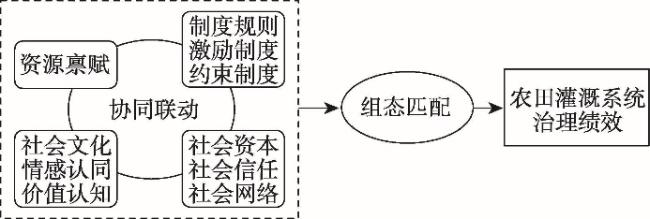
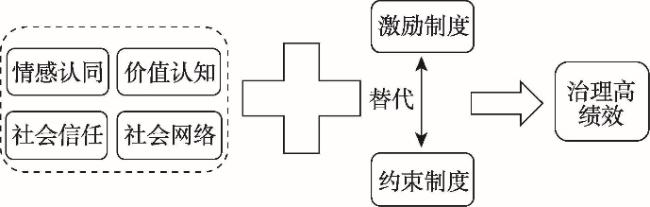
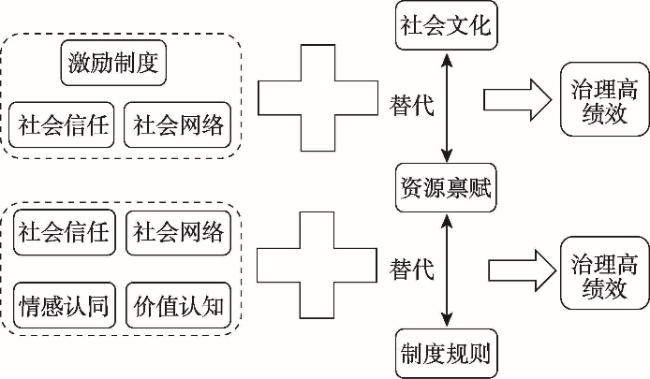
The effective management of farmland irrigation systems is of great significance for achieving sustainable agricultural development and ensuring national food security. In this study, the qualitative comparative analysis (QCA) method was used to examine the synergistic effects of resource endowment, institutional rules, culture, and social capital on the governance performance of farmland irrigation systems. The results show that: (1) A single independent factor does not cause a high or non-high level of farmland irrigation system governance performance; (2) The high-level governance performance of farmland irrigation systems can be attributed to three paths: the institution and social capital driven path under the dominance of culture, the culture and social capital driven path under the dominance of resource endowments, and the culture driven path under the dominance of institutional rules. The non-high-level governance performance of farmland irrigation systems has two paths: resource-cultural inhibition, and resource-institution-social capital inhibition; (3) There is an asymmetric relationship between the high and non-high-level governance performance path of farmland irrigation systems, and the reverse of high performance cannot explain non-high performance. The comparison found that the influence of culture and social capital on the high and non-high performance of farmland irrigation system governance is more common; (4) There is an alternative relationship between the incentive system and the constraint system in the high-performance path of farmland irrigation system governance. Cultural norms and institutional rules have an alternative effect on resource endowments and are an effective means to improve governance performance. The research conclusions not only provide a new way of analysis for the multifactor linkage that affect the governance of rural public affairs, but also provide an important theoretical and practical reference for promoting rural revitalization.
WEN Jie , LI Hongmei . Configuration path analysis of farmland irrigation system governance performance improvement: Based on the QCA method of multifactor synergy[J]. Resources Science, 2022 , 44(5) : 1066 -1078 . DOI: 10.18402/resci.2022.05.15
表1 农田灌溉系统治理绩效的结果与条件变量指标体系Table 1 Results and conditional variable indicators of governance performance of farmland irrigation systems |
| 变量名称 | 衡量指标 |
|---|---|
| 农田灌溉系统治理绩效 | 灌溉基础设施状况比较好?1=很不认同;2=比较不认同;3=一般;4=比较认同;5=很认同 灌溉用水分配过程公平吗?1=很不公平;2=比较不公平;3=一般;4=比较公平;5=很公平 村民参加灌溉治理开会讨论的频率?1=几乎没有;2=较少;3=一般;4=较多;5=很多 种植作物有增产?1=有减产;2=没变化;3=有增产 灌溉成本有节约?1=没节约;2=没变化;3=有节约 周边水质保护的如何?1=很不好;2=比较不好;3=一般;4=比较好;5=很好 村容村貌等环境如何?1=很不好;2=比较不好;3=一般;4=比较好;5=很好 |
| 激励制度 | 政府是否有参与治理的资金补贴?1=是;0=否 集体是否有参与治理的物质支持?1=是;0=否 领导干部会给与帮助并重视大家所做努力?1=是;0=否 |
| 约束制度 | 本村灌溉系统治理的信息透明程度?1=很不透明;2=比较模糊;3=一般;4=比较透明;5=很透明 本村灌溉系统治理的权责明晰程度?1=很不明晰;2=比较模糊;3=一般;4=比较明晰;5=很明晰 本村灌溉系统治理监督制度的有效程度?1=完全无效;2=不太有效;3=一般;4=比较有效;5=很有效 本村灌溉系统治理惩罚制度的有效程度?1=完全无效;2=不太有效;3=一般;4=比较有效;5=很有效 |
| 情感认同 | 家乡的亲切感和归属感?1=很差;2=比较差;3=一般;4=比较好;5=很好 参与治理能获得成就感或满足感?1=是;0=否 对家乡农业发展充满信心?1=很不同意;2=不太同意;3=一般;4=比较同意;5=很同意 |
| 价值认知 | 灌溉设施对农业生产很重要?1=很不同意;2=不太同意;3=一般;4=比较同意;5=很同意 为多数人利益,愿意参与治理?1=很不同意;2=不太同意;3=一般;4=比较同意;5=很同意 基于社会责任与义务,愿意参与治理?1=很不同意;2=不太同意;3=一般;4=比较同意;5=很同意 |
| 社会信任 | 对亲朋好友的信任?1=很不相信;2=不太相信;3=一般;4=比较相信;5=很相信 对左邻右舍的信任?1=很不相信;2=不太相信;3=一般;4=比较相信;5=很相信 对领导干部的信任?1=很不相信;2=不太相信;3=一般;4=比较相信;5=很相信 |
| 社会网络 | 与亲朋好友的联系?1=几乎没有;2=比较少;3=一般;4=比较频繁;5=很频繁 与左邻右舍的联系?1=几乎没有;2=比较少;3=一般;4=比较频繁;5=很频繁 与领导干部的联系?1=几乎没有;2=比较少;3=一般;4=比较频繁;5=很频繁 |
| 资源禀赋 | 灌溉水量充足情况?1=很紧缺;2=比较紧缺;3=基本够用;4=比较充足;5=很充足 农业生产的土质好坏?1=很差;2=比较差;3=一般;4=比较好;5=很好 种植主要地形?1=起伏较大;2=起伏较小;3=平坦土地 |
表2 变量校准与描述性统计Table 2 Variable calibration and descriptive statistics |
| 变量名称 | 校准锚点 | 描述性统计 | ||||||
|---|---|---|---|---|---|---|---|---|
| 完全不隶属 | 交叉点 | 完全隶属 | 均值 | 标准差 | 最小值 | 最大值 | ||
| 农田灌溉系统治理绩效 | 4.689 | 6.083 | 7.430 | 6.061 | 0.857 | 3.347 | 8.514 | |
| 激励制度 | 0.712 | 1.424 | 2.136 | 1.426 | 0.629 | 0.002 | 2.136 | |
| 约束制度 | 2.302 | 3.453 | 4.604 | 3.486 | 0.691 | 1.151 | 5.756 | |
| 情感认同 | 1.996 | 2.995 | 3.660 | 2.809 | 0.458 | 1.331 | 3.661 | |
| 价值认知 | 1.664 | 3.328 | 4.659 | 3.304 | 0.996 | 0.998 | 4.992 | |
| 社会信任 | 3.610 | 4.413 | 6.018 | 4.388 | 0.779 | 1.204 | 6.018 | |
| 社会网络 | 2.808 | 4.012 | 5.617 | 4.102 | 0.852 | 1.204 | 6.018 | |
| 资源禀赋 | 1.900 | 2.900 | 3.716 | 2.881 | 0.579 | 1.000 | 5.000 | |
表3 高水平和非高水平农田灌溉系统治理绩效的组态路径Table 3 Configuration path for governance performance of high-level and non-high-level farmland irrigation systems |
| 条件组态 | 高水平农田灌溉系统治理绩效 | 非高水平农田灌溉系统治理绩效 | ||||||||
|---|---|---|---|---|---|---|---|---|---|---|
| H1 | H2 | H3 | NH1 | NH2 | ||||||
| H1a | H1b | H2a | H2b | H2c | ||||||
| 激励制度 | ● | ● | ● | • | ⊗ | ⊗ | ||||
| 约束制度 | ● | ● | ⊗ | |||||||
| 情感认同 | ● | ● | ● | ● | ● | ⊗ | ||||
| 价值认知 | ● | ● | ● | ● | ● | ⊗ | ⊗ | |||
| 社会信任 | ● | • | ● | ● | ● | ⊗ | ⊗ | |||
| 社会网络 | ● | ● | ● | ● | ● | ● | ⊗ | |||
| 资源禀赋 | ● | ● | ● | • | ⊗ | ⊗ | ||||
| 一致性 | 0.938 | 0.932 | 0.925 | 0.941 | 0.927 | 0.949 | 0.935 | 0.948 | ||
| 原始覆盖度 | 0.282 | 0.343 | 0.290 | 0.264 | 0.322 | 0.277 | 0.294 | 0.273 | ||
| 唯一覆盖度 | 0.010 | 0.012 | 0.045 | 0.019 | 0.021 | 0.039 | 0.037 | 0.016 | ||
| 总体解的一致性 | 0.900 | 0.931 | ||||||||
| 总体解的覆盖度 | 0.475 | 0.310 | ||||||||
注:●或⊗表示核心条件,•或⊗表示边缘条件。空白代表条件可存在也可不存在。下同。 |
表4 改变变量测量方式的稳健性检验Table 4 A robustness test that changes the way variables are measured |
| 条件组态 | 高水平农田灌溉系统治理绩效 | 非高水平农田灌溉系统治理绩效 | ||||||
|---|---|---|---|---|---|---|---|---|
| H1 | H2 | H3 | NH1 | NH1 | ||||
| H1a | H1b | H2a | H2b | H2c | ||||
| 激励制度 | ● | ● | ● | • | ⊗ | ⊗ | ||
| 约束制度 | ● | ● | ⊗ | |||||
| 情感认同 | ● | ● | ● | ● | ● | ⊗ | ||
| 价值认知 | ● | ● | ● | ● | ● | ⊗ | ||
| 社会信任 | ● | • | ● | ● | ● | ⊗ | ⊗ | |
| 社会网络 | ● | ● | ● | ● | ● | ● | ⊗ | |
| 资源禀赋 | ● | ● | ● | • | ⊗ | ⊗ | ||
| 一致性 | 0.931 | 0.939 | 0.920 | 0.947 | 0.943 | 0.940 | ||
| 原始覆盖度 | 0.347 | 0.281 | 0.371 | 0.296 | 0.289 | 0.309 | ||
| 唯一覆盖度 | 0.034 | 0.028 | 0.057 | 0.043 | 0.018 | 0.055 | ||
| 总体解的一致性 | 0.903 | 0.915 | ||||||
| 总体解的覆盖度 | 0.475 | 0.476 | ||||||
| [1] |
王亚华, 臧良震. 小农户的集体行动逻辑[J]. 农业经济问题, 2020, (1): 59-67.
[
|
| [2] |
秦国庆, 朱玉春, 马恒运, 等. 农户分化背景下制度变迁对农田水利自治的影响[J]. 西北农林科技大学学报(社会科学版), 2021, 21(2): 110-118.
[
|
| [3] |
陈柳言, 赵鑫, 朱玉春. 公众参与河长制对河流治理效果的影响: 基于江苏、湖北的实证研究[J]. 资源科学, 2021, 43(6): 1077-1087.
[
|
| [4] |
张新文, 张龙. 乡土文化认同、共同体行动与乡村文化振兴: 基于鄂西北武村修复宗族文化事件的个案启示[J]. 南京农业大学学报(社会科学版), 2021, 21(4): 19-28.
[
|
| [5] |
王博, 万晶晶, 朱玉春. 制度能力对农户合作供给农田灌溉系统的影响分析: 基于黄河灌溉区6省份的调查数据[J]. 农业技术经济, 2020, (2): 32-44.
[
|
| [6] |
代芝静, 曾起艳, 潘伟光. 社会资本对农户参与村庄公共产品供给意愿的影响分析[J]. 农业现代化研究, 2020, 41(2): 303-311.
[
|
| [7] |
雷丽霞, 张应良, 刘魏. 村庄特征、 民主治理对村级公共品供给的影响研究: 基于IAD框架的理论与实证分析[J]. 湖南农业大学学报(社会科学版), 2021, 22(6): 62-72.
[
|
| [8] |
王昕, 陆迁. 水资源稀缺性感知影响农户地下水利用效率的路径分析: 基于华北井灌区1168份调查数据的实证[J]. 资源科学, 2019, 41(1): 87-97.
[
|
| [9] |
周冲, 黎红梅. 村民感知与意愿响应视角下的后疫情时代乡村人居环境治理路径分析[J]. 农林经济管理学报, 2020, 19(5): 654-662.
[
|
| [10] |
汪敏达, 李建标, 殷西乐. 偏好结构、 策略远见和集体行动[J]. 南开经济研究, 2019, (2): 122-146.
[
|
| [11] |
|
| [12] |
|
| [13] |
王磊, 刘圆圆, 任宗悦, 等. 村镇建设与资源环境协调的国外经验及其对中国村镇发展的启示[J]. 资源科学, 2020, 42(7): 1223-1235.
[
|
| [14] |
龙子泉, 张媛媛, 周玉琴, 等. 产权改革、社会资本与小型农田水利设施管护效果: 基于交易费用的中介效应分析[J]. 湖南农业大学学报(社会科学版), 2019, 20(4): 1-9.
[
|
| [15] |
杨柳, 任洋, 汤志伟, 等. 制度规则对小型农田水利设施集体治理绩效的影响: 基于普遍道德的中介作用[J]. 软科学, 2020, 34(8): 51-56.
[
|
| [16] |
任贵州, 曹海林. 乡村文化治理: 能动空间与实践路向[J]. 云南民族大学学报(哲学社会科学版), 2021, 38(5): 98-106.
[
|
| [17] |
王转林, 王金霞, 陈煌, 等. “八五”时期以来中国北方灌溉投资的变化趋势及村庄新增灌溉投资的影响因素[J]. 中国农村经济, 2021, (8): 103-124.
[
|
| [18] |
王亚华, 陶椰, 康静宁. 中国农村灌溉治理影响因素[J]. 资源科学, 2019, 41(10): 1769-1779.
[
|
| [19] |
|
| [20] |
柴盈. 南方地区农田水利政府支出效率及地方性制度比较分析[J]. 农业经济问题, 2014, 35(6): 46-53.
[
|
| [21] |
潘丹. 命令控制型和市场激励型环境规制对造林面积的影响: 来自中国县级层面的准自然实验证据[J]. 资源科学, 2021, 43(10): 2026-2041.
[
|
| [22] |
张林秀, 周天昊, 白云丽, 等. 干群偏好差异与村民公共投资满意度[J]. 华南农业大学学报(社会科学版), 2022, 21(2): 1-14.
[
|
| [23] |
张志原, 刘贤春, 王亚华. 富人治村、 制度约束与公共物品供给: 以农田水利灌溉为例[J]. 中国农村观察, 2019, (1): 66-80.
[
|
| [24] |
|
| [25] |
李鹏, 李晨阳, 沈梦婷, 等. 自然保护地旅游承载力多情景核算: 以云南泸沽湖为例[J]. 资源科学, 2022, 44(3): 620-633.
[
|
| [26] |
陶克涛, 张术丹, 赵云辉. 什么决定了政府公共卫生治理绩效?基于QCA方法的联动效应研究[J]. 管理世界, 2021, 37(5): 128-138.
[
|
| [27] |
谢智敏, 王霞, 杜运周, 等. 创业生态系统如何促进城市创业质量? 基于模糊集定性比较分析[J]. 科学学与科学技术管理, 2020, 41(11): 68-82.
[
|
| [28] |
张明, 杜运周. 组织与管理研究中QCA方法的应用: 定位、策略和方向[J]. 管理学报, 2019, 16(9): 1312-1323.
[
|
| [29] |
杜运周, 刘秋辰, 程建青. 什么样的营商环境生态产生城市高创业活跃度? 基于制度组态的分析[J]. 管理世界, 2020, 36(9): 141-155.
[
|
| [30] |
程建青, 罗瑾琏, 杜运周, 等. 何种创业生态系统产生女性高创业活跃度?[J]. 科学学研究, 2021, 39(4): 695-702.
[
|
/
| 〈 |
|
〉 |