Influence of participation motivation of virtual travel community members on their engagement behavior: Taking an outdoor travel virtual community as example
Received date: 2019-01-02
Request revised date: 2019-03-25
Online published: 2019-09-25
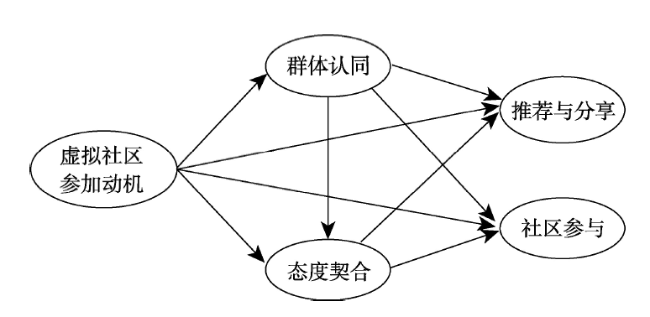
Today, virtual communities have become an important space for tourists. Tourists publish information, organize activities, seek help, share their lives, and show other non-trading behaviors (engagement behaviors) in virtual communities. Clarifying the motivation of participation in tourism virtual community and examine the relationship between motivation and engagement behavior are important for the operation and development of virtual communities. This study employed quantitative analysis methods based on data from a questionnaire survey on a virtual tourism community in Inner Mongolia, investigated the main psychological motives of people participating in the tourism virtual community, and explored the influence of participation motivation on engagement behaviors. The research results show that the motivation of participating in tourism virtual community can be divided into four types: self-achievement, socializing, learning, and practical benefits. Virtual community participation motivation has significant impacts on engagement behaviors, but it has a direct impact only on the attitude engagement. Group identity is an important variable between participation motivation and engagement behavior; and only if attitude engagement happens, will the engagement behavior be achieved for the virtual communities’ members. The relationship chain of “participation motivation-group identity-attitude engagement-behavior engagement” has been clarified, and we have identified the universal path from motivation to engagement behavior. This research may enrich the study of tourism virtual community engagement behavior, and has certain reference value for the management of tourism virtual communities.
ZHOU Zekun , WU Tiehong , TANG Wenyue . Influence of participation motivation of virtual travel community members on their engagement behavior: Taking an outdoor travel virtual community as example[J]. Resources Science, 2019 , 41(9) : 1734 -1746 . DOI: 10.18402/resci.2019.09.14
表1 变量的测量题项Table 1 Measurement of the variables |
| 构面 | 测量项目 | 来源 |
|---|---|---|
| 自我成就动机 | 体验未知与冒险、尝试新鲜事物 | White[64] |
| 培养适应周遭环境的能力 | ||
| 获得成就感 | ||
| 社交动机 | 会见新的户外旅游者、驴友 | Kyle等[65] |
| 和志同道合的人在一起 | ||
| 和各式各样的人们交流 | ||
| 学习动机 | 了解户外地区状况,学习自然生态知识 | Lu等[66];根据具体情况设置 |
| 学习如何与他人更有效的合作 | ||
| 学习户外相关知识和技能(如登山、扎帐篷技巧等) | ||
| 实际好处 | 获得高自由度、强参与度、高质量的户外旅游体验 | |
| 获得最新活动消息,参加社区组织的特别主题活动,如露营、烧烤 | ||
| 获得较低的价格和会员折扣 | ||
| 群体认同 | 我认为户外群体是我自己的重要反映 | Leonardelli等[67] |
| 我拥有户外群体的许多典型特征 | ||
| 属于户外群体对于塑造自我形象很重要 | ||
| 态度契合 | 我信任户外社区,认为他们有能力组织活动 | 王高山[48];根据具体情况设置 |
| 没有户外社区,我的生活会不一样 | ||
| 我认为户外社区组织的户外活动安全有保障,安全性高 | ||
| 我喜欢户外社区 | ||
| 口碑与分享 | 我会向他人正面评价该社群 | 王高山[48];杨艳[68] |
| 我会向他人推荐该社群 | ||
| 我愿意与社区成员分享我的技术、心得和经验 | ||
| 群成员求助时,我会为其提供能力范围内的帮助 | ||
| 社区参与行为 | 我常运用社区(QQ群、微信群、贴吧、论坛)中浏览到的信息来满足自己的需要 | 王高山[48];根据具体情况设置 |
| 我经常在社区(QQ群、微信群、论坛等)中发起谈话 | ||
| 我会参加社区组织的线上线下活动 |
表2 信度和效度Table 2 Reliability and validity |
| 构面 | 指标 | 标准化载荷 | 标准误 | t值 | C.R.值 | Cronbach’α | AVE值 |
|---|---|---|---|---|---|---|---|
| 自我成就动机 | ZWD1 | 0.59 | 0.757 | 0.627 | 0.442 | ||
| ZWD2 | 0.72 | 0.096 | 10.016*** | ||||
| ZWD3 | 0.54 | 0.110 | 8.236*** | ||||
| 社交动机 | SJD1 | 0.69 | 0.723 | 0.721 | 0.466 | ||
| SJD2 | 0.63 | 0.074 | 11.604*** | ||||
| SJD3 | 0.74 | 0.084 | 13.492*** | ||||
| 学习动机 | XXD1 | 0.75 | 0.782 | 0.784 | 0.545 | ||
| XXD2 | 0.75 | 0.070 | 14.353*** | ||||
| XXD3 | 0.71 | 0.068 | 13.406*** | ||||
| 实际好处 | HCD1 | 0.71 | 0.678 | 0.665 | 0.416 | ||
| HCD2 | 0.64 | 0.076 | 10.946*** | ||||
| HCD3 | 0.57 | 0.090 | 9.783*** | ||||
| 群体认同 | QTR1 | 0.83 | 0.85 | 0.823 | 0.591 | ||
| QTR2 | 0.83 | 0.055 | 14.687*** | ||||
| QTR3 | 0.71 | 0.058 | 17.715*** | ||||
| 态度契合 | TDQ1 | 0.82 | 0.841 | 0.833 | 0.518 | ||
| TDQ2 | 0.71 | 0.063 | 14.843*** | ||||
| TDQ3 | 0.70 | 0.070 | 15.154*** | ||||
| TDQ4 | 0.79 | 0.059 | 18.188*** | ||||
| 口碑与分享 | ZSF1 | 0.73 | 0.885 | 0.862 | 0.607 | ||
| ZSF2 | 0.84 | 0.080 | 15.999*** | ||||
| KBP1 | 0.82 | 0.077 | 16.286*** | ||||
| KBP2 | 0.72 | 0.079 | 14.122*** | ||||
| 社区参与 | SQC1 | 0.71 | 0.845 | 0.798 | 0.576 | ||
| SQC2 | 0.76 | 0.083 | 13.964*** | ||||
| SQC3 | 0.79 | 0.074 | 14.625*** |
注:**表示p<0.01;***表示p<0.001 |
表3 户外旅游虚拟社区参加动机二阶验证因子之模型配适指标(N=389)Table 3 Test results of goodness-of-fit indices for the structural equation model (SEM)(N = 389) |
| 参加动机二阶验证因素模式 | x2值 | 自由度(df) | x2/df | GFI | AGFI | CFI | RMSEA |
|---|---|---|---|---|---|---|---|
| Null model | 2154.717 | 78 | 27.625 | 0.320 | 0.207 | 0.000 | 0.262 |
| 一阶一因子分析 | 280.972 | 65 | 4.323 | 0.892 | 0.848 | 0.896 | 0.093 |
| 一阶四因子模式(因子间无相关) | 975.091 | 65 | 15.001 | 0.699 | 0.579 | 0.562 | 0.190 |
| 一阶四因子模式(因子间有相关) | 195.512 | 59 | 3.314 | 0.923 | 0.882 | 0.934 | 0.077 |
| 二阶因子模式 | 133.655 | 59 | 2.265 | 0.949 | 0.921 | 0.964 | 0.057 |
| 建议值 | 越小越好 | 越大越好 | <3 | >0.9 | >0.9 | >0.9 | <0.08 |
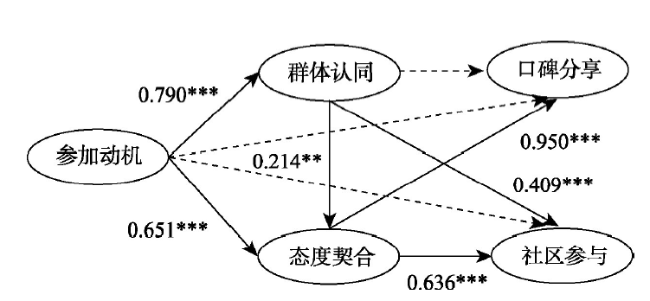
图2 概念模型路径系数估计结果注:**表示p<0.01;***表示p<0.001 Figure 2 Path coefficient estimation results of the conceptual model |
表4 模型假设检验结果Table 4 Hypotheses test results |
| 假设路径 | 标准化路径系数 | t值 | 验证结果 |
|---|---|---|---|
| H1:参加动机→群体认同 | 0.790 | 9.346*** | 支持 |
| H2:态度契合→推荐与分享 | 0.950 | 11.038*** | 支持 |
| H3:态度契合→社区参与 | 0.636 | 7.607*** | 支持 |
| H4a:群体认同→态度契合 | 0.214 | 2.603** | 支持 |
| H4b:群体认同→推荐与分享 | -0.063 | -0.964 | 不支持 |
| H4c:群体认同→社区参与 | 0.409 | 5.074*** | 支持 |
| H5a:参加动机→态度契合 | 0.651 | 6.465*** | 支持 |
| H5b:参加动机→推荐与分享 | -0.085 | -1.025 | 不支持 |
| H5c:参加动机→社区参与 | -0.049 | -0.052 | 不支持 |
| [1] |
邹勇文, 田逢军 . 网络虚拟社区中的南昌市旅游空间意象图景[J]. 资源科学, 2017,39(2):314-324.
[
|
| [2] |
|
| [3] |
|
| [4] |
侯楠, 赵希男, 杨皎平 . 虚拟社区中个人需求、共享动机与竞优行为[J]. 管理评论, 2018,30(6):114-124.
[
|
| [5] |
|
| [6] |
|
| [7] |
荆宁宁, 李德峰 . 顾客契合研究综述[J]. 外国经济与管理, 2015,37(7):33-45.
[
|
| [8] |
|
| [9] |
|
| [10] |
|
| [11] |
|
| [12] |
|
| [13] |
|
| [14] |
崔正, 赵梦琪, 徐仲月 . 交易型虚拟社区顾客体验对顾客契合的影响研究[J]. 价格月刊, 2018, ( 9):64-69.
[
|
| [15] |
肖淑兰, 陈剑, 林红菱 . 基于自我导向学习理论的顾客学习行为及其对顾客契合影响研究[J]. 预测, 2018,37(3):35-41.
[
|
| [16] |
韩小芸, 田甜, 孙本纶 , 等. 旅游虚拟社区成员“感知-认同-契合行为”模式的实证研究[J]. 旅游学刊, 2016,31(8):61-70.
[
|
| [17] |
黄颖华 . 后现代视角下的旅游者社交网络行为研究[J]. 旅游学刊, 2014,29(8):9-11.
[
|
| [18] |
|
| [19] |
|
| [20] |
|
| [21] |
|
| [22] |
|
| [23] |
|
| [24] |
|
| [25] |
谢礼珊, 王鼎 . 旅游虚拟社区服务质量与社区成员忠诚感研究[R]. 北京: 中国市场学2006年年会暨第四次全国会员代表大会论文集, 2006.
[
|
| [26] |
苗学玲, 保继刚 . “众乐乐”: 旅游虚拟社区“结伴旅行”之质性研究[J]. 旅游学刊, 2007,22(8):48-54.
[
|
| [27] |
罗瑶 . 虚拟社区成员知识分享动机研究[D]. 上海: 复旦大学, 2013.
[
|
| [28] |
江莉 . 旅游虚拟社区成员信息分享影响因素的实证研究[D]. 长沙: 湖南师范大学, 2014.
[
|
| [29] |
|
| [30] |
赵茂磊 . 非交易类虚拟社区的成员参与动机研究[D]. 杭州: 浙江大学, 2005.
[
|
| [31] |
|
| [32] |
郭俊俊 . 旅游虚拟社区成员行为对旅游决策的影响研究[D]. 杭州: 浙江大学, 2008.
[
|
| [33] |
范晓屏 . 非交易类虚拟社区成员参与动机: 实证研究与管理启示[J]. 管理工程学报, 2009,23(1):1-6.
[
|
| [34] |
耿欣 . 非赢利性旅游虚拟社区成员行为实证研究[D]. 广州: 广州大学, 2012.
[
|
| [35] |
|
| [36] |
|
| [37] |
邵景波, 张君慧, 蔺晓东 . 什么驱动了顾客契合行为?: 形成机理分析与实证研究[J]. 管理评论, 2017,29(1):155-165.
[
|
| [38] |
|
| [39] |
|
| [40] |
|
| [41] |
|
| [42] |
|
| [43] |
|
| [44] |
|
| [45] |
王甫园, 许春晓, 王开泳 . 旅游者与目的地契合的概念与测量[J]. 资源科学, 2019,41(3):441-453.
[
|
| [46] |
|
| [47] |
|
| [48] |
王高山 . 社会化商务电子服务质量对顾客契合的影响机理研究[D]. 济南: 山东师范大学, 2014.
[
|
| [49] |
张莹瑞, 佐斌 . 社会认同理论及其发展[J]. 心理科学进展, 2006,14(3):475-480.
[
|
| [50] |
李晓明, 张辉 . 顾客品牌契合行为的心理机制研究: 自我决定理论视角[J]. 旅游学刊, 2017,32(7):57-68.
[
|
| [51] |
殷融, 张菲菲 . 群体认同在集群行为中的作用机制[J]. 心理科学进展, 2015,23(9):1637-1646.
[
|
| [52] |
|
| [53] |
|
| [54] |
赵志裕, 温静, 谭俭邦 . 社会认同的基本心理历程: 香港回归中国的研究范例[J]. 社会学研究, 2005, ( 5):202-227.
[
|
| [55] |
|
| [56] |
|
| [57] |
张书维, 王二平, 周洁 . 相对剥夺与相对满意: 群体性事件的动因分析[J]. 公共管理学报, 2010,7(3):95-102.
[
|
| [58] |
|
| [59] |
|
| [60] |
|
| [61] |
|
| [62] |
魏闯 . 顾客契合的前置因素及对顾客感知价值的影响研究[D]. 沈阳: 沈阳工业大学, 2017.
[
|
| [63] |
|
| [64] |
|
| [65] |
|
| [66] |
|
| [67] |
|
| [68] |
杨艳 . 虚拟社区中的知识交流和共享行为研究[D]. 杭州: 浙江大学, 2005.
[
|
| [69] |
|
| [70] |
|
/
| 〈 |
|
〉 |