Verification and influence strategies of residents' spiritual cognition of recycled water reuse
Received date: 2017-07-14
Request revised date: 2018-03-13
Online published: 2018-06-22
Copyright
Considering the different natures of recycled water, such as environmental protection and public welfare, we used a single category implicit association test (SC-IAT) to avoid the influence that some factors (e. g. social preferences) have on the research outcomes and to arrive at a more accurate understanding of public attitudes towards recycled water. From the perspective of implicit attitude, it proved the“spiritual contagion” phenomenon of the public to refuse the use of recycled because it comes from processed polluted water. This made a comparison between the implicit attitude of the public towards reclaimed water and the public’s explicit attitude towards the use of recycled water through self-report questionnaires. The implicit attitude of the public is more active than the explicit attitude, which provides a scientific explanation for the issue why reclaimed water is not approved by most citizens. Experimental variables were used to simulate the strategy to motivate the environmental protection motivation, demonstration guiding strategy and working mechanism of knowledge publicity. Besides, intervention simulation has been designed, and participants in the experimental group are divided into three groups to receive three types of intervention simulation. By using comparative variables to change the attitude of participants before and after the test, three types of intervening strategies can help citizens conquer their spiritual contagion attitude toward reclaimed water and improve their attitude toward the reuse of water. The demonstration guiding strategy had the most significant effect, is very important for the use of recycled water and has a large effect on residents’ attitudes.
FU Hanliang , LIU Xiaojun . Verification and influence strategies of residents' spiritual cognition of recycled water reuse[J]. Resources Science, 2018 , 40(6) : 1222 -1229 . DOI: 10.18402/resci.2018.06.12
Table 1 Sample description of recycled water reuse SC-IAT表1 再生水回用单类内隐测试实验样本情况描述 |
| 变量名称 | 总样本/人 | 有效样本/人 | |
|---|---|---|---|
| 年龄/岁 | (20,30] | 51 | 45 |
| (30,40] | 40 | 38 | |
| 40以上 | 10 | 10 | |
| 性别 | 男 | 40 | 37 |
| 女 | 61 | 56 | |
| 学历 | 本科以下 | 5 | 5 |
| 本科 | 51 | 45 | |
| 研究生及以上 | 45 | 43 |
Table 2 Recycled water reuse SC-IAT process表2 再生水回用单类内隐测试过程 |
| 环节 | 次数 | 组别 | 反应键 | |
|---|---|---|---|---|
| “F”键 | “J”键 | |||
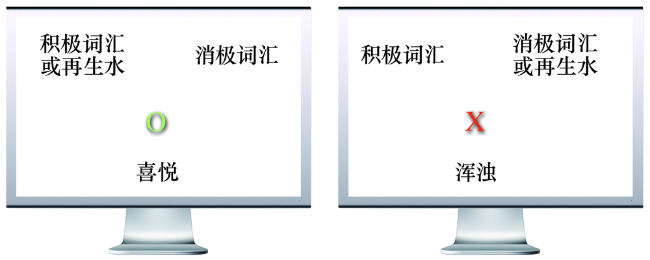
| 正序组 | 24 | 测试组 | 积极词汇+再生水 | 消极词汇 |
| 48 | 实验组 | 积极词汇+再生水 | 消极词汇 | |
| 反转组 | 24 | 测试组 | 积极词汇 | 消极词汇+再生水 |
| 48 | 实验组 | 积极词汇 | 消极词汇+再生水 | |
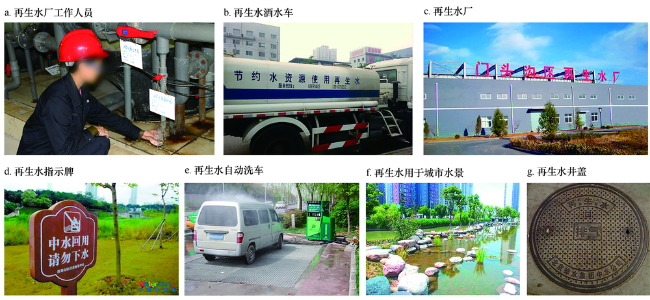
Figure 1 Steps of the production and use of recycled water图1 再生水生产使用环节 |
Figure 2 Sample graph of recycled water resue SC-IAT图2 再生水回用单类内隐联想测试示例 |
Table 3 Experiment data of recycled water resue SC-IAT before intervention表3 干预刺激前再生水回用内隐联想测试实验数据汇总 |
| 实验环节 | 均值 | 标准差 |
|---|---|---|
| 正序组平均反应时(P) | 814.579 | 145.947 |
| 反转组平均反应时(N) | 760.184 | 147.186 |
| D值(P-N) | 54.395 | 55.126 |
Table 4 Experiment data of control groups of recycled water resue SC-IAT表4 再生水回用内隐联想测试对照组实验数据汇总 |
| 组别 | 对照组1 | 对照组2 | 对照组3 | |||||
|---|---|---|---|---|---|---|---|---|
| 均值 | 标准差 | 均值 | 标准差 | 均值 | 标准差 | |||
| 正序组平均反应时间(P) | 787.952 | 130.434 | 774.736 | 142.792 | 773.722 | 139.033 | ||
| 反转组平均反应时间(N) | 783.912 | 125.802 | 797.484 | 135.034 | 760.796 | 146.442 | ||
| P-N值 | 4.040 | 50.307 | -22.748 | 45.533 | 8.926 | 52.957 | ||
| 正序组与反转组平均反应T检验结果 | t(28)=0.447,P=0.658 | t(32)=-2.782,P<0.05 | t(33)=2.303,P=0.513 | |||||
Table 5 Intra-group data comparison of recycled water resue SC-IAT表5 再生水回用内隐联想测试组内比较数据统计 |
| 数据类别 | 对照组1 平均反应时间差 | 对照组2 平均反应时间差 | 对照组3 平均反应时间差 | D值 | 标准差 |
|---|---|---|---|---|---|
| 基线组1平均反应时间差 | t(28)=5.568,P<0.001 | 54.040 | 55.375 | ||
| 基线组2平均反应时间差 | t(32)=6.625,P<0.001 | 54.672 | 65.293 | ||
| 基线组3平均反应时间差 | t(33)=4.476,P<0.001 | 54.474 | 44.602 | ||
| D值 | 4.040 | -22.748 | 8.926 | ||
| 标准差 | 50.307 | 45.533 | 52.957 |
注:基线组n的数据,即为对照组n实验参与人在干预刺激前阶段内隐联想实验结果。 |
The authors have declared that no competing interests exist.
| [1] |
|
| [2] |
|
| [3] |
|
| [4] |
|
| [5] |
|
| [6] |
|
| [7] |
|
| [8] |
|
| [9] |
|
| [10] |
|
| [11] |
[
|
| [12] |
|
| [13] |
|
| [14] |
|
| [15] |
|
| [16] |
|
| [17] |
|
| [18] |
|
/
| 〈 |
|
〉 |