A systematic literature review of tourism hub theory and practice
Received date: 2016-01-10
Request revised date: 2016-05-08
Online published: 2016-06-18
Copyright
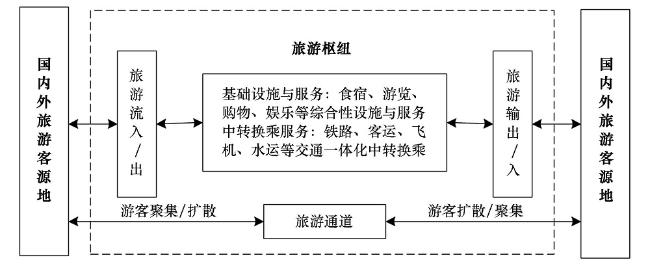
Research on tourism hubs in China and abroad are based on transportation hubs,after which the basic theory about tourism hubs occurred and boosted study on the theoretical and practical development of tourism hubs. Tourism hubs originated from transportation hubs. Based on transportation hubs,tourism hubs provide tourists with tourism-related information,service and infrastructure,as well as well-rounded,seamless and accessible integration of all kind of transports which make tourist transfers and travel more convenient. Tourism hubs bridge tourism markets and destinations,but there are differences between them. The tourism resources are main attractions for tourists while tourism hubs strike to control the local tourism industry through tourist flows. The functions of gathering and scattering are key factors for tourism hubs which help to control tourist flows and the tourism industry. According to different practical functions and various development processes of international tourism hubs,we generalize their practices and divide them into two categories:hub-dominated tourism cities and hub-destination tourism cities. The development of international tourism hubs follows similar laws. Well-constructed hubs,especially the airport hub network will be helpful for tourism hubs to attract tourist flow. Tourism hubs benefit from their hub functions and control of local tourism industries. With the development of the tourism industry,tourist destinations and tourism hubs tend to mix together.
ZOU Tongqian , JIANG Luhong , GUO Xiaoxia . A systematic literature review of tourism hub theory and practice[J]. Resources Science, 2016 , 38(6) : 1003 -1012 . DOI: 10.18402/resci.2016.06.01
Table 1 Characteristics of tourism hubs表1 旅游枢纽特征 |
| 旅游枢纽 | |
|---|---|
| 设立条件 | 独特的交通区位;良好的经济区位 |
| 组成要素 | 集散平台;基础设施;换乘设施;旅游服务设施 |
| 主要功能 | 集散功能;换乘功能;服务功能 |
| 基本分类 | 按旅游流划分:对外枢纽、市内枢纽 |
| 按规模划分:特大、大型、中型和小型 | |
| 按空间局部划分:立体式、平面式 | |
| 按交通方式划分:公路、铁路、航空、水运、城市公共交通枢纽 | |
| 影响因素 | 旅游枢纽与国际/国内城市的客运能力 |
| 换乘的高效性、经济性、舒适性 | |
| 政府管理水平与旅游企业服务水平 | |
Figure 1 Relationship between tourism hubs and tourist destinations图1 旅游枢纽与旅游目的地关系 |
Table 2 Positioning of international tourism hubs表2 国际旅游枢纽发展定位 |
| 城市 | 地理位置 | 发展定位 |
|---|---|---|
| 迪拜 | 坐落于欧洲和亚洲中间位置 | 世界级交通枢纽;理想的中转站和国际旅游目的地 |
| 香港 | 地处亚欧大陆东南部,背靠中国大陆 | “必看”的“一程多站”的旅游枢纽;中国内地门户城市;亚洲旅游枢纽 |
| 新加坡 | 地处两大洋和两大洲的“十字路口” | 亚太旅游门户;东南亚的旅游中转站 |
| 伦敦 | 欧洲西部,大西洋东部,不列颠群岛的东南部 | 英国与世界的门户;世界城市,世界门户,欧洲领袖 |
| 巴黎 | 法国北部、欧洲西部,贯通欧洲各国要道,连接欧美的桥梁 | 欧洲旅游中转平台;欧洲公路、铁路交通的中心;世界航空运输的中心之一 |
| 纽约 | 美国沿大西洋海岸的东北部 | 世界枢纽中心;美国最大港口城市,集金融、贸易、旅游与文化艺术的国际大都市 |
Table 3 Categories of international tourism hubs表3 国际旅游枢纽分类 |
| 分类 | 演变历程 | 城市特征 | 发展规律 |
|---|---|---|---|
| 枢纽主导型旅游枢纽 | 交通枢纽-旅游枢纽-旅游目的地 | 1.所处国际、国内地理位置优越 2.交通便利,形成综合交通运输网 3.自然、人文旅游资源匮乏 | 1.政府部门在旅游发展中起着重要的促进作用 2.建造人造景观、景区、主题公园、标志性旅游吸引物 3.开展各类旅游节事活动 4.发展旅游购物 5.发展商贸、会展旅游 6.交通、旅游、住宿、餐饮等部门有效配合 |
| 枢纽/目的地并存型旅游枢纽 | 旅游目的地-旅游枢纽 | 1.自然、人文旅游资源丰富 2.具有较大旅游吸引力 3.所处国际、国内地理位置优越 | 1.强化目的地功能同时加大对旅游枢纽的建设 2.对过境、入境旅游形成了较好的集散与控制 3.发展商贸旅游,促进旅游购物的繁荣 |
The authors have declared that no competing interests exist.
| [1] |
[
|
| [2] |
|
| [3] |
[
|
| [4] |
|
| [5] |
[
|
| [6] |
|
| [7] |
|
| [8] |
[
|
| [9] |
[
|
| [10] |
[
|
| [11] |
|
| [12] |
|
| [13] |
|
| [14] |
|
| [15] |
|
| [16] |
|
| [17] |
|
| [18] |
[
|
| [19] |
|
| [20] |
|
| [21] |
|
| [22] |
[
|
| [23] |
[
|
| [24] |
[
|
| [25] |
[
|
| [26] |
[
|
| [27] |
[
|
| [28] |
[
|
| [29] |
[
|
| [30] |
[
|
| [31] |
[
|
| [32] |
[
|
| [33] |
[
|
| [34] |
[
|
| [35] |
[
|
| [36] |
|
| [37] |
|
| [38] |
[
|
| [39] |
|
| [40] |
|
| [41] |
[
|
| [42] |
|
| [43] |
|
| [44] |
[
|
| [45] |
|
| [46] |
[
|
| [47] |
[
|
| [48] |
[
|
| [49] |
|
| [50] |
|
| [51] |
[
|
| [52] |
[
|
| [53] |
|
| [54] |
[
|
| [55] |
[
|
| [56] |
[
|
| [57] |
|
| [58] |
[
|
| [59] |
|
| [60] |
[
|
| [61] |
[
|
| [62] |
[
|
| [63] |
[
|
| [64] |
[
|
| [65] |
[
|
| [66] |
|
| [67] |
[
|
| [68] |
[
|
| [69] |
|
| [70] |
|
| [71] |
[
|
| [72] |
[
|
| [73] |
|
| [74] |
|
| [75] |
|
| [76] |
|
| [77] |
[
|
| [78] |
|
| [79] |
|
| [80] |
|
| [81] |
Avmark. Hubbing economics -the real benefits for airline and passengers[J]. The Avmark Aviation Economist,1990,7(6):5-9.
|
| [82] |
|
| [83] |
|
| [84] |
|
/
| 〈 |
|
〉 |